What Actually Goes into a Dinnerware Set
Most dinnerware sets are sold as either 4-piece place settings (scaled to serve one person) or as larger sets — typically 16-piece, 20-piece, or more — designed to serve four to six people.
A standard 4-piece place setting usually includes a dinner plate, a salad or dessert plate, a soup bowl, and a mug or cup. Some sets swap out the mug for a saucer or add a small side plate. When you're comparing sets, always check exactly what's included, because "16-piece set" can mean very different things depending on the brand.
Beyond the count, you'll also encounter a few configuration styles:
Open stock means pieces are sold individually, so you can mix and match or replace a single broken plate without buying a whole new set. It's more flexible, though often more expensive per piece.
Closed sets come packaged together, usually at a better price per piece, but if you need a replacement down the road, you may be out of luck if the pattern has been discontinued.
The Big Question: What Material Is Right for You?
The material your dinnerware is made from affects how it looks, how it handles, how it ages, and — critically — how easy it is to live with day to day. Here's an honest breakdown.
Porcelain and Bone China
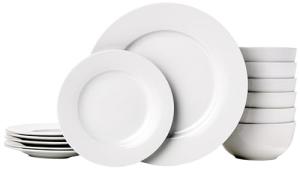
These are the classics. Porcelain is fired at extremely high temperatures, which makes it dense, smooth, and wonderfully durable. It's the go-to for people who want something that feels refined without being fragile. Bone china follows a similar process but incorporates bone ash into the clay body, which gives it that characteristic translucency and a lighter weight. When you hold a bone china plate up to the light, you can sometimes see your hand through it — that's the hallmark of quality.
Both are dishwasher-safe in most cases (always verify), resistant to staining, and available in everything from stark minimalist whites to richly patterned heirloom designs. If you want dishes that will look just as good in fifteen years as they do today, porcelain or bone china is hard to beat.
Stoneware
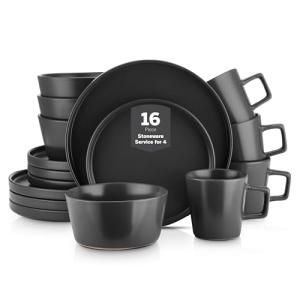
Stoneware is the workhorse of the dinnerware world. It's thicker and heavier than porcelain, fired at high temperatures, and known for its rustic, earthy feel. The slight variations in glaze and texture that you see in good stoneware aren't imperfections — they're part of the aesthetic. Each piece has a handmade quality, even when it's mass produced.
It retains heat well, which means your food stays warm longer. It's generally microwave and dishwasher safe, though you should check the manufacturer's instructions. The main trade-off is weight: stoneware plates are noticeably heavier than porcelain, which some people love and others find cumbersome.
Earthenware and Terracotta
Earthenware is fired at lower temperatures than stoneware or porcelain, which makes it more porous and a bit more fragile. It chips more easily and is often not microwave safe unless specifically glazed. That said, it has a warmth and color richness that's hard to replicate in denser materials — think the deep reds and ochres of Spanish ceramics or the creamy whites of Italian country pottery.
If you're drawn to earthenware for its looks, just be realistic about how you'll use it. It's wonderful for serving and entertaining, less ideal for daily heavy-duty use.
Melamine and Acrylic
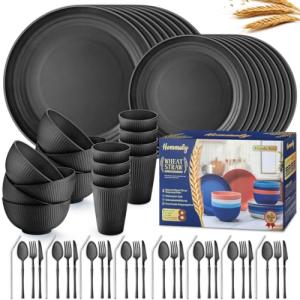
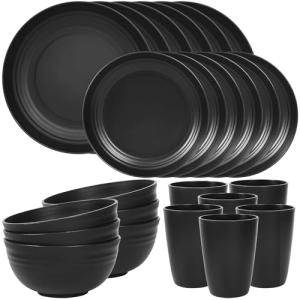
Melamine gets a bad reputation in some circles, but it genuinely solves a real problem: outdoor dining, households with young children, boat living, camping. It looks remarkably like ceramic from a distance, it's virtually unbreakable, and it's easy to clean. The downsides are real though — it's not microwave safe, it can scratch over time, and it doesn't have the weight or feel of real ceramics.
Think of melamine as the right tool for the right job, not a compromise.
Styles and Aesthetics: Finding Your Fit
Dinnerware is one of those purchases where personal taste matters enormously, and the range of styles available today is genuinely remarkable. A few broad categories worth knowing:
Minimalist and Modern
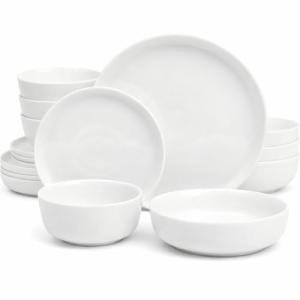
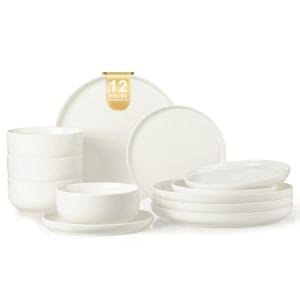
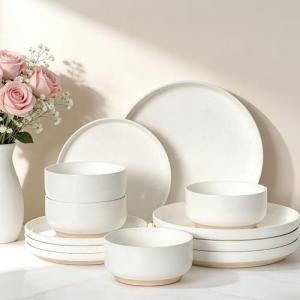
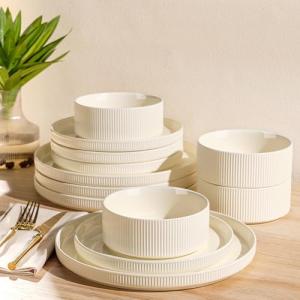
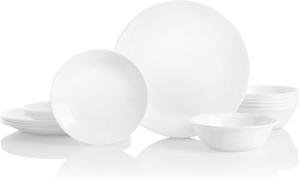
Clean edges, no pattern, matte or glossy white (or off-white, cream, slate gray, or matte black). This style works with almost any food, any table setting, any occasion. It's the restaurant aesthetic, and for good reason — the dish becomes a frame for the food rather than competing with it. Brands doing this well tend to favor slightly organic shapes: a rim that's not quite perfectly circular, a bowl that's slightly irregular. It feels considered without feeling precious.
Farmhouse and Rustic
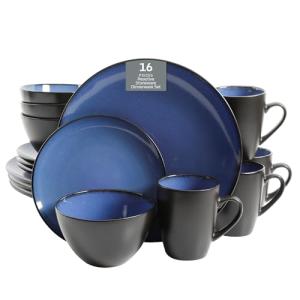
Reactive glazes, earthy tones, a visible texture on the surface. This style has been popular for a long time now, and the best versions of it have a genuine handmade quality. Speckled glazes in navy, sage, and warm terracotta have become particularly common. This look pairs naturally with linen napkins, wooden cutting boards, and relaxed table settings.
Traditional and Formal
Floral patterns, gold or platinum rims, fine bone china. This is the heirloom category — the kind of set that lives in a cabinet most of the year and comes out for Christmas dinner and milestone birthdays. If this is what you're after, invest in quality, because you want it to last. Look for patterns that are classic rather than trendy, and verify that replacement pieces are available.
Colorful and Eclectic
Solid colors in bold shades — deep cobalt, terracotta orange, forest green, saturated yellow — often mixed and matched deliberately. This style works best when you commit to it. A set where every plate is a different color sounds chaotic but looks intentional when the colors are well-chosen and the shapes are consistent.
How Many Pieces Do You Actually Need?
This depends entirely on how you live. A few honest questions to ask yourself:
How often do you host? If you regularly have six or more people over for dinner, you need enough full place settings to cover that. Don't buy a four-person set and plan to supplement it with mismatched pieces — it rarely works as well in practice as it does in theory.
Do you have kids? If yes, factor in breakage. Stoneware or even melamine for everyday use makes sense. Save the nice porcelain for when the children have better motor skills.
How much storage do you have? Dinnerware takes up more cabinet space than most people expect. A 16-piece set for four people is one thing; a 32-piece set for eight people requires serious dedicated storage.
How often do you actually use all the pieces? Be honest. Most people use dinner plates, bowls, and mugs every day. Salad plates get used occasionally. Soup bowls, maybe once a week. Saucers, almost never. Don't let an impressive piece count sell you on items you won't use.
What to Look for in Terms of Quality
Shopping for dinnerware online or in a store, here are the things worth paying attention to:
Chip resistance is a practical concern that often gets buried in marketing. Look for brands that specifically mention chip-resistant edges or reinforced rims — these are the first places to go.
Glaze consistency matters both aesthetically and practically. An uneven glaze can harbor bacteria in microcracks over time, and it often indicates less careful manufacturing overall.
Weight and balance tell you a lot when you're holding a piece in your hands. A plate that feels substantial without being heavy, that balances naturally on your palm — that's the sweet spot. Very lightweight plates can feel cheap; very heavy ones become tedious to handle at a dinner party.
Stackability is underrated. Plates that stack neatly and stably are significantly easier to store and less likely to chip when you're quickly grabbing one from a cabinet.
Temperature resistance — both the range a piece can handle and the speed at which it handles changes — matters if you use your microwave and dishwasher regularly. Check manufacturer specs, not just the box marketing.
Caring for Your Dinnerware Set
Even dishwasher-safe dinnerware lasts longer with a little care. A few things that genuinely make a difference:
Avoid stacking plates immediately after washing while they're still hot — the temperature differential can stress the glaze over time. Let them cool first.
When stacking, don't overstuff. A stack of twelve plates creates pressure at the bottom that, over years, contributes to crazing (the fine network of cracks in the glaze) and chipping.
Hand wash pieces with gold or platinum trim. Those metallic accents are not dishwasher-safe, full stop. The detergents will dull and eventually strip them.
For stubborn staining — tea, coffee, tomato sauce — a paste of baking soda and water works better than scrubbing. Apply, let it sit for a few minutes, rinse. No abrasion needed.
Mixing and Matching: A Note on Building a Collection Over Time
The best-set tables often aren't a single matching set at all. They're the result of years of thoughtful accumulation — a set of everyday stoneware supplemented by a few inherited pieces, a mismatched collection of plates from different eras unified by a consistent color palette or material.
If you're starting fresh, it makes sense to begin with a cohesive everyday set in a neutral that you genuinely love. From there, you can add serving pieces, accent colors, and occasional pieces over time without everything feeling mismatched. The key is to build around a central aesthetic idea — material, color temperature, formality level — rather than buying randomly.
Dinnerware is one of those categories where mid-range spending often delivers the best value. Very cheap sets tend to chip quickly, have uneven glazing, and feel disappointing to eat from every day. Very expensive sets can be beautiful but create anxiety — nobody wants to be nervous about breaking a plate at their own dinner table.
The sweet spot is a well-made set at a price where you'd be disappointed if a piece broke, but not devastated. Something you'd replace rather than mourn. Durability, aesthetics, and the simple pleasure of a well-set table — that's the whole point.