What Is a Contact Grill?
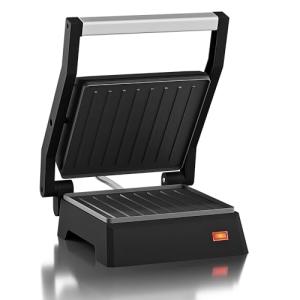
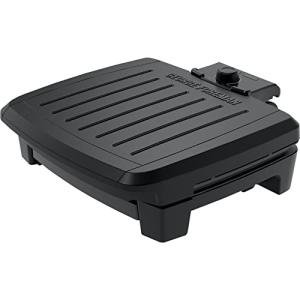
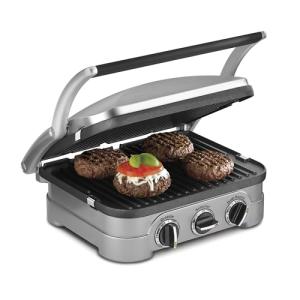
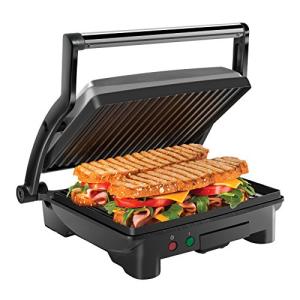
A contact grill is an electric countertop appliance with two heated plates — one on top and one on the bottom — that cook food simultaneously from both sides. You place your food between the plates, close the lid, and let the dual heat do its job. No flipping required. No open flame. No smoke filling up your kitchen.
This is the fundamental difference between a contact grill and every other cooking method. A regular pan or griddle heats from one side only, so you spend time hovering and flipping. A contact grill cuts that process in half — and often delivers a more even, consistent result at the same time.
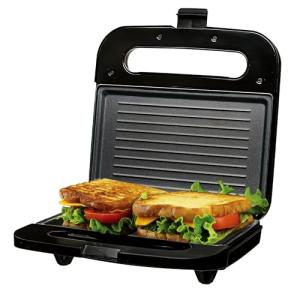
You'll also hear contact grills called panini presses, sandwich grills, or indoor grills. While the names are sometimes used interchangeably, a true contact grill is more capable than a basic sandwich toaster. The better models can handle thick steaks, chicken breasts, burgers, vegetables, fish fillets, and much more.
Why People Love Them: The Real Benefits
Speed That Actually Matters
Cooking from both sides at once means contact grills can cut your cooking time significantly compared to a regular pan or oven. A chicken breast that might take 20 minutes in a pan can be done in 8–12 minutes on a contact grill. Burgers, salmon fillets, and vegetables cook even faster. For anyone juggling busy schedules, this speed isn't just convenient — it changes what's possible on a weeknight.
Less Fat, Leaner Results
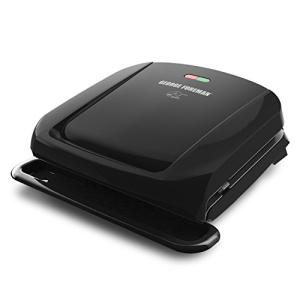
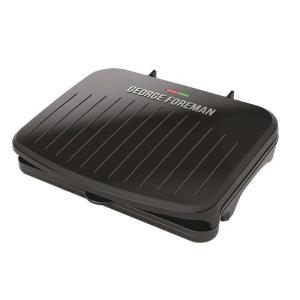
Many contact grills, particularly the classic George Foreman-style designs, are built on a slight slope so that rendered fat and grease drain away from your food as it cooks. The food sits elevated above its own fat, which means you're eating leaner results without doing anything different. You don't need to add oil in most cases either, since the dual-sided heat keeps food moist from within rather than relying on added fats to prevent sticking.
Consistent Cooking Every Time
One of the most underrated benefits of a contact grill is repeatability. Because both plates apply even heat and pressure, every piece of food comes out the same. There's no hot spot on one side of the pan, no undercooked center because you flipped too early. Once you've figured out the right time and temperature for your favourite cut of meat or your go-to panini, you'll get that exact result every single time.
No Outdoor Space Required
This is huge for anyone in a flat or a smaller home. A contact grill plugs into a standard wall socket, takes up minimal counter space, and produces very little smoke — especially models designed with splatter shields and cool-air zones. You can grill a steak or cook a full chicken breast in your kitchen without triggering smoke alarms or needing to crack a window in the middle of winter.
What Can You Cook on a Contact Grill?
Far more than you might expect. Here's a realistic picture of what these machines handle well:
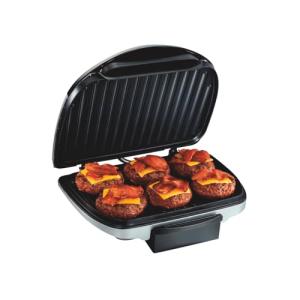
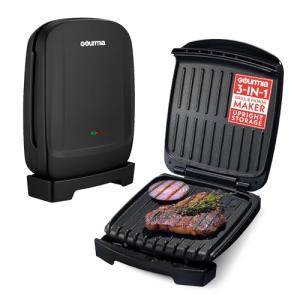
Meat and poultry: Burgers, chicken breasts, pork chops, sausages, lamb cutlets, and even thicker steaks all work brilliantly. The dual heat locks in juices while creating a satisfying exterior sear. Steak typically takes between 4 and 8 minutes depending on thickness and your preferred doneness.
Fish and seafood: Salmon, tuna steaks, and even whole prawns cook quickly and evenly. The controlled heat prevents the overcooking that's easy to do in a pan.
Vegetables: Courgettes, peppers, asparagus, mushrooms, and aubergine all develop great colour and a slightly caramelised edge. Ideal as a quick side dish.
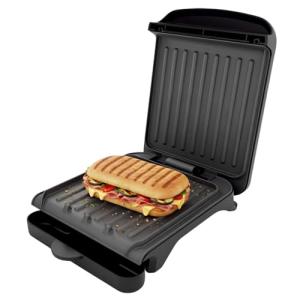
Sandwiches and wraps: The original use case, and still one of the best. Paninis, toasties, quesadillas, flatbreads, and breakfast burritos all come out with a satisfying crisp and melt without needing butter on the outside.
Eggs and breakfast items: Some contact grills open flat into a full griddle surface, making them suitable for eggs, bacon, and even pancakes.
Key Features to Look For
Plate Type: Grooved vs. Flat
This is one of the most important decisions you'll make when choosing a contact grill.
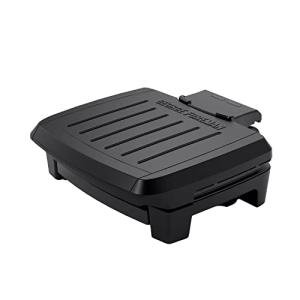
Grooved plates have raised ridges on both surfaces. They create those satisfying dark grill marks on your food, add visual appeal, and are ideal for meats and sandwiches where you want that classic grilled look. The ridges also allow fat to drain away more efficiently.
Flat plates act more like a griddle — smooth, even heat across the entire surface. They're better for delicate proteins like fish, for foods where you want an all-over golden crust rather than char marks, and for cleanup, since there are no ridges to scrub.
Combination models offer one grooved plate and one flat plate, or allow you to swap plates altogether. If your cooking is varied, this flexibility is worth paying for.
Removable vs. Fixed Plates
Removable plates are a genuine quality-of-life upgrade. Being able to pull the grill plates off and wash them in a dishwasher makes cleanup dramatically faster and more thorough. Fixed plates need to be wiped down once the unit has cooled — not difficult, but more time-consuming and less hygienic over time.
If you cook on your contact grill regularly, removable dishwasher-safe plates are worth prioritising.
Temperature Control
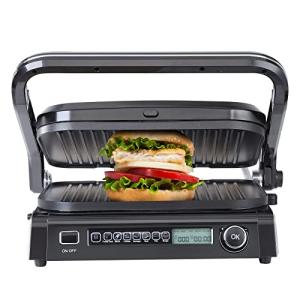
Basic models have a single heat indicator light — it either is or isn't hot enough to cook. Mid-range and better models offer adjustable temperature settings, typically with low, medium, high, and max settings. The best models include a digital thermostat and timer, letting you dial in precise temperatures and set an automatic cutoff.
For casual cooking, adjustable dial settings are perfectly adequate. If you want to cook different types of food confidently and consistently, a digital control panel gives you more control.
Hinge Design and Floating Lid
A fixed hinge works fine for thin foods like sandwiches, but if you want to cook a thick burger or a generous chicken breast, you need a floating hinge — one that adjusts upward to accommodate the height of your food rather than crushing it flat. Look for models that specify at least a 1-inch or adjustable hinge clearance.
Plate Coating: Non-Stick vs. Ceramic
Traditional non-stick (PTFE) coatings are common and work well, but they can scratch over time and may degrade at very high temperatures. Ceramic coatings have become increasingly popular as an alternative — they're typically more durable, stain and fade resistant, and free from PTFE and PFOA. Ceramic-coated plates are also often dishwasher safe, which is a practical bonus.
Size and Cooking Surface
Contact grills vary significantly in cooking area. A compact model might fit two to four slices of sandwich bread side by side, while a larger model can handle four or five burger patties simultaneously. Think realistically about who you're cooking for most often:
- Cooking for one or two: A compact model is ideal. It heats up faster, takes up less space, and is easier to store.
- Family cooking: Look for a larger cooking surface, typically in the 200–300 square centimetre range.
- Entertaining: A double-headed or extra-large model will save you from cooking in multiple batches.
Understanding Power Output
Wattage determines how quickly a contact grill heats up and how well it maintains temperature when you add cold food. Most household models sit between 1,200W and 2,000W. Higher wattage isn't always better — but underpowered models can struggle to recover heat quickly between batches, resulting in longer cook times and uneven results. For regular cooking, 1,500W–1,800W is a solid, practical range.
Smart Features Worth Considering
Newer models in the mid-to-high price range increasingly include digital features that used to be reserved for professional equipment. Programmable presets for common foods (chicken, steak, panini), integrated timers with audible alerts, and even Bluetooth or Wi-Fi connectivity for monitoring and control are all available now. These features aren't essential for most home cooks, but they do reduce guesswork and make it easier to cook more confidently without standing over the machine.
Cleaning and Maintenance
Keeping a contact grill clean is straightforward, but the effort involved depends heavily on the model.
With removable plates: Simply detach the plates once the grill has cooled slightly and place them in the dishwasher, or wash by hand with warm soapy water. The body of the unit just needs a wipe-down.
With fixed plates: Allow the grill to cool completely before cleaning. Use a damp sponge or cloth to wipe down the grill surface. Most come with a small cleaning brush or scraper to clear food from between the ridges. Never submerge the unit in water.
Drip trays: Empty and clean these after every use to prevent grease buildup and potential odours. Most are dishwasher safe.
Regular cleaning not only extends the life of your contact grill — it keeps the non-stick or ceramic coating performing well for longer.
Who Should Buy a Contact Grill?
Contact grills aren't for everyone, but they're ideal for a wide range of people:
- Busy weeknight cooks who want fast, healthy meals without a lot of fuss
- Flat or apartment dwellers who can't use an outdoor grill
- Health-conscious eaters who want lower-fat cooking without sacrificing flavour
- Families looking for a quicker alternative to the oven for chicken, burgers, or fish
- Anyone who loves a good panini and is tired of pressing it with a pan
If you primarily cook large cuts of meat low and slow, or if you're committed to outdoor grilling with charcoal or gas, a contact grill won't replace what you already love. But as a fast, practical second option for everyday cooking, it's hard to beat.
Making the Right Choice
The best contact grill for you comes down to a few simple questions: How many people are you usually cooking for? Do you want the classic grill mark look, or a more even golden sear? How important is quick cleanup? And do you want manual controls or digital precision?
Spend a little time thinking through those answers before you browse, and you'll immediately narrow the field. At every price point, there are solid options that deliver genuinely great results — because at its core, a contact grill is a brilliantly simple concept: two heated surfaces, food in the middle, and dinner on the table in minutes.