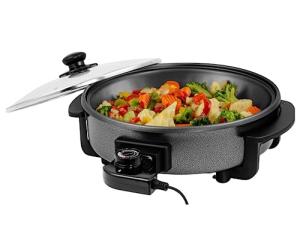
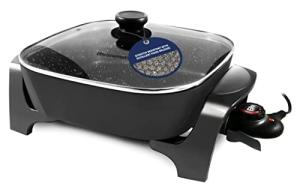
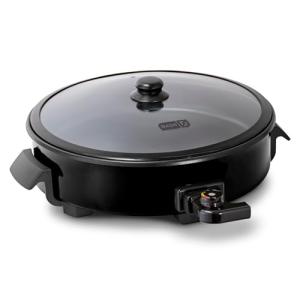
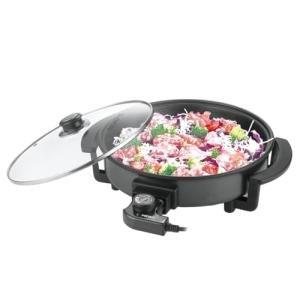
What Is an Electric Skillet?
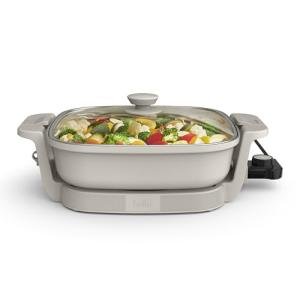
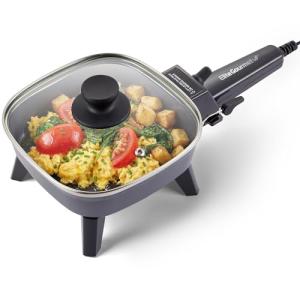
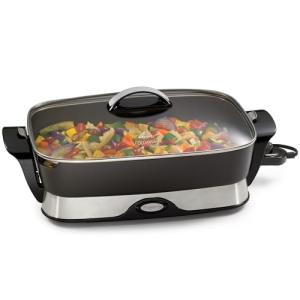
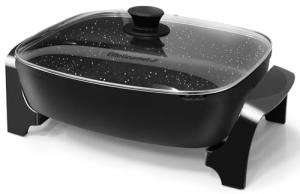
At its core, an electric skillet is a self-contained cooking surface with its own built-in heating element and thermostat. You plug it into an outlet, set your temperature, and cook — no stovetop required. Most models are a few inches deep with a snug-fitting lid, which means they can do a lot more than just fry. Think of it as a portable, flat-bottomed oven and frying pan rolled into one.
The thermostat is what really sets electric skillets apart from a regular pan sitting on a burner. Stovetop heat is notoriously inconsistent — you're always nudging the dial up or down, trying to find that sweet spot. An electric skillet maintains your target temperature with much more reliability. That consistency is why pancakes come out the same golden-brown color across the entire batch, and why a slow-braised dish doesn't suddenly scorch on the bottom when you look away for two minutes.
Why People Love Them: Real Benefits for Real Cooks
Extra Cooking Surface When You Need It Most
One of the most practical reasons people reach for an electric skillet is simple: they need more cooking real estate. Holiday meals are the obvious example — when your stovetop has four burners already occupied and you still need to cook the gravy, warm the rolls, and keep the green beans from going cold, an electric skillet becomes an absolute lifesaver. But it's not just for special occasions. On a regular weeknight, having a second cooking surface means you can prep two things simultaneously without any juggling.
True Portability
Electric skillets go where stovetops can't. Camping trips, tailgates, potlucks, vacation rental kitchens with subpar cookware — if there's an outlet nearby, you're cooking. Smaller models are particularly popular for dorm rooms, RVs, and small apartments where counter space is limited but the desire to cook real food is not. They also make excellent additions to outdoor entertaining setups, where extension cords and a skillet can transform a patio into a full cooking station.
Even, Predictable Heat
Ask anyone who bakes pancakes regularly about their biggest frustration with stovetop cooking, and you'll hear a lot about hot spots. Electric skillets largely eliminate this problem. The heating element runs across the entire base of the pan, which means the temperature stays consistent from edge to edge. This matters enormously for things like frying chicken (where uneven heat leads to unevenly cooked meat), cooking large batches of eggs, or searing a steak — you want the same heat across the whole surface, not a ring of scorching around the center with cooler zones on the outside.
Doubles as a Serving Dish
Many electric skillets are attractive enough to go straight from the counter to the table. With the keep-warm setting engaged, your food stays at the right temperature while everyone serves themselves — no transferring to a warming tray, no second dish to wash. This is a particularly underrated feature for brunch gatherings or buffet-style dinners where you want everything ready and warm at the same time.
What to Look for When Buying an Electric Skillet
Size: Match It to Your Household
This is the first decision to make, and it's worth thinking through carefully. Electric skillets are typically measured by the length of their cooking surface, and sizes range from compact 11-inch round models all the way up to 18-inch rectangular pans.
For one or two people, an 11 to 12-inch skillet is usually plenty — it's lighter, easier to store, and uses less electricity. A household of three to four people will generally be happier with something in the 13 to 15-inch range. For large families, frequent entertainers, or anyone who does serious batch cooking, a 16 to 18-inch model gives you the room you actually need.
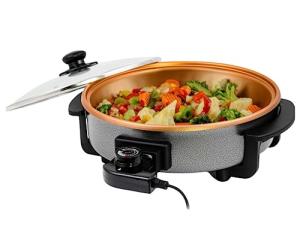
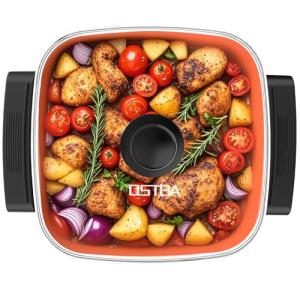
Shape matters too. Round skillets tend to be more compact overall, while rectangular and square designs offer more usable cooking area for the same footprint. If you're cooking a lot of proteins — chicken breasts, steaks, fish fillets — a rectangular shape lets you fit more pieces in a single layer without crowding.
Material and Coating: Where Performance Meets Safety
The body of most electric skillets is made from cast aluminum, which heats up quickly, distributes heat evenly, and stays lightweight. Some higher-end models use stainless steel, which is more durable and more attractive but can be slower to heat evenly without a proper coating.
The interior cooking surface is where things get more interesting. Non-stick coatings are almost universal in this category, and for good reason — they make cooking and cleanup significantly easier. Traditional PTFE-based coatings (commonly known as Teflon) remain popular and effective, but there's been a real shift toward ceramic coatings in recent years. Ceramic surfaces are free from PFAS, PFOA, and other synthetic chemicals that some cooks prefer to avoid. They also tend to be more scratch-resistant and heat up faster than older non-stick formulations. If you have concerns about cookware chemicals, look for models specifically labeled PFAS-free or PTFE-free — these are now widely available across all price ranges.
Temperature Range and Control
A good electric skillet should cover a wide temperature range — ideally from around 200°F up to 400°F or 450°F. The low end handles delicate tasks like keeping food warm, melting chocolate, or simmering a sauce that shouldn't boil. The high end is what you need for searing meat, stir-frying vegetables, or getting a proper crust on fried chicken.
Beyond the range itself, pay attention to how the temperature is controlled. Analog dials are the most common and generally reliable, though they can be imprecise — you're setting something between "medium" and "high" rather than an exact number. Digital controls offer more precision and are worth the extra cost if you cook recipes that require specific temperatures, like tempering chocolate or holding oil at exactly 350°F for frying.
The keep-warm setting deserves a special mention. It's not always included on budget models, but it's one of those features that you don't appreciate until you have it. Being able to finish cooking and then keep everything at serving temperature without overcooking it is genuinely useful — not just for entertaining, but for everyday meals when family members eat at different times.
The Lid
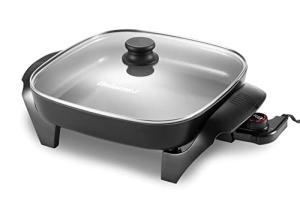
Most electric skillets come with a tempered glass lid, and this is far more useful than it might seem. Cooking with the lid on traps steam, which speeds up cooking time and keeps moisture in — essential for braised dishes, rice, and anything that would dry out under open heat. The glass lets you check on your food without releasing heat every time you want a peek. Look for lids with a vent hole (which prevents pressure from building up) and a cool-touch handle on top.
Cleanup: The Features That Save You Time
Nobody wants to scrub a skillet after dinner. The good news is that most modern electric skillets are designed with cleanup in mind. The most important feature here is a removable heating element or temperature probe — without this, you can't submerge the pan in water. With it, the cooking pan itself can typically be washed in the sink, and many are even dishwasher-safe.
Non-stick surfaces make a real difference here too. A well-maintained ceramic or PTFE coating means most food residue wipes away with a damp cloth, and even tougher messes release with a brief soak. If you're hard on cookware or tend to cook at high temperatures, look for a reinforced or scratch-resistant coating — these hold up better over time with regular use.
What Can You Actually Cook in an Electric Skillet?
The honest answer is: almost everything. People are sometimes surprised by just how versatile these appliances are. Here's a look at what they genuinely do well:
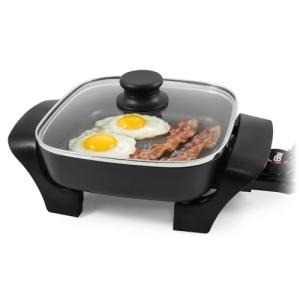
Breakfast foods are where electric skillets absolutely shine. Pancakes cook up evenly and golden without the scorching you sometimes get on a stovetop. Bacon, eggs, hash browns, French toast — a good electric skillet handles all of it with room to spare.
Proteins respond well to the consistent heat. Chicken breasts stay juicy because the temperature doesn't spike unexpectedly. Steaks get a solid sear when you push the heat up. Fish fillets cook through evenly without falling apart.
Stir-fries and sautéed vegetables work because the large cooking surface lets you spread everything out rather than crowding the pan. Less crowding means better browning and more evaporation, which is what you want.
Braises and stews can be started and finished in the same pan — sear your meat at high heat, lower the temperature, add your liquid and aromatics, put the lid on, and let it go low and slow.
Fried foods like french fries, donuts, or fried chicken benefit from the thermostat's ability to hold oil at a consistent temperature. When oil temperature drops or spikes during frying, the food absorbs more grease and cooks unevenly — the electric skillet helps avoid this.
Even baking is possible in a deep electric skillet, though it takes some practice. Casseroles, cornbread, brownies, and shakshuka-style egg dishes all work well in a covered skillet on a moderate heat setting.
Electric Skillet vs. Other Appliances: Where It Fits In
It's worth being clear about how an electric skillet compares to some alternatives. An electric griddle is flat and open — better for very large batches of pancakes or a big breakfast spread, but it can't contain liquid or steam the way a skillet with a lid can. An air fryer produces a crispier result for some fried foods but has a much smaller capacity and doesn't do sauces or braises at all. A slow cooker is hands-off and great for long cooks, but can't sear or fry.
The electric skillet doesn't replace any of these — it occupies its own space as the most genuinely all-purpose of the bunch, capable of doing a reasonable job across the widest range of cooking techniques.
Choosing Your Budget Range
Entry-level electric skillets in the $30–$60 range are functional and cover the basics well. They typically offer analog temperature control, standard non-stick coatings, and straightforward cleanup. They're a good choice if you want to try the category before committing.
Mid-range models from $60–$120 add better build quality, more precise temperature control, improved non-stick coatings (often PFAS-free ceramic), and features like digital displays or larger cooking surfaces. This is where most daily cooks will find the best balance of price and performance.
Premium models above $120 typically feature superior materials, more refined heat distribution, and design touches like foldaway handles for compact storage or multi-piece systems with interchangeable inserts. They're worth considering if you cook frequently and want an appliance built to last for years of heavy use.
Electric skillets are one of those kitchen tools that tends to surprise people once they actually start using one. The combination of consistent heat, a genuinely large cooking surface, portability, and easy cleanup makes them useful for a much wider range of cooking situations than most people initially expect. Whether you're outfitting a small apartment kitchen, adding capacity for holiday entertaining, or just looking for a more reliable way to cook your everyday meals, there's an electric skillet in this category that's a natural fit for how you cook. Take the time to match the size, coating, and temperature controls to your actual needs — and you'll likely find yourself reaching for it far more often than you thought.