What Is a Cookware Set?
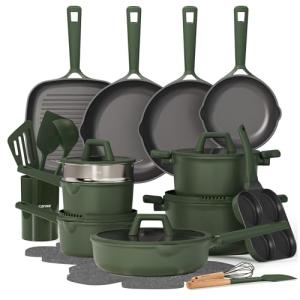
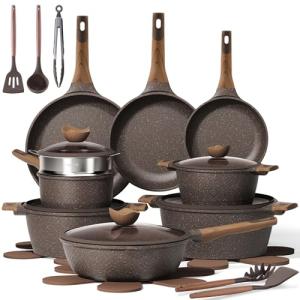
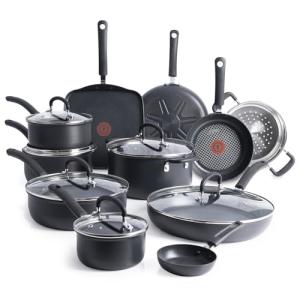
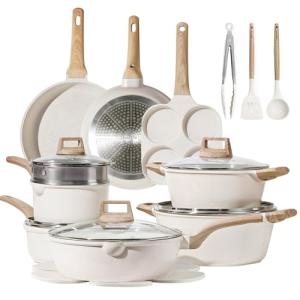
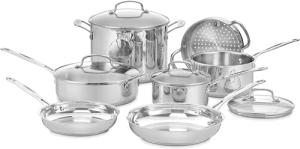
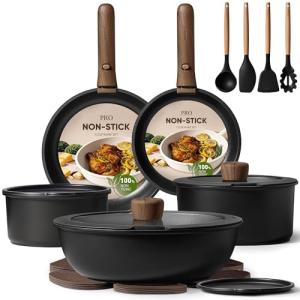
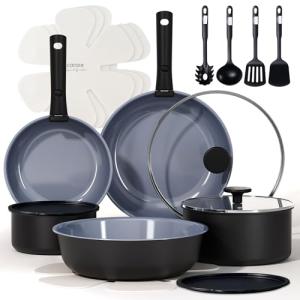
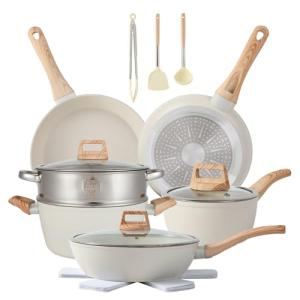
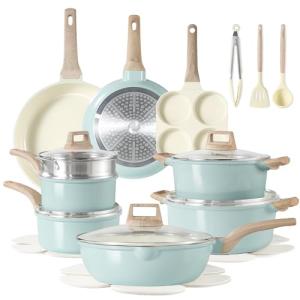
At its simplest, a cookware set is a bundled collection of pots, pans, and lids designed to work together — usually from the same manufacturer, in the same material and finish. Buying as a set typically saves money compared to purchasing each piece individually, and having matching pieces means uniform heat distribution, a consistent look on your stovetop, and lids that actually fit.
Most sets include a combination of the following:
- Frying pans or skillets (usually 8-inch, 10-inch, or 12-inch)
- Saucepans (1.5-quart and 2-quart are common)
- A sauté pan with straight sides and a lid
- A stockpot or Dutch oven for soups, pasta, and braises
- Lids — sometimes glass, sometimes stainless steel
Some sets come with 5 pieces. Others pack in 15. More pieces don't always mean more value — it depends entirely on what you'll actually use.
The Big Decision: What Material?
If there's one factor that will shape your cooking experience more than any other, it's the material your cookware is made from. Each has real strengths, real weaknesses, and real devotees. Here's an honest breakdown.
Stainless Steel
Stainless steel is the workhorse of professional kitchens, and for good reason. It's durable, non-reactive (meaning it won't affect the flavor of acidic foods like tomatoes or citrus), and handles high heat beautifully. A good stainless steel pan will last decades without warping or degrading.
The catch? Stainless steel is not naturally nonstick. Food will stick — especially proteins — until you learn to cook with it properly. The technique isn't difficult (preheat the pan, add oil, wait until it shimmers), but there is a learning curve. Once you've got it, you'll never go back. The browned bits that stick to the bottom of a stainless pan are actually flavor — when you deglaze with wine or broth, they lift right off and become the base of a sauce.
Look for stainless sets with an aluminum or copper core — often labeled "tri-ply" or "5-ply" — sandwiched between the steel layers. Pure stainless is a poor heat conductor; it's that inner core that makes the pan heat evenly. All-Clad, Made In, and Tramontina are reliable names in this category, ranging from budget-friendly to investment-grade.
Nonstick
Nonstick cookware is, genuinely, a pleasure to use. Eggs slide out cleanly, pancakes flip without drama, and cleanup is a matter of seconds. For everyday cooking — especially for anyone still building their kitchen confidence — nonstick is forgiving in all the right ways.
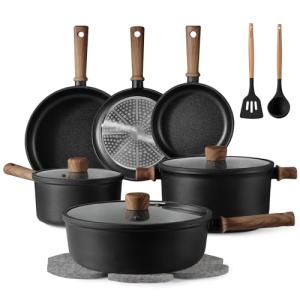
The tradeoff is longevity. Nonstick coatings wear down over time, particularly if you use metal utensils or put the pans in the dishwasher. Most nonstick pans need replacing every three to five years. They also have temperature limits — most traditional PTFE-based coatings (think Teflon) shouldn't be used on screaming-hot settings, which rules out searing.
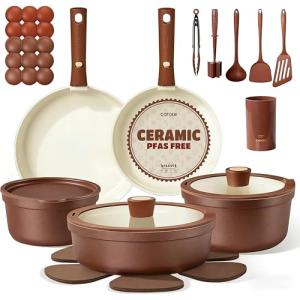
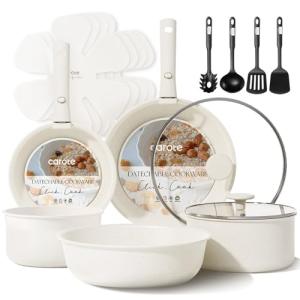
Ceramic nonstick has grown significantly in popularity as a PTFE-free alternative. It's generally more heat-tolerant and marketed as more environmentally friendly. The nonstick performance tends to degrade faster than traditional coatings, but newer formulations have improved considerably. Brands like GreenPan, Caraway, and Our Place have built loyal followings in this space.
Cast Iron
Cast iron is the original cookware, and it's still unmatched for certain things: searing steak, baking cornbread, frying chicken, cooking over a campfire. It holds heat better than any other material, which makes it ideal for high-heat, long-cook applications. A well-seasoned cast iron pan is naturally nonstick and will outlive everyone in your family.
The downsides are equally obvious. Cast iron is heavy — genuinely, back-strainingly heavy — and it requires specific care. It reacts with acidic foods and shouldn't be soaked or put in the dishwasher. It heats unevenly on glass or electric stovetops. And it takes time to reach cooking temperature.
Enameled cast iron (like Le Creuset or Lodge's enameled line) addresses the reactivity and maintenance issues by coating the iron with a glass-like enamel. It's easier to clean, safe for acidic dishes, and comes in beautiful colors. It's also expensive and still very heavy.
Carbon Steel
Often described as a lighter, more responsive sibling to cast iron, carbon steel has become something of a cult favorite among home cooks in recent years. It heats and cools more quickly than cast iron, making it easier to control. It develops a seasoning just like cast iron and becomes more nonstick with use.
Carbon steel pans are common in professional restaurant kitchens for exactly these reasons. They're not quite as intimidating as full cast iron but still require care and gradual seasoning. If you're drawn to cast iron but want something less physically demanding, carbon steel is worth a serious look.
Understanding the Numbers: Pieces and Ply
How Many Pieces Do You Actually Need?
Cookware set marketing loves big numbers. "12-piece set!" sounds impressively comprehensive. But look at what those 12 pieces actually are — often the count includes individual lids as separate pieces, or a small butter warmer you'll use twice a year.
For most households, a genuinely useful core set includes:
- One 10-inch or 12-inch skillet
- One 8-inch skillet or nonstick pan for eggs
- A 2-quart saucepan for sauces, grains, and reheating
- A 3.5-quart or 4-quart sauté pan with lid
- A 6-quart or 8-quart stockpot for pasta, soups, and large batches
That's five or six functional pieces, and it covers the vast majority of what happens in a real kitchen. Anything beyond that is nice to have but rarely essential for everyday cooking.
What Does "Ply" Mean?
You'll see terms like "tri-ply" and "5-ply" on stainless steel cookware. Ply refers to the number of bonded layers in the pan's construction. A tri-ply pan has three layers — typically stainless, aluminum, stainless — bonded together. A 5-ply pan adds more layers, often with additional aluminum or a copper disc.
More ply generally means better, more even heat distribution and better heat retention. It also means more weight and higher price. For most home cooks, tri-ply offers an excellent balance. If you're cooking at a high level and want to invest, 5-ply is worth considering — but it's not a necessity.
Compatibility: Induction, Oven, and Dishwasher
Before buying any cookware set, check three things:
Stovetop compatibility. Induction stovetops require magnetic materials — cast iron and most stainless steel work; aluminum and pure copper don't unless they have a magnetic base. If you have or plan to have an induction cooktop, verify the set is induction-compatible. It's usually listed clearly in the product specs.
Oven safety. Many recipes finish in the oven or require oven braising. Most stainless steel and cast iron cookware is fully oven-safe to 500°F or higher. Nonstick pans typically cap out lower — often around 350–400°F — and that limit drops if the handles are plastic. Check the maximum oven temperature before assuming a pan can make the transition.
Dishwasher safety. Technically, many pots and pans are labeled dishwasher-safe. Practically, dishwashers are hard on cookware — harsh detergents and high heat degrade nonstick coatings, strip seasoning from cast iron, and can cloud or discolor stainless steel over time. Handwashing is almost always recommended for longevity, but if dishwasher convenience matters to you, check explicitly whether the set supports it.
Budget: What Should You Expect to Spend?
Cookware sets span an enormous price range, and it's genuinely possible to cook well at every level.
Under $100 — You'll find aluminum or thin stainless sets, usually with nonstick coatings. Fine for basic cooking and a good starting point for someone just getting into the kitchen. Don't expect longevity from the nonstick coating.
$100–$300 — This is the sweet spot for most home cooks. Brands like Tramontina, T-fal, and Cuisinart offer solid tri-ply stainless and good-quality nonstick sets in this range. Quality jumps noticeably from the entry tier.
$300–$600 — You're getting into premium territory: thicker construction, better handles, improved heat distribution, and sets built to last a long time. Made In, Calphalon, and Anolon live in this range.
$600 and above — All-Clad, Le Creuset, and imported European brands. These are genuinely exceptional products with performance to match. Worth the investment if cooking is central to your life and you want equipment that outlasts fashion trends and regular replacement cycles.
What to Look for in Handles and Lids
It sounds secondary, but handle design matters enormously over the life of a pan. Riveted stainless handles are the most durable — they don't loosen, don't conduct heat badly, and won't degrade. Silicone-wrapped handles are comfortable but can discolor or degrade with heavy use. Welded handles eliminate the rivets (which can trap food) but are structurally less robust.
Lids can be glass or stainless. Glass lets you monitor what's happening without lifting the lid — genuinely useful when simmering or steaming. Stainless is more durable and better for oven use. Some sets include both types.
A Few Honest Recommendations for Different Cooks
If you're just starting out: A mid-range nonstick set paired with a single cast iron skillet will serve you better than any all-in-one set. The nonstick makes everyday cooking low-stress; the cast iron teaches you about high heat and searing.
If you're a confident home cook: Invest in a good tri-ply stainless set. Learn to cook with it properly, and it will repay you for years. Add a dedicated nonstick pan for eggs.
If you cook seriously and frequently: A 5-ply stainless set from a premium brand, supplemented with carbon steel for high-heat work and an enameled Dutch oven for braises, covers almost every cooking scenario at a professional level.
If you have specific dietary or lifestyle needs: Look at sets with PFAS-free nonstick coatings (ceramic), or consider a full cast iron collection if you prioritize chemical-free cooking and don't mind the weight.
Cookware is one of those purchases where quality genuinely pays off over time. A cheap set that warps, loses its coating, or heats unevenly doesn't save you money — it costs you in frustration and premature replacement. The best set for you isn't necessarily the most expensive or the most pieces; it's the one that matches your stovetop, your cooking style, your maintenance habits, and the budget you're working with right now.
Take your time, think about how you actually cook (not how you imagine you might someday cook), and choose accordingly. Your future self — standing at the stove with something smelling incredible — will thank you.