Pots and pans are the heart of any kitchen, and having the right ones can make cooking so much easier and more enjoyable. From non-stick skillets for those perfect pancakes to sturdy stockpots for hearty soups, there's something for every cooking style and dish. Explore our collection to find the perfect set that will help you whip up delicious meals effortlessly!
Pots and Pans
Discover the perfect pots and pans to elevate your cooking game and make meal prep a breeze
Product List
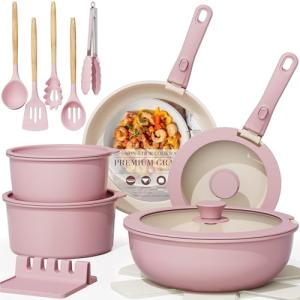
Astercook 21 Pcs Pots and Pans Non Stick Cera...
Product Review Score
4.76 out of 5 stars
194 reviews$99.99 $59.96
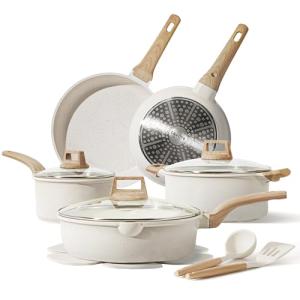
CAROTE 14 Pcs Pots and Pans Set Nonstick,Cook...
Product Review Score
4.58 out of 5 stars
52 reviews$106.99 $66.49
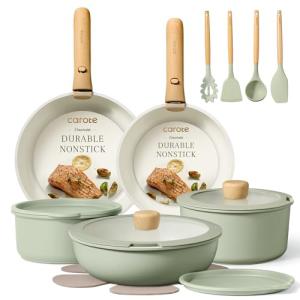
CAROTE Pots and Pans Set, Nonstick Cookware S...
Product Review Score
4.59 out of 5 stars
162 reviews$99.99 $59.99
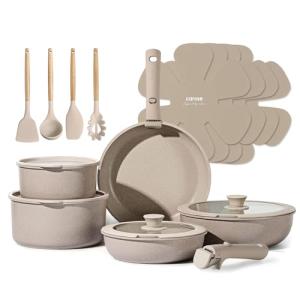
CAROTE 19pcs Pots and Pans Set Non Stick, Non...
Product Review Score
4.8 out of 5 stars
123 reviews$139.99 $59.97
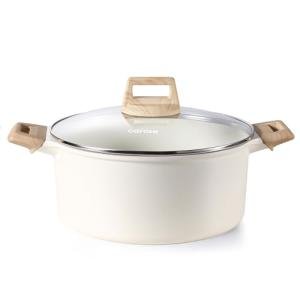
CAROTE 6 Qt Nonstick Stock Pot with Lid Soup...
Product Review Score
4.87 out of 5 stars
20 reviews$45.99 $29.99
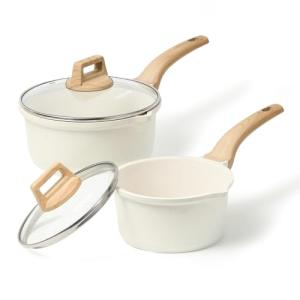
CAROTE 1.5Qt & 3.0Qt Sauce Pan Sets with Lid...
Product Review Score
4.95 out of 5 stars
126 reviews$49.99 $29.98
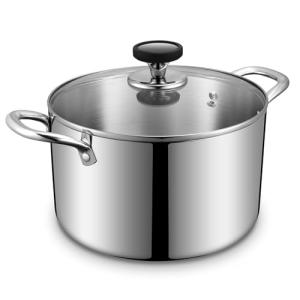
Tri-Ply Stainless Steel Stock Pot, 6.5 Quart...
Product Review Score
4.42 out of 5 stars
110 reviews$26.98 $21.99
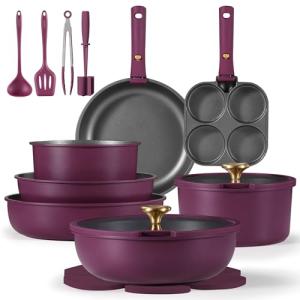
CAROTE 21pcs Pots and Pans Set, Nonstick Cook...
Product Review Score
4.11 out of 5 stars
165 reviews$159.99 $99.99
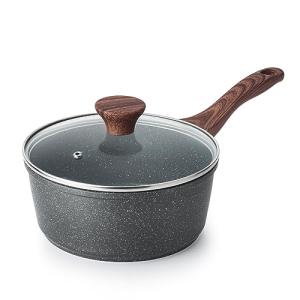
SENSARTE Nonstick Saucepan with Lid, 1.5 Quar...
Product Review Score
4.26 out of 5 stars
70 reviews$26.99 $19.98
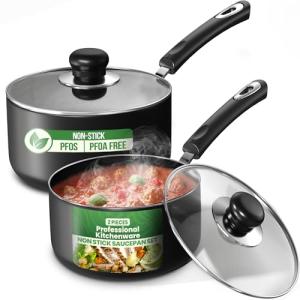
Utopia Kitchen Nonstick Saucepan Set, Cooking...
Product Review Score
4.33 out of 5 stars
172 reviews$32.99 $29.99
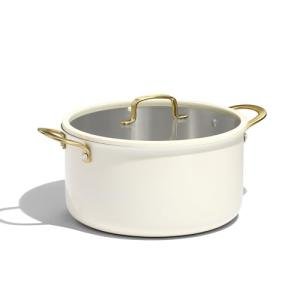
CAROTE 8QT Full Clad Tri Ply Stainless Steel...
Product Review Score
4.16 out of 5 stars
198 reviews$59.99 $36.99
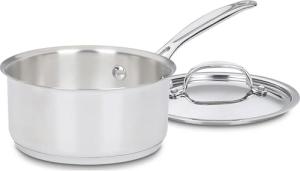
Cuisinart 1.5 Quart Sauce Pan with Cover, Sta...
Product Review Score
4.86 out of 5 stars
167 reviews$24.95 $17.95
Why Cookware Actually Matters
It's easy to underestimate how much your pots and pans shape the food on your plate. A thin, flimsy skillet creates hot spots that burn your onions in one patch and leave them raw in another. A pan with poor heat retention loses its temperature the moment food hits the surface, so instead of a proper sear you get a grey, steamed result. And a pot that reacts with acidic ingredients can leave a metallic taste that no amount of seasoning will fix.
Good cookware, on the other hand, gives you control. Heat distributes evenly. The pan responds predictably when you turn the flame up or down. Food releases cleanly, or sticks in exactly the way you want it to. You stop fighting your equipment and start actually cooking.
That's the difference — and it's a bigger deal than most people realize until they experience it firsthand.
The Main Materials: What They Mean for Your Cooking
Stainless Steel
Stainless steel is the workhorse of professional kitchens, and for good reason. It's durable, non-reactive, easy to clean, and capable of handling high heat without warping or degrading over time. A good stainless steel pan will outlast almost any other cookware if you treat it reasonably well.
The key thing to understand is that stainless steel on its own isn't a great conductor of heat. Most quality stainless cookware solves this by sandwiching an aluminium or copper core between layers of steel — this is what manufacturers mean when they talk about "tri-ply" or "5-ply" construction. That core spreads heat evenly across the entire cooking surface, including up the sides of the pan.
Stainless steel is ideal for browning, deglazing, making pan sauces, boiling, and braising. It handles acidic foods like tomatoes and citrus without any issue. The trade-off is that food can stick if you don't get the technique right — the pan needs to be properly preheated, and a little fat goes a long way.
Cast Iron
Cast iron is one of the oldest materials in cooking, and it has survived centuries of kitchen evolution for good reason. It holds heat extraordinarily well — once it's hot, it stays hot. That makes it perfect for searing, frying, baking, and cooking anything that benefits from sustained, even heat.
A properly seasoned cast iron pan is naturally non-stick and gets better with every use. The seasoning — layers of polymerised oil baked into the surface — builds up over time, creating a smooth, protective coating that improves the pan's performance and protects it from rust.
Cast iron is heavy. There's no way around that. But if you're willing to handle the weight and give it a bit of care after washing (dry it thoroughly, apply a light coat of oil), a cast iron skillet or Dutch oven will reward you with decades of reliable service. Many people inherit cast iron from parents and grandparents, which says something about how long these pieces last.
Enamelled Cast Iron
Enamelled cast iron brings together the heat retention of cast iron with a smooth, non-reactive surface that requires almost no maintenance. The enamel coating means you don't need to season it, and you can cook acidic foods without worry. It's also visually striking — enamelled Dutch ovens and braisers come in rich colours that look as good on the table as they do on the stove.
The main use case is slow, low cooking: stews, braises, soups, and bread baking. An enamelled cast iron pot is perhaps the single most useful piece of cookware for anyone who enjoys cooking in that style. Just be aware that the enamel can chip if knocked or dropped, and most enamelled pieces shouldn't be used over very high heat.
Non-Stick
Non-stick pans have a coating — typically PTFE-based, though ceramic options exist — that prevents food from sticking without needing much fat. They're easy to use and easier to clean, which makes them genuinely valuable for certain tasks.
Where non-stick excels: eggs of every kind, delicate fish, pancakes, crêpes, and anything that tends to tear or cling. You don't need high heat for these jobs, which is fortunate, because high heat is where non-stick coatings struggle. Overheating degrades the surface over time, and even the best non-stick pan will eventually need replacing.
Use a non-stick pan for what it's good at, avoid metal utensils that scratch the coating, don't preheat it empty, and you'll get solid performance for several years.
Carbon Steel
Carbon steel sits somewhere between cast iron and stainless steel: lighter than cast iron but with similar heat properties, non-stick when seasoned but with a thinner, more responsive construction. Professional cooks love it — it's the material behind the classic French omelette pan and the wok.
Like cast iron, carbon steel requires seasoning and a little ongoing care. Unlike cast iron, it heats up and cools down faster, giving you more responsive control. If you're the kind of cook who adjusts heat constantly and appreciates a pan that follows your lead, carbon steel is worth exploring.
Copper
Copper is the most thermally responsive cooking material available — it heats up almost instantly and cools down just as quickly. For techniques that require precise, moment-to-moment control, nothing beats it. That's why copper has been the prestige choice in French professional kitchens for generations.
The practical downsides are real, though. Copper is expensive, requires regular polishing to maintain its appearance, and most copper pans are lined with tin or stainless steel to prevent the reactive copper from coming into contact with food. Still, if you're drawn to cooking as a craft and you want the very best tool for delicate sauces and temperature-sensitive work, quality copper cookware delivers an experience nothing else quite matches.
Essential Pieces: What to Actually Buy
The Skillet (or Frying Pan)
If you could only own one piece of cookware, it would be a skillet. A 10 to 12-inch skillet covers the vast majority of everyday cooking: sautéing vegetables, browning meat, cooking eggs, making pan sauces, toasting spices, finishing dishes in the oven. It does almost everything.
Most cooks end up with two: a stainless steel or cast iron skillet for high-heat searing and oven work, and a non-stick skillet specifically for eggs and delicate proteins. That combination covers almost everything a home cook needs.
The Saucepan
A 2 to 3-quart saucepan is another staple. This is your go-to for boiling water for smaller amounts, cooking grains and pasta sides, heating liquids, making sauces, and warming leftovers. A saucepan with a tight-fitting lid and a comfortable, stay-cool handle is something you'll reach for almost every day.
The Stock Pot
For pasta, soups, stocks, and cooking for a crowd, a large pot — typically 8 quarts or more — is essential. Stainless steel is the standard choice here. You want good handles that can hold the weight of a full pot, and a lid that fits properly. A stock pot is also useful for blanching vegetables, boiling corn on the cob, and any cooking job that simply needs volume.
The Dutch Oven
A Dutch oven — whether bare cast iron or enamelled — is the most versatile large vessel you can own. It goes from stovetop to oven without a second thought. You can brown meat in it, build a braise, simmer a soup, bake bread, fry in it, or make a pot of chilli that feeds eight people. A good Dutch oven in the 5 to 7-quart range handles almost any batch cooking situation you can imagine.
The Sauté Pan
A sauté pan looks like a skillet but with straight, taller sides. That design makes it better for cooking with liquids — it keeps splashing to a minimum and gives you more surface area for browning without losing liquid out the sides. It's also brilliant for shallow poaching, cooking chicken pieces with a sauce, or making dishes that start with a sear and finish with a long simmer.
The Small Saucepan or Butter Warmer
A small 1-quart saucepan or butter warmer is the piece most often overlooked, and then constantly reached for once you own one. Melting butter, warming cream, making small quantities of sauce, poaching a single egg, heating up a portion of soup — a small pan handles all of it with less waste and easier cleaning than dragging out a larger vessel.
Building a Set vs. Buying Individual Pieces
Cookware sets can offer good value, and they give your kitchen a cohesive, organised look. But the honest truth is that most sets include pieces you'll rarely use alongside the pieces you'll use daily. A 10-piece set might give you three saucepans of slightly different sizes when you really only need one or two.
The smarter approach for most people is to buy individual pieces based on how they actually cook. Start with the essentials — a skillet, a saucepan, a stock pot — and add from there as specific needs arise. Spend more on the pieces you use every day and less on the ones that come out occasionally.
Caring for Your Cookware
Good pans last a long time when treated with a little basic care. Stainless steel is the most forgiving — it tolerates the dishwasher, though hand washing keeps it looking better longer. Cast iron and carbon steel should never go in the dishwasher; they need to be dried promptly and oiled lightly to prevent rust. Enamelled cast iron is dishwasher-safe but usually better off hand-washed to protect the enamel. Non-stick pans should always be hand washed with a soft sponge.
Avoid extreme temperature shocks — moving a very hot pan directly into cold water can warp the base over time. Use wooden, silicone, or nylon utensils in non-stick pans. Store pans without stacking them directly against each other if possible, or use pan protectors to prevent scratching.
Pots and pans are one of the most personal parts of any kitchen. The right set depends on what you cook, how often you cook it, and how much care you're willing to put into maintaining your equipment. A cast iron devotee and a non-stick convert can both be right — they're just cooking differently.
What matters is choosing well for your kitchen, understanding what each material and shape does best, and investing in quality where it counts most. The best cookware isn't necessarily the most expensive — it's the stuff you reach for without thinking, the pans that feel right in your hand and do exactly what you need them to do.
Get that right, and everything you make will be better for it.