What Actually Makes a Bread Knife a Bread Knife
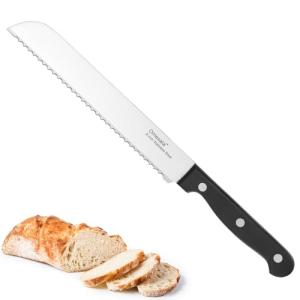
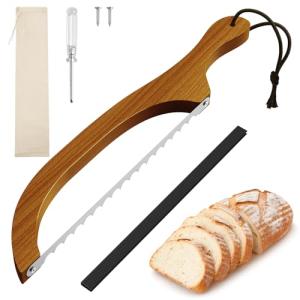
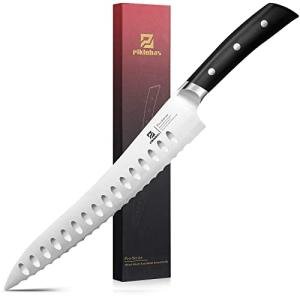
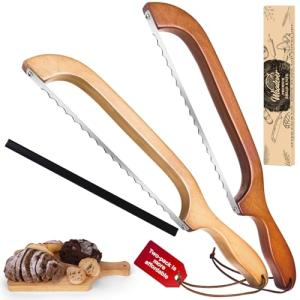
The defining feature is the serrated edge — a long row of teeth that works like a fine saw rather than a straight blade pressing down. That sawing action is what allows the knife to grip and cut through a hard, crackling crust without transferring pressure to the soft crumb inside. A straight-edge blade, no matter how sharp, tends to push down before it cuts through, compressing the loaf. The serrated edge skips that problem entirely.
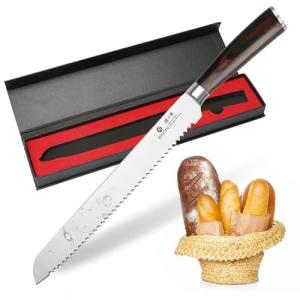
The blade is also notably long — typically between 8 and 10 inches — and for good reason. Think of it like a handsaw: you want the blade to be longer than the thing you're cutting, so you can use long, smooth strokes without the tip getting buried in the loaf. A short blade forces you to use choppy, awkward cuts that tear the bread rather than slice it.
Most bread knives also keep the blade relatively thin and slightly flexible, which helps the knife glide through the interior of the loaf without dragging. And you'll often notice that the tip is rounded or blunt rather than pointed — this is a deliberate safety and performance choice that helps the knife exit the bread cleanly at the end of each stroke.
The Types of Bread Knives You'll Find
Standard Serrated Bread Knives
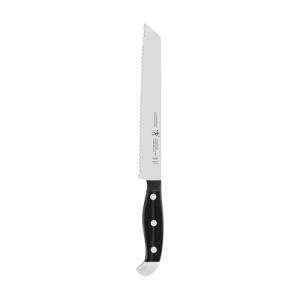
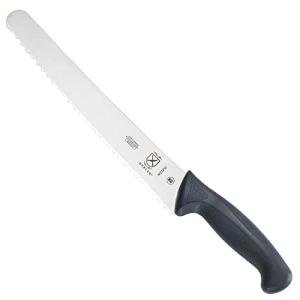
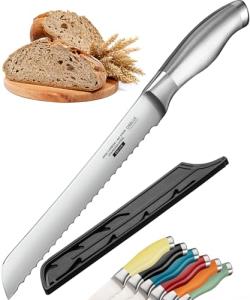
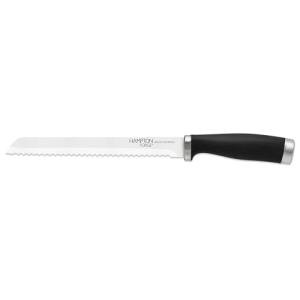
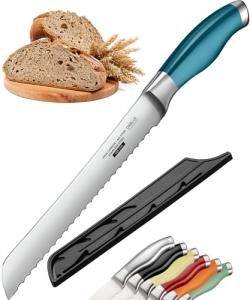
This is the classic — what most people picture when they think of a bread knife. A long blade with a consistent row of serrated teeth running its full length. The serrations do all the heavy lifting, gripping the crust and sawing through to the soft interior cleanly. This style handles virtually every bread type well: sourdough, baguettes, sandwich loaves, rye, pumpernickel, brioche, challah.
Within this category, the shape and size of the serrations matter more than most people realize. Knives with deeper, more pointed serrations tend to tear bread rather than slice it, leaving the cut edge ragged and uneven. Knives with moderately shallow serrations that have slightly rounded points produce much cleaner slices. If you're buying your first quality bread knife, look for this more rounded serration profile — it's the detail that separates a frustrating knife from a genuinely great one.
Offset Handle Bread Knives
An offset knife has a handle that sits higher than the blade, creating a bend or "step" between the two. This design gives your knuckles clearance when you're cutting all the way through a loaf sitting on a flat cutting board. Without that clearance, your hand hits the board before the blade finishes the cut, forcing you to tilt the knife awkwardly. If you do a lot of bread slicing — especially with wider, taller loaves — an offset design significantly reduces hand fatigue and makes the whole process more comfortable.
Double-Serrated Bread Knives
Less common but worth knowing about, especially for anyone working in a bakery or slicing large volumes of bread daily. Double-serrated knives have two rows of serrations, which gives the blade extra grip on tough crusts and produces very consistent, clean cuts. They're a favorite in professional bakery environments where precision matters across dozens of loaves.
Wavy Edge Bread Knives
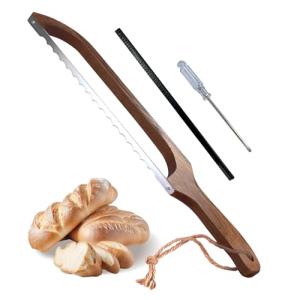
Instead of distinct pointed serrations, some bread knives use a wavy or scalloped edge — a gentler, more continuous undulation along the blade. These are particularly well-suited to softer breads and baked goods like cakes, where a more aggressive serration would tear delicate crumb structures. They're also easier to sharpen than traditional serrated knives because the geometry is simpler.
Blade Length: Why It Matters More Than You Think
If you take away one piece of practical advice from this guide, it's this: don't buy a bread knife shorter than 9 inches. Knives in the 8-inch range can feel adequate at first, but they start to show their limitations when you're working with larger loaves — wide sourdough boules, full-sized sandwich loaves, or any artisan bread with a generous diameter.
A 9 to 10.5-inch blade is the sweet spot for most home cooks. It's long enough to handle wide loaves in smooth, single strokes without the tip getting stuck partway through the cut. It also makes slicing tasks like cutting a cantaloupe in half or portioning a large layer cake dramatically easier, because you're not fighting the geometry of the food versus the length of your blade.
For sourdough enthusiasts specifically, a 10-inch blade is genuinely worth considering. Sourdough boules tend to be wide, and the combination of a hard crust and an open, airy crumb means any awkward cutting motion shows up immediately in a messy, torn slice. A longer blade lets you use the long, gentle sawing strokes that produce those clean, even cuts.
Blade Materials: Steel Is Not Just Steel
Stainless Steel
The most common blade material, and for good reason. Stainless steel resists rust and corrosion, is easy to maintain, and holds up well to regular use and hand washing. It's forgiving in terms of care and a solid choice for most home kitchens.
High-Carbon Stainless Steel
A step up from standard stainless, high-carbon stainless steel is harder and holds a sharper edge for longer. It's the material of choice for most mid-range to premium bread knives. German knife brands like Wüsthof and Japanese brands like Shun both make heavy use of high-carbon stainless in their bread knife lines, and it shows in the performance.
Carbon Steel
Sharper than stainless and capable of holding a very fine edge, but more demanding to care for. Carbon steel can rust and discolor if left wet or exposed to acidic foods for extended periods. It's an excellent choice for someone who enjoys the ritual of knife maintenance and wants maximum cutting performance, but not the right pick for a knife you want to wash and put away without much thought.
Handle Design and Ergonomics
A bread knife handle gets less attention than the blade, but it matters enormously in actual use. Bread slicing is a repetitive motion — you're drawing the knife back and forth across the loaf, often with a fair bit of force needed to break through the crust on a well-baked artisan loaf. A handle that doesn't fit your hand well, or that slips when your hands are slightly damp, turns what should be a satisfying task into an annoying and potentially unsafe one.
Look for handles that offer a secure, comfortable grip without requiring you to squeeze hard to keep control. Textured or contoured handles generally outperform smooth ones for this purpose. Materials like pakkawood (a resin-impregnated wood composite), rubberized grips, and high-quality polymers all work well. Full-tang construction — where the blade steel runs all the way through the handle — adds both balance and durability.
Weight and balance matter too. A bread knife should feel substantial enough to do the work but not so heavy that your wrist tires after a few loaves. When you hold a well-balanced bread knife, the cutting motion should feel almost effortless — the knife does the work, and you're just guiding it.
Beyond Bread: The Surprisingly Versatile Bread Knife
Here's something that surprises a lot of people: a bread knife is one of the most versatile knives in the kitchen, and not just for bread. The same serrated edge that handles a sourdough crust without crushing the crumb is also perfect for tomatoes — the teeth grip the skin and cut through without squashing the interior, which is something even a sharp straight-edge blade struggles with. Slicing a ripe beefsteak tomato with a good bread knife produces clean, thin rounds that a chef's knife would turn into a mess.
Bread knives also handle cakes beautifully, particularly layered cakes that need to be cut cleanly through frosting and soft sponge without dragging. Large fruit like melons and pineapples — foods with tough exteriors and soft interiors — are natural territory for a bread knife as well. And for anyone who bakes, a bread knife is the tool of choice for splitting cake layers horizontally, a task that requires a long, steady cutting stroke that most other knives simply can't manage.
Caring for Your Bread Knife
Serrated knives have a reputation for being difficult to maintain, and there's a kernel of truth to it — sharpening a serrated blade is not the same as sharpening a straight edge, and you can't just run it through a standard pull-through sharpener. But the good news is that serrated blades actually stay sharp for much longer than straight-edge knives, precisely because the teeth do the cutting work and the edge between the teeth rarely contacts the cutting board.
When a serrated bread knife does eventually need sharpening, the best approach is either a specialized sharpening rod sized for the serrations, or sending it back to the manufacturer. Many premium knife brands offer sharpening services, sometimes for free or at very low cost, as part of their product support.
In terms of daily care, the rules are simple. Hand wash and dry your bread knife rather than running it through the dishwasher — the heat and detergent cycles in dishwashers are hard on both blades and handles over time. Store it in a knife block, on a magnetic strip, or in a blade guard rather than loose in a drawer, where the serrations can get dinged and dulled from contact with other utensils.
How to Choose the Right Bread Knife for You
The right bread knife depends on what you're mostly cutting and how much you're willing to spend.
For most home cooks, a 9 to 10-inch serrated bread knife in high-carbon stainless steel with a comfortable, non-slip handle is the perfect answer. You don't need to spend a fortune — there are genuinely excellent bread knives in the $20 to $60 range that outperform knives costing several times more. The Victorinox Fibrox and Mercer Culinary lines are consistently praised by both professional testers and home bakers for their combination of performance and value.
If you bake frequently — especially artisan sourdoughs with thick, hard crusts — consider going to a 10-inch blade and prioritizing a serration pattern with rounded, not pointed, teeth. The extra blade length makes a real difference with wider loaves, and the rounded serrations produce cleaner slices.
For a premium experience, Japanese-made bread knives from brands like Shun, Kai, and Misono offer exceptional sharpness and beautiful craftsmanship. These knives are often sharpened at a more acute angle than their German counterparts, which means they slice with noticeably less effort. They're worth the investment if you'll use them regularly and are willing to care for them properly.
If you do heavy-volume slicing — running a small bakery, catering, or hosting frequently — an offset handle design is worth serious consideration. The knuckle clearance it provides becomes increasingly valuable as the number of loaves you slice in a session climbs.
A bread knife is one of the easiest kitchen upgrades you can make. It's a specialized tool, yes, but it does its specific job so much better than the alternatives that once you have a good one, going back feels genuinely impossible. Crusty sourdoughs, soft sandwich loaves, ripe tomatoes, fresh-baked cakes — all of them become easier, neater, and more satisfying to cut.
If you've been getting by with a dull chef's knife or an undersized serrated knife you grabbed years ago, it's time. The right bread knife won't just change how you slice bread. It might change how much you enjoy making it in the first place.