Keeping your pantry organized can make meal prep a breeze and help you save time and money. With the right pantry organizers, you can easily find what you need without digging through clutter. From stackable bins to pull-out racks, these solutions transform your pantry into a neat and inviting space.
Pantry Organizers
Maximize your kitchen space and keep your essentials neatly stored and easy to find
Product List
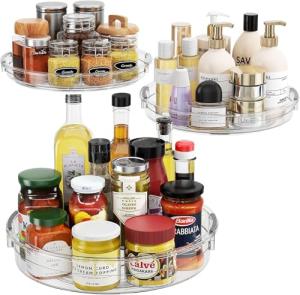
LAMU 3 Pack Lazy Susan Organizer Turntable fo...
Product Review Score
4.41 out of 5 stars
7 reviews$25.99 $19.99
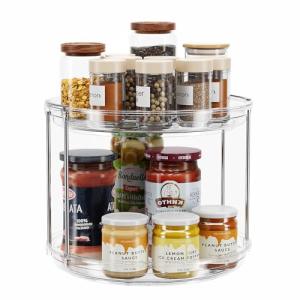
LAMU 2 Tier Lazy Susan Turntable Organizer 9....
Product Review Score
4.46 out of 5 stars
17 reviews$13.99 $8.99
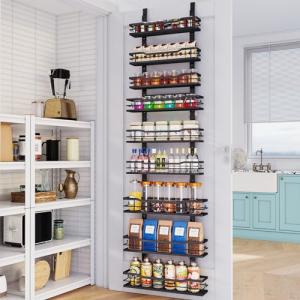
Eastherry Over The Door Pantry Organizer,9-T...
Product Review Score
4.68 out of 5 stars
57 reviews$53.95 $39.99
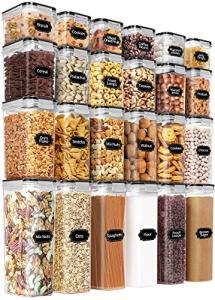
PRAKI Airtight Food Storage Containers Set wi...
Product Review Score
4.71 out of 5 stars
68 reviews$37.49 $29.99
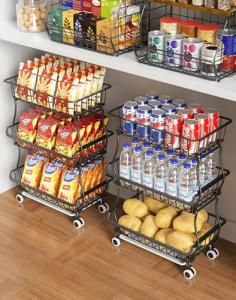
OKZEST 3-Tier Rolling Pantry Floor Organizer...
Product Review Score
4.22 out of 5 stars
176 reviews$35.99
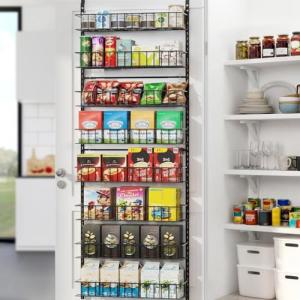
ElegantArray 8-Tier Pantry Door Oragnizer, Ov...
Product Review Score
4.43 out of 5 stars
21 reviews$39.99 $26.97
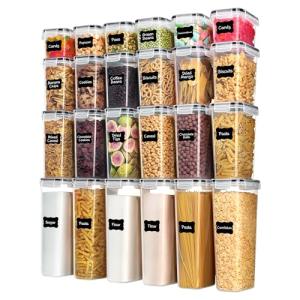
Airtight Food Storage Containers with Lids, V...
Product Review Score
4.71 out of 5 stars
182 reviews$36.99 $29.99
Types of Pantry Organizers: What's Out There
The pantry organizer category is broad, which is actually a good thing — it means there's a solution for every kind of pantry problem. Here's a breakdown of the main types you'll find.
Airtight Food Storage Containers
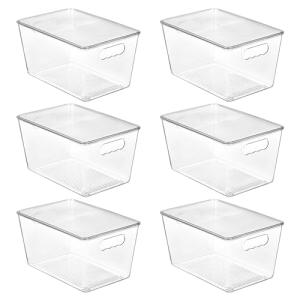
These are the workhorses of pantry organization. Airtight containers are designed to replace the original packaging of dry goods — flour, sugar, oats, pasta, rice, cereal, nuts, coffee, and more. By transferring these items out of their bags and boxes, you accomplish several things at once: you keep food fresher for longer, you can see exactly how much you have at a glance, and your shelves take on a clean, uniform look that's genuinely satisfying.
The two main materials are plastic and glass. Plastic containers are lightweight, budget-friendly, and shatter-proof — practical for busy households with kids. Look for BPA-free options to ensure safe food storage. Glass containers are heavier but feel more premium, don't hold onto stains or odors, and are safe to go from the pantry straight into the microwave or oven. Many people mix and match, using plastic for bulky staples and glass for baking supplies they reach for frequently.
When choosing airtight containers, pay attention to capacity. A standard bag of flour needs a larger container than a small bag of chia seeds. Many brands sell stackable sets in graduated sizes specifically designed to make the most of your shelf height.
Shelf Bins and Baskets
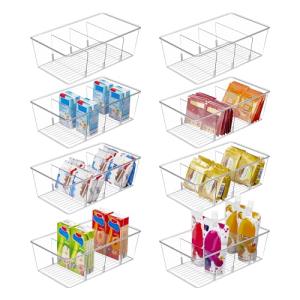
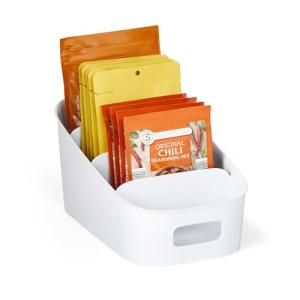
If airtight containers are for individual ingredients, shelf bins and baskets are for grouping whole categories of items together. A bin for snack bars. A basket for pasta. A section dedicated to breakfast cereals or baking supplies. This "zoning" approach is one of the most recommended strategies from professional organizers, and bins make it easy to maintain.
Clear plastic bins are popular because you can see exactly what's inside without picking anything up. Woven baskets and fabric bins add warmth and texture and work beautifully in open pantries or walk-ins where aesthetics matter. Structural bins that hold their shape — whether plastic or a stiffer woven material — work better for heavier items, while flexible baskets suit lighter snacks and packaged goods.
The key advantage of bins is portability. You can pull an entire bin off the shelf, grab what you need, and slide it back. That's far more practical than picking through individual items one by one.
Tiered Shelf Organizers and Risers
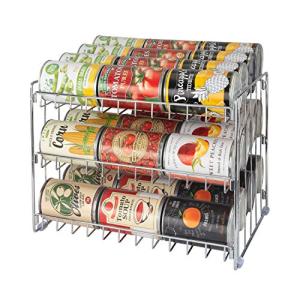
One of the most underused pantry resources is vertical space. A single flat shelf might hold one row of cans when it could hold three with a simple tiered riser. Shelf organizers and step risers stack items at different heights so nothing hides behind anything else. This is especially useful for canned goods, spice jars, and condiments where the front row tends to block everything behind it.
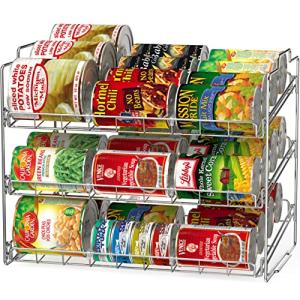
Tiered can organizers take this concept even further — some are designed as gravity-fed dispensers that roll cans toward the front automatically as you remove one. It sounds like a small thing until you've actually used one, and then it feels indispensable.
Pull-Out Drawers and Sliding Organizers
Deep pantry shelves are a blessing in terms of storage capacity and a nightmare in terms of accessibility. Anything pushed to the back essentially disappears. Pull-out drawers and sliding organizers solve this by allowing you to reach the full depth of a shelf without bending, stretching, or knocking things over.
These can range from simple plastic slide-out trays to more substantial rolling carts with multiple tiers. Some versions mount directly under a shelf to create extra storage in otherwise wasted space. If you have deep shelves and consistently lose track of what's at the back, this category of organizer may be the most impactful upgrade you can make.
Door and Wall Organizers
Pantry doors are prime real estate that most people ignore completely. Over-the-door organizers hang from the door itself and create an entirely new storage layer for spices, condiments, foil and wrap boxes, snacks, or cleaning supplies. They're particularly valuable in small kitchens where pantry space is tight and every inch matters.
Wall-mounted racks serve a similar purpose — a spice rack mounted to the inside pantry wall, a pegboard system for hanging tools and bags, or a narrow shelving unit mounted at an awkward corner angle. These solutions work with your space rather than fighting it.
Lazy Susans
The rotating tray — also called a Lazy Susan — is a classic for a reason. Mount one on a pantry shelf and suddenly the back corners of that shelf become fully accessible with a simple spin. Lazy Susans are particularly useful for spices, oils, vinegars, sauces, and condiments: items that tend to cluster in groups and get disorganized quickly. They come in single and double-tier versions and in materials ranging from plastic to bamboo to stainless steel.
Stackable and Modular Systems
For people who want a truly cohesive pantry setup, modular organizer systems offer matching pieces — bins, containers, drawers, and racks — designed to work together. These systems are more of an investment but pay off in both function and aesthetics. Everything fits together, stacks cleanly, and gives the pantry a unified, intentional look rather than the mismatched hodgepodge that accumulates when you buy pieces one at a time.
How to Choose the Right Pantry Organizers
There's no universal pantry organization solution because there's no universal pantry. The right products depend on your specific space, the way your household cooks and eats, and how much effort you want to put into maintenance. A few guiding questions can help narrow things down.
What's your pantry's biggest problem? If visibility is the issue — you can't see what you have — focus on clear containers and tiered risers. If accessibility is the problem — things get lost at the back of deep shelves — pull-out drawers will help most. If the pantry just feels chaotic and disorganized, shelf bins and a zoning system will create structure quickly.
How much space are you working with? Small pantries and single-cabinet setups benefit most from maximizing vertical space with risers, using door organizers, and keeping everything tightly categorized. Larger walk-in pantries offer more flexibility but also more opportunity for disorder — drawer systems and modular setups tend to work well here.
What's your maintenance style? If you want a system you can realistically maintain with minimal daily effort, simpler is better. A beautiful pantry with 40 matching labeled containers looks incredible but takes real time to keep up. Be honest about what you'll actually maintain, and choose accordingly.
Who else uses the pantry? Households with kids especially benefit from clear labeling, low-shelf bins for snacks kids can reach themselves, and systems that are intuitive enough for the whole family to follow. A system only one person understands will only stay organized for one person.
Materials, Durability, and What to Look For
Pantry organizers come in a range of materials, each with real trade-offs.
Plastic remains the most common material because it's affordable, lightweight, and available in virtually any size and shape. Clear plastic is particularly practical because visibility is half the battle. Look for BPA-free and food-safe designations, especially for containers that will hold dry goods directly.
Bamboo and wood bring warmth and a natural aesthetic that suits open pantries and exposed storage well. They're more decorative than utilitarian in most cases and tend to cost more, but they age beautifully and feel more substantial than plastic.
Stainless steel and wire work well for structural components — tiered racks, drawer frames, and wall-mounted systems that need to hold weight over time. Wire construction is breathable, easy to clean, and shows you what's stored at a glance.
Woven and fabric bins add texture and visual softness. They're best for lighter items and in pantries where aesthetics are a priority alongside function.
A Few Practical Tips Before You Buy
Start by pulling everything out of your pantry and doing a full inventory before purchasing any organizers. You'll inevitably find expired items to toss, and you'll get a much clearer picture of what categories of food you actually have and in what quantities. Buying bins before you know what's going in them often leads to mismatched sizes and wasted money.
Think in zones before you think in containers. Decide which categories of items belong together — breakfast, baking, snacks, canned goods, grains, condiments — and roughly where each zone should live on your shelves. Most-used items belong at eye level and within easy reach. Rarely used appliances and bulk backstock can live higher up or on the floor.
Labels are underrated. Even the simplest organization system holds up better over time when bins and containers are labeled. It makes it easy for other household members to put things back in the right place, and it keeps you honest about what goes where.
A well-organized pantry doesn't require a complete renovation or a massive budget. It requires the right combination of products, a clear sense of how your household actually uses the space, and a little time to set things up properly. Once that foundation is in place, maintaining it becomes genuinely easy — and every time you open that pantry door and find exactly what you're looking for in under five seconds, you'll appreciate the investment.