Every meal deserves a great plate. Whether you're serving up a feast or a quick snack, the right plate can make all the difference in how your food looks and feels. Check out our selection to find the perfect style and size that’ll make your meals pop!
Plates
Find the perfect plates to elevate your dining experience and make every meal special
Product List
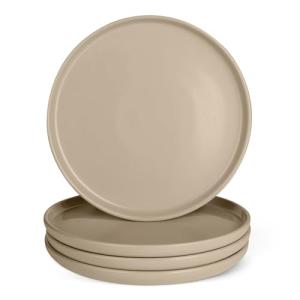
Amazon Basics Glazed Stoneware Dinner Plates,...
Product Review Score
4.43 out of 5 stars
167 reviews$21.59
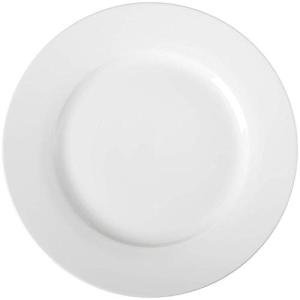
Amazon Basics 6-Piece White Dinner Plate Set,...
Product Review Score
4.47 out of 5 stars
77 reviews$24.15
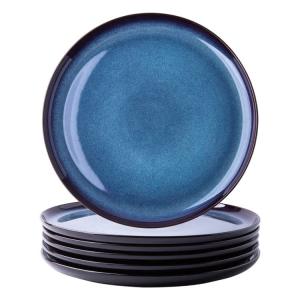
LERATIO Ceramic Dinner Plates Set of 6,10.5 I...
Product Review Score
4.59 out of 5 stars
10 reviews$49.95
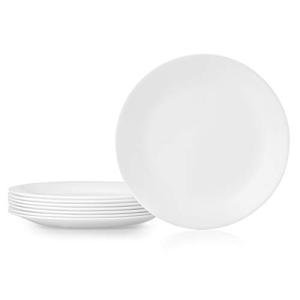
Corelle Vitrelle 8-Piece Dinner Plates Set Tr...
Product Review Score
4.39 out of 5 stars
36 reviews$39.99 $35.78
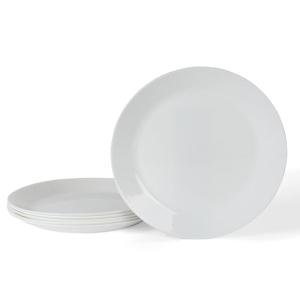
Martha Stewart Opalton 6-Piece 10-Inch Dinner...
Product Review Score
4.39 out of 5 stars
62 reviews$19.99
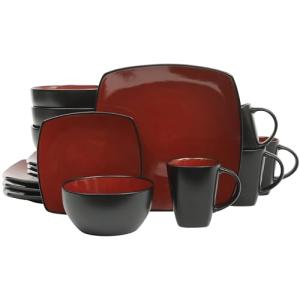
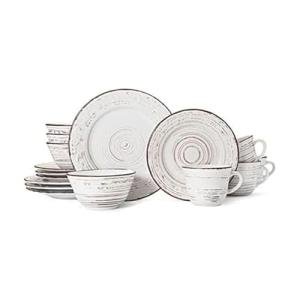
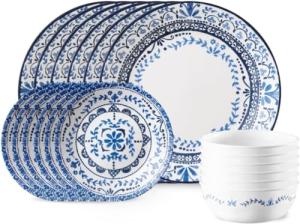
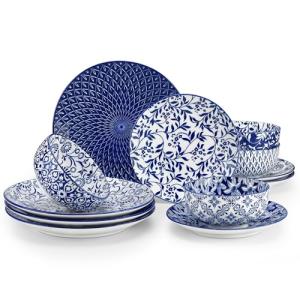
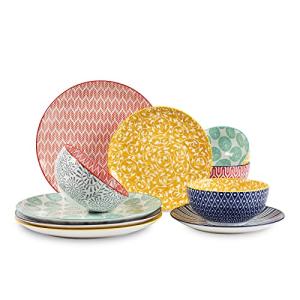
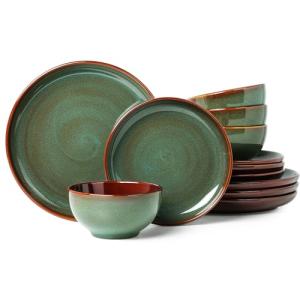
Materials: What Your Plate Is Made Of Matters
Porcelain and Bone China
Porcelain is the classic choice, and for good reason. It is fired at high temperatures to produce a dense, non-porous surface that resists staining, holds heat well, and has a luminous quality that makes food look genuinely better. Bone china — which traditionally incorporated bone ash into the clay — is even more refined: lighter, more translucent, and with a particular warmth to its white that ordinary porcelain can't quite match. Both are dishwasher safe in most cases, though gentle handling extends their life considerably.
If you care about the elegance of a table setting and want pieces that will last decades, porcelain and bone china are where to start.
Stoneware
Stoneware sits at the opposite end of the temperament spectrum. It is thicker, heavier, and has a natural, slightly textured quality that makes it feel grounded and honest. Its colour tends toward earthy tones — creams, greys, soft greens, warm browns — because of the minerals in the clay body. Stoneware holds heat extremely well, which matters when you're carrying a warm plate from the kitchen to the table. It chips less dramatically than fine china and has a relaxed character that suits everyday life beautifully.
A good stoneware plate doesn't pretend to be something it isn't. It's confident, tactile, and ages well.
Earthenware
Earthenware is the most ancient of the ceramic traditions and the most porous. It fires at lower temperatures, which means it tends to be more colourful and expressive — the vivid plates of Provence, the hand-painted majolica of Italy, the folk pottery traditions of virtually every culture on earth. It is a little more fragile than stoneware, more prone to chipping, and should usually be hand-washed to preserve its surface.
But there is a vitality to earthenware that other materials struggle to match. These plates have personality.
Melamine and Durable Composites
For outdoor dining, children's tables, or anywhere that breakage is a genuine concern, melamine and similar composite materials offer a practical solution that has improved significantly in recent years. Modern melamine can mimic the look of ceramic quite convincingly, comes in a vast range of colours and patterns, and is virtually indestructible under normal use. It is not microwave-safe and shouldn't be used with anything genuinely hot from the oven, but for al fresco summer meals or casual everyday use, it does the job with considerably less anxiety.
Plate Types: More Than Just "Dinner Plates"
A complete set of plates involves considerably more variety than most people realise when they first start building a kitchen.
Dinner plates are the centrepiece — typically 26 to 30 centimetres in diameter, large enough to hold a main course without crowding, and the piece that defines the look of a table setting more than any other.
Side plates and salad plates are smaller, generally 18 to 22 centimetres, and serve as workhorses for bread, salads, appetisers, and the occasional slice of cake that deserves its own space. Having a good set of these makes casual meals feel more considered without any extra effort.
Soup plates — sometimes called rimmed soup bowls — occupy a useful middle ground between a flat plate and a deep bowl. They are wide and shallow with a broad rim, designed to hold liquid dishes while still sitting elegantly in a formal setting. They are also surprisingly useful for pasta, risotto, and anything sauced.
Dessert plates are a luxury, but a pleasant one. Slightly smaller than a side plate, they signal that the meal has moved into a new chapter. Used well, they make even a simple tart or a scoop of good ice cream feel like a proper occasion.
Charger plates or presentation plates are purely decorative — large, often ornate plates placed under the dinner plate as a base layer. They add visual weight and formality to a table and are traditionally removed before the main course is served.
Size, Proportion, and Why They Matter
There is a quiet logic to plate sizing that most people intuit without thinking about it consciously. A piece of grilled fish on a plate that is far too large looks lost and sad. The same fish on a plate that is slightly too small looks cramped and careless. The right size frames the food in a way that feels balanced — not so much space that the plate overwhelms, not so little that the food is struggling for room.
Modern dining has trended toward larger plates in recent decades, partly driven by restaurant culture and partly because portion sizes have increased. A 28 or 30 centimetre dinner plate is now standard in many households. If you favour smaller, more composed portions — or simply have a table that doesn't have space to breathe with large plates — 26 centimetres is a more elegant choice that has fallen slightly out of fashion but deserves a revival.
For bowls-and-plates setups that are popular with casual cooking styles (think grain bowls, one-dish meals, pasta), a medium deep plate of about 24 centimetres often does the work of both a plate and a bowl and is worth considering as your everyday workhorse.
Choosing a Style: The Honest Conversation
Matching Sets vs. Curated Collections
There are two schools of thought, and neither is wrong.
Matching sets offer coherence and ease. When everything is the same, the table has a quiet, intentional quality. Sets are also practical — you know exactly how many pieces you have of each type, replacement is straightforward, and the visual simplicity lets the food and the people doing the eating take centre stage.
Curated collections — mixing different but complementary pieces — have a warmth and individuality that sets can't quite achieve. A Japanese ramen bowl next to a French bistro plate next to a hand-thrown stoneware dish tells a story about a life actually lived. The key is finding a common thread: similar colour families, consistent rim styles, or a shared material. Without some element of coherence, mismatched becomes merely chaotic.
Colour and Pattern
White plates are the default for a reason. They are neutral, versatile, make food look its best, and work with virtually any table linen or setting. If you're ever unsure, white is almost always the right answer.
But colour and pattern, used thoughtfully, do something white can't. A set of deep blue plates on a wooden table has a particular atmosphere. Handpainted patterns connect a table to a tradition. A set of warm terracotta earthenware plates transforms a weeknight dinner into something that feels vaguely Mediterranean and unhurried.
The rule of thumb: the more food-focused your cooking, the more you'll appreciate a neutral plate. The more you care about the overall sensory experience of a meal as an event, the more a plate with character rewards you.
Practical Considerations
Stackability and Storage
If you live in a small kitchen, how plates stack matters quite a lot. Plates with pronounced foot rings stack at a height; flatter profiles stack more efficiently. If you have limited cupboard space, look specifically for designs noted for efficient stacking.
Dishwasher Compatibility
Most modern ceramics, including porcelain and stoneware, are technically dishwasher safe, but "safe" and "optimal" are different things. High heat and strong detergents gradually dull glazes and can cause gold or platinum decoration to fade. Hand-washing anything precious takes seconds and extends the life of a plate considerably. For everyday pieces, the dishwasher is fine. For anything you actually love, a moment at the sink is worth it.
Weight
Weight is a matter of personal preference, but it's worth being conscious of. Heavy stoneware feels substantial and serious in the hand. Fine porcelain feels almost impossibly light and refined. Neither is better — they simply suit different tables, different meals, and different people.
How Many Do You Actually Need?
The honest answer is: more than you think, but fewer than you fear. For a household of two, a set of six is comfortable — it accommodates guests without drama and leaves you room for breakages without immediately running short. For families, eight to twelve is a sensible range. If you entertain regularly, twelve to sixteen dinner plates is not excessive.
The pieces that are most often underestimated in quantity are side plates. People tend to buy fewer than they need, then find themselves washing them mid-meal. Buy at least as many side plates as dinner plates. Buy more if you can.
There is something slightly countercultural about caring genuinely about your plates. In a world of disposable everything, treating your dinnerware as objects worth choosing carefully, worth looking after, and worth passing on is a quiet act of resistance against the idea that meals are just fuel and tables are just surfaces.
The plate in front of you has been touched by the person who made it, chosen by the person who bought it, and placed deliberately for the person eating from it. That chain of small human intentions matters. A good plate, well chosen, is one of those modest domestic pleasures that rewards you every single day — not with drama, but with the quiet satisfaction of a thing done properly.
Choose plates you actually like. The rest will follow.