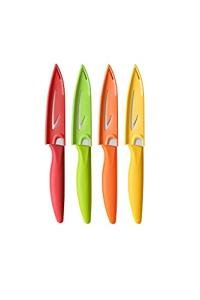
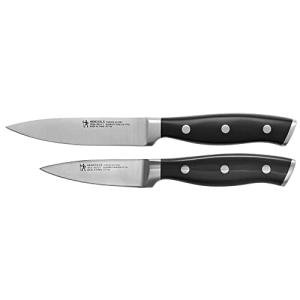
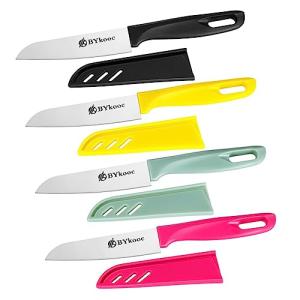
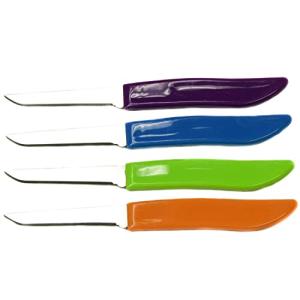
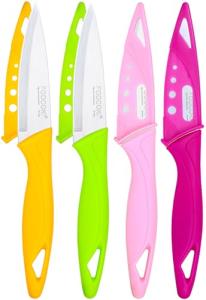
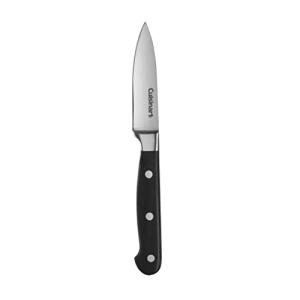
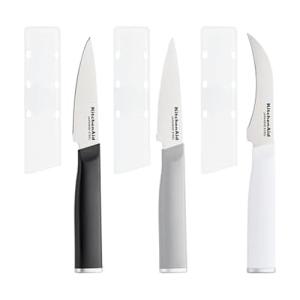
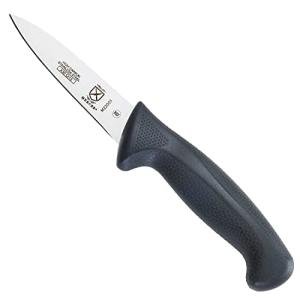
What Is a Paring Knife?
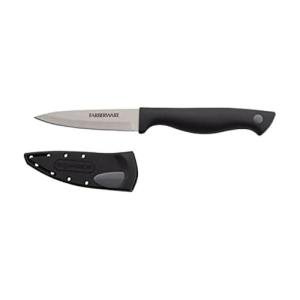
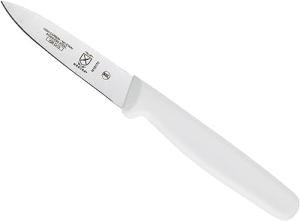
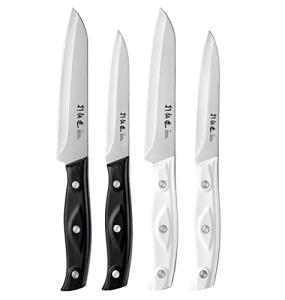
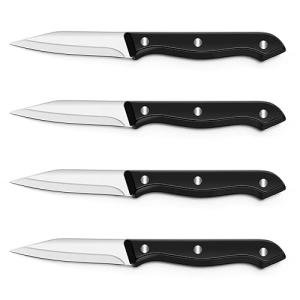
The name comes from the word pare, meaning to strip away an outer layer — which is exactly what this knife was designed to do. A paring knife typically features a short, narrow blade ranging from 2.5 to 4 inches in length, paired with a compact handle to match. The result is a knife that feels less like a kitchen tool and more like an extension of your hand.
That intimacy is the whole point. Unlike a chef's knife, which you work against a cutting board using rocking motions, a paring knife is often used in the air — held in one hand while the food is held in the other. Think of peeling an apple, trimming the stem of a mushroom, or cutting the eyes out of a potato. These are tasks that require finesse, not force. The paring knife delivers both control and precision in a way that no larger blade can match.
Types of Paring Knives
Not all paring knives are the same shape, and the differences actually matter when it comes to how they perform. Here are the four main blade styles you'll encounter:
Classic (Spear Point)
This is the most common and recognizable paring knife style. It looks like a miniaturized chef's knife — a slightly curved cutting edge tapering to a pointed tip. The sharp tip is especially useful for detail work: scoring fruit skin, poking vegetables to test doneness, deveining shrimp, or carving small decorative cuts. If you're only going to own one paring knife, the classic spear point is the most versatile choice. It handles everything from peeling to slicing to mincing small ingredients with equal ease.
Sheep's Foot
The sheep's foot paring knife has a flat, straight cutting edge with a blade top that slopes gently down to meet it near the tip. It resembles a smaller version of a santoku knife. The flat edge means the entire length of the blade can contact the cutting board at once, which makes this style particularly well-suited for repeated mincing and precise slicing tasks. It's a great choice for people who do a lot of careful chopping of smaller ingredients like shallots, garlic, chili peppers, or herbs where straight, consistent cuts matter.
Bird's Beak (Tourné Knife)
The bird's beak is the most specialized of the three common paring knife shapes. Its concave, sickle-like blade curves inward toward a sharp point. The shape comes from the French tourné technique, a classical method of cutting root vegetables into smooth, football-like shapes so they cook evenly. The curved blade naturally follows the contour of round produce — melons, potatoes, grapefruits — making peeling feel almost effortless. The pointed tip excels at tasks like hulling strawberries, removing avocado pits, and digging out blemishes from fruit and vegetables. It's a niche tool, but cooks who use it regularly swear by it.
Serrated Paring Knife
Serrated paring knives are slightly less common but genuinely useful for produce with waxy or tough skins — tomatoes, plums, figs, and small citrus fruits. The tiny serrations do the cutting work without crushing the soft flesh underneath. They don't require sharpening as frequently as smooth-edged blades, which is a practical plus for a knife that often gets daily use.
Blade Materials: What Your Knife Is Made Of Matters
The material of the blade affects sharpness, edge retention, maintenance requirements, and overall durability. Three materials dominate the paring knife market:
Stainless Steel
Stainless steel is the most popular choice for good reasons. It's durable, resistant to rust and corrosion, and requires relatively low maintenance. The addition of chromium in the steel's composition is what gives it that stain-resistant quality. Most well-made stainless steel paring knives hold a serviceable edge with regular honing and occasional sharpening, and they're forgiving enough for everyday kitchen use without demanding special care. If you want a reliable, low-fuss paring knife, stainless steel is the smart default.
High-Carbon Steel
High-carbon steel is the material of choice for serious cooks and professional chefs who prioritize razor-sharp performance above convenience. Carbon steel can be honed to an exceptionally fine, acute edge that outperforms stainless in raw sharpness and edge retention. The trade-off is that it requires more attentive care — it's susceptible to oxidation and rust if not dried promptly and stored properly. Think of it as a high-performance tool that rewards the cook who's willing to put in a little extra effort. Japanese-made high-carbon paring knives in particular are known for their exceptional sharpness and staying power.
Ceramic
Ceramic paring knives are extremely sharp out of the box and stay that way for a surprisingly long time. They're also completely non-reactive, meaning they won't impart any metallic taste to delicate ingredients. The significant downside is brittleness — ceramic blades can chip or crack from lateral pressure or if dropped on a hard floor. For this reason, ceramic paring knives are best suited for light precision tasks on soft produce, and less ideal as everyday workhorses.
Blade Length: Finding the Right Size for You
Paring knives typically come in three common lengths: 3 inches, 3.5 inches, and 4 inches. Each has a slightly different feel in the hand:
A 3-inch blade offers maximum control and is ideal for very fine, detailed work — think deveining shrimp, scoring decorative patterns, or peeling tiny vegetables. It's compact enough to maneuver in tight spaces with complete confidence.
A 3.5-inch blade is the sweet spot for most cooks. It's versatile enough to handle both precision tasks and slightly larger prep jobs without feeling cumbersome. If you're unsure which size to start with, the 3.5-inch is the most forgiving all-rounder.
A 4-inch blade gives you a bit more reach and handles tasks like segmenting citrus or slicing small fruits with less effort. It starts to overlap territory with a small utility knife, but many cooks appreciate the extra length when working with larger produce.
It's worth noting that if a task requires a blade longer than 4 inches, a paring knife isn't the right tool — at that point, you'd want a utility knife or petty knife instead.
Handle Construction and Balance
Because paring knives are so often used in-hand rather than against a cutting board, the handle deserves careful attention. A good paring knife handle should feel secure in a variety of grips — pinch grip, pointer grip, and full palm grip — without causing fatigue during extended prep sessions.
Look for a handle with an ergonomic shape and a comfortable texture that doesn't become slippery when wet. Many quality paring knives feature a full tang construction, where the steel of the blade extends through the entire length of the handle. This provides better balance, improved durability, and a more solid feel overall. Partial tang knives can work fine at lower price points, but full tang is a meaningful upgrade for frequent use.
Handle materials vary widely: traditional wood provides warmth and grip but needs more maintenance; synthetic materials like POM, G-10, or reinforced nylon are durable, hygienic, and weather-resistant; and some modern knives use all-metal construction for a sleek, seamless aesthetic.
What Can You Actually Do With a Paring Knife?
More than you might think. Here's a non-exhaustive look at the tasks a paring knife handles best:
Peeling — Apples, potatoes, carrots, ginger, kiwi, pears. The short blade gives you the control to remove just the skin without wasting the flesh underneath.
Trimming and cleaning — Removing mushroom stems, cutting eyes from potatoes, tidying the ends of green beans, cleaning shrimp.
Segmenting citrus — Slipping the blade under the skin and pith of an orange or grapefruit to extract clean, membrane-free segments.
Deveining shrimp — The sharp tip pierces the shell cleanly and traces the vein without tearing the meat.
Mincing small ingredients — Garlic, shallots, small chili peppers, radishes. Ingredients that are simply too small to work comfortably under a full-size chef's knife.
Scoring — Marking cross-hatch patterns on a duck breast before searing, scoring a mango for cubing, or cutting decorative slits in bread dough before baking.
Hulling — Removing strawberry tops, digging out avocado pits, and hollowing small vegetables for stuffing.
Garnishing — Carving vegetable roses, creating cucumber fans, or cutting radish flowers. The precision of a paring knife is what makes food presentation possible at a detailed level.
Forged vs. Stamped: Does It Matter?
Forged paring knives are made from a single piece of heated and hammered steel. The forging process produces a denser, more durable blade with better balance and typically a bolster — the thick band between blade and handle — that adds weight and protection. Stamped knives are cut from a flat sheet of steel, which makes them lighter and less expensive to produce. Both can perform very well at their respective price points. For a paring knife used daily, a forged blade offers a noticeable advantage in longevity and feel. For occasional use or as a backup knife, a quality stamped blade does the job without issue.
Caring for Your Paring Knife
A good paring knife will last you many years if you treat it properly. A few simple habits go a long way:
Hand wash only. Dishwashers are genuinely bad for knife blades — the heat, moisture, and jostling dull the edge and can cause rust, corrosion, and handle damage over time. A quick wash with warm soapy water and a dry before storage is all it takes.
Dry before storing. Leaving a wet knife in a drawer or block accelerates corrosion, particularly on carbon steel blades.
Store properly. A knife block, magnetic strip, or blade guard keeps the edge from rubbing against other surfaces and dullling prematurely. Tossing your paring knife loose in a utensil drawer is a fast way to ruin a good edge.
Sharpen regularly. Because paring knives are small, many home cooks assume they don't need sharpening as often. In fact, regular honing and periodic sharpening on a whetstone (for Japanese-style knives) or a pull-through sharpener (for everyday stainless knives) keeps the blade doing what it's supposed to do — cutting cleanly and safely.
Do You Actually Need a Paring Knife?
The honest answer is yes — if you cook with any regularity, a paring knife fills a role that nothing else in your knife block can. It's the kitchen tool that handles all the delicate, up-close work that a chef's knife is simply too big for, and it does it with a level of control and precision that makes everyday prep both faster and more enjoyable. Whether you're a casual home cook or someone who treats Sunday meal prep as a serious endeavor, a well-chosen paring knife is one of the most worthwhile additions you can make to your kitchen.
Browse our full selection of paring knives above to find the right blade style, size, and material for the way you cook.