Why the Pan You Choose Actually Matters
Most beginner bakers assume any pan will do the job. After all, batter goes in, heat does the work, cupcakes come out. But experienced bakers know better. The material your pan is made from affects how heat travels through the metal, which directly affects how evenly your baked goods cook. A thin, flimsy pan can produce cupcakes with burnt bottoms and raw centers. A heavy, well-made pan conducts heat smoothly and consistently, giving you that even rise and tender texture every time.
Beyond heat distribution, the surface coating determines whether your muffins release cleanly or come out in pieces. The depth of the cups affects how tall and domed your tops get. Even the color of the pan plays a role — darker pans absorb more heat, which can speed up browning on the outside before the inside has had a chance to set.
This isn't overthinking it. This is just understanding your tools.
Materials: What's the Pan Actually Made Of?
Aluminized Steel
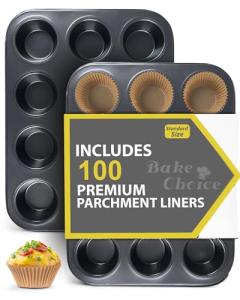
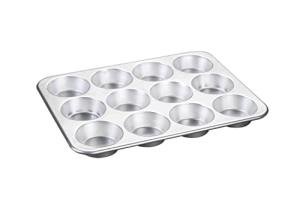
This is the workhorse material of professional bakeries, and for good reason. Aluminized steel pans heat quickly and distribute that heat evenly across every cup in the tray. You get consistent results from the center cups to the outer ones, which is something cheaper pans often struggle with. These pans tend to be sturdier than pure aluminum options and resist warping at high oven temperatures. If you bake frequently and want results you can count on, aluminized steel is a smart starting point.
Carbon Steel
Carbon steel pans are heavier and more durable than aluminized steel. They heat up a little slower, but once they're hot, they hold that heat incredibly well — which can translate to a crispier edge and a more evenly set center. Many bakers love carbon steel for muffins specifically because of that slightly firmer exterior. The trade-off is that carbon steel requires a bit more care: it can rust if left wet and may need seasoning over time, similar to a cast iron pan.
Aluminum
Pure aluminum pans are lightweight, affordable, and surprisingly effective. They heat fast and cool fast, which can be a genuine advantage when you're doing multiple batches back to back. Disposable aluminum pans fall into this category too — useful for baking gifts or taking things to events where you don't need to bring the pan back home. For everyday home baking, a good-quality aluminum pan with a nonstick coating gets the job done without breaking the bank.
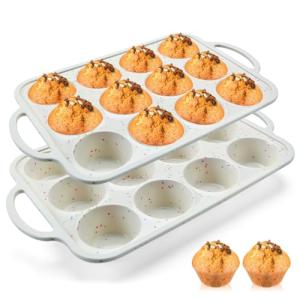
Silicone
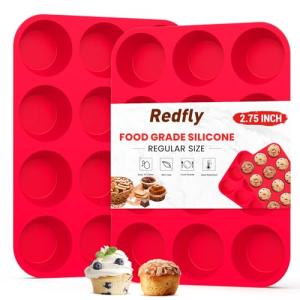
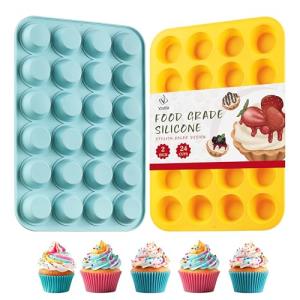
Silicone muffin molds have their fans and their skeptics. The flexible material means muffins pop out effortlessly without any greasing, which sounds like a dream until you realize silicone doesn't conduct heat the same way metal does. The result is often a paler exterior and a softer, sometimes slightly undercooked bottom. Silicone works better in convection ovens where circulating air compensates for the weaker heat transfer. For cupcakes going straight into frosting, this isn't always a dealbreaker. For muffins where you want a bit of golden crust? Metal usually wins.
Ceramic and Stoneware
Ceramic and stoneware pans are beautiful and they heat gently and evenly, making them wonderful for delicate batters. They're also naturally nonstick when properly seasoned, and they go straight from oven to table in style. The downsides are weight and fragility — drop a stoneware muffin pan and it's likely gone forever. These are slower to heat up, which means longer bake times, but the gentleness of that heat can actually produce remarkably moist results.
Nonstick Coatings: What to Look For
Almost every metal muffin pan on the market today comes with some kind of nonstick coating, and not all of them are equal. Here's what matters:
PTFE coatings (commonly known by the brand name Teflon) are highly effective at releasing baked goods but require care — metal utensils will scratch them, and once scratched, the performance drops off quickly. Avoid exposing PTFE-coated pans to very high temperatures (above 500°F/260°C) and replace them when the coating starts to chip or flake.
Ceramic nonstick coatings are a popular alternative for people who prefer to avoid PTFE. They're generally more heat-tolerant and feel more "natural" in terms of materials. They can be slightly less slippery than PTFE in the beginning, but quality ceramic coatings hold up well with proper care.
Uncoated pans (bare metal) require greasing every single time, but they're often more durable long-term. Many professional bakers actually prefer uncoated aluminized steel pans because there's nothing to chip, scratch, or wear off. With a good paper liner and a light spray of cooking oil, you'll never have a sticking problem.
Sizes and Configurations: Finding the Right Fit
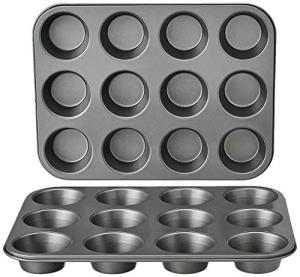
Standard 12-Cup Muffin Pan
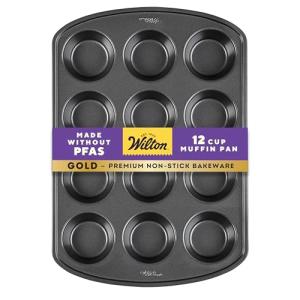
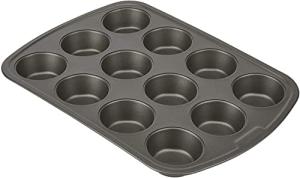
This is the classic — twelve cups arranged in two rows of six, each cup holding roughly ⅓ cup of batter. It produces standard-sized muffins and cupcakes that fit perfectly into typical cupcake liners and standard bakery boxes. If you only ever buy one muffin pan, make it a 12-cup standard. It's the most versatile option in existence.
6-Cup Standard Pan
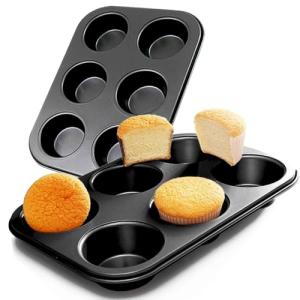
Same cup size as the 12-cup, just half the quantity. Great for smaller households, small-batch recipes, or situations where oven space is at a premium. Some bakers keep a 6-cup pan as a backup for when a recipe makes 18 instead of 12.
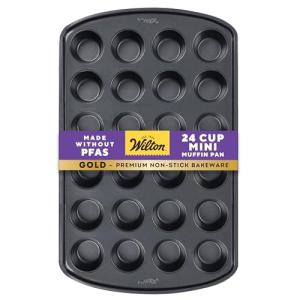
Mini Muffin Pans (24-Cup)
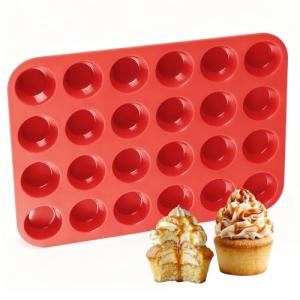
Mini muffin pans typically hold about 1 tablespoon of batter per cup and produce bite-sized muffins and cupcakes. These are endlessly useful for parties, kids' events, tasting portions, and appetizer-style baked goods like mini quiches or cornbread bites. The small cups bake faster, so keep a close eye on your oven when you're using them — a few minutes too long and they dry out quickly.
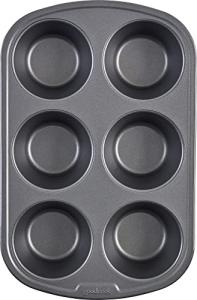
Jumbo Muffin Pans (6-Cup)
On the other end of the spectrum, jumbo pans produce those massive, bakery-style muffins with the big domed tops that overflow gloriously over the edges of the cup. Each cup holds about ¾ cup of batter. They take longer to bake through, but the result is impressive and satisfying. A jumbo muffin pan is also ideal for oversized cupcakes or large individual bread rolls.
Texas Muffin Pans
Slightly larger than standard but smaller than jumbo, Texas muffin pans occupy a middle ground that many bakeries use. They produce that "extra-large but not ridiculous" muffin that feels like a real treat without being cartoonishly oversized.
Specialty Shapes
Beyond the round cup, you'll find muffin and cupcake pans in all kinds of novelty shapes — flowers, hearts, stars, pumpkins, skulls, holiday shapes, and more. These are less about everyday baking and more about specific occasions. They're fun to have for birthdays and themed events. Just be aware that irregular shapes can make it harder to gauge doneness and may require more careful greasing than standard cups.
Features Worth Paying Attention To
Rim Design
A rolled or folded rim along the outer edge of the pan might seem like a minor detail, but it dramatically improves your grip when sliding a heavy pan in and out of a hot oven. Look for pans with a sturdy, well-formed rim — especially if you tend to bake full batches where the weight adds up.
Pan Thickness and Rigidity
Thin pans warp. It's that simple. A pan that warps in the oven will tilt your muffins sideways, create uneven baking, and eventually develop hot spots where burning occurs first. Give any pan a flex test before buying — it should feel solid and rigid, not flimsy. Heavier gauge steel is almost always worth a few extra dollars.
Corrugated or Textured Cups
Some higher-end pans feature corrugated walls inside each cup. This is more than decorative — the ridges create tiny air channels between the batter and the metal, which promotes more even browning and helps muffins release more easily even without a liner.
Cup Depth
Deeper cups produce taller muffins with more height above the rim — those beautiful "muffin tops" that everyone loves. Shallower cups produce flatter, more compact muffins. If an oversized dome top is your goal, look for pans with a cup depth of at least 1.5 inches.
How to Care for Your Muffin Pan
Even the best pan won't last forever if you don't treat it right. Here are the basics:
Avoid the dishwasher. Almost every quality muffin pan — nonstick or otherwise — will tell you to hand wash. Dishwasher detergent is harsh, and the high heat can degrade coatings, dull finishes, and warp thinner pans over time. A quick hand wash with warm soapy water and a soft sponge is all you need.
Don't use metal tools in nonstick cups. A metal fork or sharp spatula will scratch a nonstick coating in seconds. Use silicone or plastic tools when loosening muffins, and let the pan cool before attempting to remove anything stuck.
Dry thoroughly before storing. Even stainless-looking pans can develop rust spots if stored wet, particularly at the seam points where metal meets metal. Towel dry your pan after washing and if possible, let it air out for a few minutes before stacking it away.
Use liners liberally. Paper muffin liners aren't just for decoration — they protect your pan's surface from acidic batters (like lemon or berry muffins, which can stain and corrode coatings over time) and make cleanup genuinely effortless. Tulip-style liners are particularly popular for cupcakes and add a professional presentation without any extra effort.
Season carbon steel pans. If you've gone with a carbon steel pan, a light coating of vegetable oil rubbed over the entire surface and baked at 350°F for an hour will build up a natural nonstick layer over time. Do this a couple of times when the pan is new and periodically after that.
Which Pan Is Right for You?
If you're a casual home baker who makes muffins a few times a month, a well-made nonstick aluminized steel 12-cup pan is genuinely all you need. Look for a mid-range option with a solid gauge, a rolled rim, and a reputable coating. You'll use it for years.
If you bake seriously — for events, for a small business, or just because baking is your thing — consider having two 12-cup pans so you can bake 24 at once, plus a mini pan for variety. Invest in heavier-gauge options and skip the nonstick coatings in favor of uncoated pans with good liners.
If you bake with kids or for holidays and themed parties, a couple of novelty shape pans alongside your standard ones adds a lot of fun with minimal investment.
The right muffin and cupcake pan is the one that fits how you actually bake — not the most expensive one, not the trendiest one, but the one that makes your kitchen routine easier and your results more reliable. Once you find it, you'll wonder how you ever got by without it.