Browse our full range of juicers — from entry-level centrifugal models to premium cold-press machines — and find the one that works for your kitchen, your budget, and your health goals.
Juicers
Product List
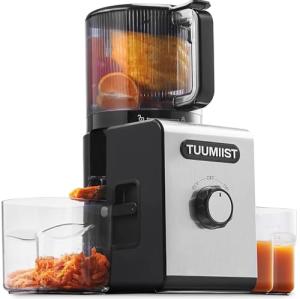
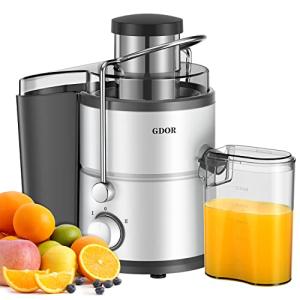
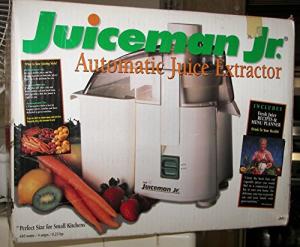
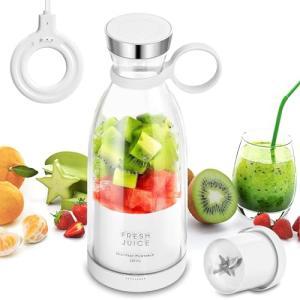
What Is a Juicer and How Does It Work?
A juicer is a kitchen appliance designed to extract liquid from fruits, vegetables, leafy greens, and herbs. Unlike a blender — which pulverises everything together — a juicer separates the juice from the fibre and pulp, leaving you with a smooth, drinkable liquid packed with vitamins, minerals, and natural sugars.
Different types of juicers achieve this in very different ways, and the method matters. It affects the taste, nutritional content, foam levels, how long the juice stays fresh, and even how quiet the machine is while you use it.
Types of Juicers Explained
Centrifugal Juicers
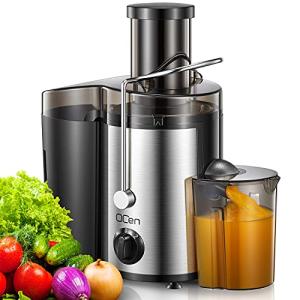
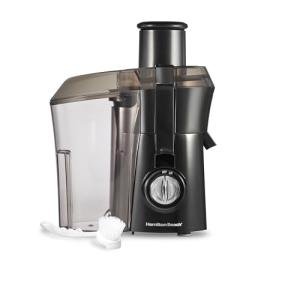
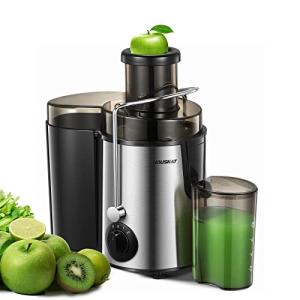
Centrifugal juicers are the most common type you'll find at an accessible price point. They work by spinning a mesh basket at high speed — typically between 6,000 and 13,000 RPM — while sharp blades shred the produce. The centrifugal force then separates the juice from the pulp, pushing liquid through a fine mesh filter into a collection jug.
The big advantages here are speed and convenience. Drop in an apple, get juice within seconds. These machines tend to have wide feed chutes, meaning less chopping and prep time. They also tend to be easier to find, easier to clean, and noticeably cheaper than their cold-press counterparts.
The trade-off is that the high-speed spinning generates a little heat and introduces air into the juice, which causes some oxidation. This means the juice is slightly less nutritionally dense and doesn't store as well — ideally you're drinking it fresh. Centrifugal juicers also struggle more with leafy greens like kale and spinach, and the juice tends to be a bit foamier.
Best for: Beginners, busy households, those juicing mainly hard fruits and vegetables, anyone who wants fast results without a big initial outlay.
Masticating Juicers (Cold Press / Slow Juicers)
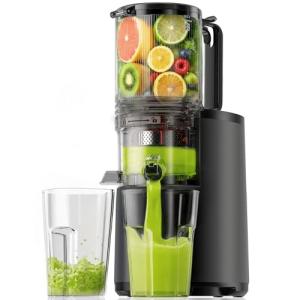
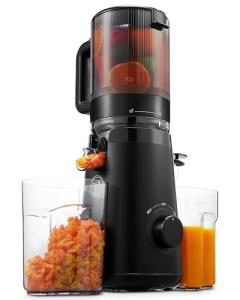
Masticating juicers — also called cold press juicers or slow juicers — take a completely different approach. Instead of spinning blades, they use a slowly rotating auger (a screw-like component) to crush and press produce against a strainer. The process squeezes out the juice at low speed, with minimal heat and minimal air exposure.
The result is a noticeably higher-quality juice. Because there's less oxidation, the juice retains more nutrients, stays fresher for longer, and has a richer, less watery flavour. Cold-press juice can typically be refrigerated for 24–72 hours without significant nutrient loss, which is ideal if you like to batch-prep your juices in advance.
Masticating juicers also handle leafy greens exceptionally well — a genuine weak point for centrifugal machines. Kale, spinach, wheatgrass, and fresh herbs all yield far more juice in a slow juicer. Some models can also make nut milks, baby food, and frozen fruit sorbets.
The downsides? They're slower (juicing takes a couple of minutes rather than seconds), generally more expensive, and require a bit more cleaning care. Some models can also jam when fed too much at once, which is why most include a reverse function.
Best for: Health-focused users, regular juicers, those who want to prep juices in advance, green juice lovers, families wanting a multi-purpose machine.
Twin Gear (Triturating) Juicers
Twin gear juicers are the top tier of home juicing equipment. Instead of a single auger, they use two interlocking stainless steel gears that press and grind produce with incredible force. The result is an exceptionally dry pulp and a correspondingly high juice yield — meaning you get more juice from the same amount of produce.
These machines handle virtually everything: hard vegetables, leafy greens, wheatgrass, even nuts and seeds. They're built to last and often come with long warranties. The downside is that they're expensive, bulky, and take more time to clean and assemble. For most home users, a quality masticating juicer will do the job perfectly well — twin gear is typically for very committed juicers or those who need the absolute maximum from their produce.
Best for: Serious juicing enthusiasts, wheatgrass fans, those wanting the highest possible juice yield.
Citrus Juicers
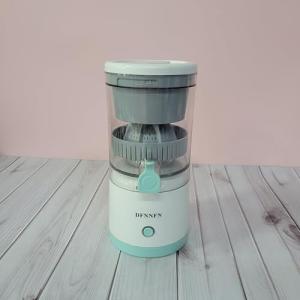
Citrus juicers are a specialist category designed purely for oranges, lemons, limes, and grapefruits. They work using a reamer — you press the halved fruit down onto a spinning or stationary cone, which extracts the juice while keeping the pips and most of the pith out.
These machines are compact, affordable, easy to clean, and completely brilliant at what they do. If your main goal is a glass of freshly squeezed orange juice every morning, there's no need to buy a full juicer — a citrus juicer does the job faster and with less fuss.
Best for: Daily orange juice drinkers, those who mainly juice citrus fruits, small kitchens.
Manual Juicers
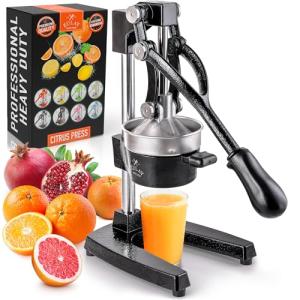
Manual juicers — including hand press and lever press models — require no electricity at all. They're particularly popular for citrus and are used in everything from home kitchens to cocktail bars. High-quality manual cold press juicers are also available, using body weight and a lever mechanism to apply hydraulic-style pressure.
They're quiet, portable, budget-friendly, and produce excellent juice quality. The obvious limitation is effort — you're doing the work yourself, which becomes tiring if you're juicing in volume.
Best for: Occasional juicers, those wanting a portable or off-grid option, cocktail making, citrus-only use.
Key Features to Look for When Buying a Juicer
Motor Power
For centrifugal juicers, motor power matters — you want at least 700–800 watts to handle tougher produce like beetroot, carrots, and ginger without straining the motor. For masticating juicers, the RPM is more important than raw wattage; look for models running at 40–80 RPM for optimal cold-press performance.
Feed Chute Size
A wider feed chute means less prep time. Models with a 3-inch or wider chute let you drop in whole apples, whole beets, and large chunks without pre-cutting everything into tiny pieces. This is a genuinely practical feature that affects how likely you are to use your juicer every day.
Ease of Cleaning
Cleaning is the main reason people stop using their juicer. Look for models with dishwasher-safe parts, minimal components, and smooth surfaces without too many hard-to-reach grooves. Many newer vertical masticating juicers include self-cleaning functions — you simply run water through the machine after juicing, and an internal rotating brush does most of the work.
Noise Level
Centrifugal juicers are loud — genuinely loud, like a blender at full power. If you live in a flat, have sleeping children, or want to juice early in the morning without waking anyone, this matters a great deal. Masticating juicers run almost silently, which is a significant lifestyle benefit that doesn't always get enough attention in product listings.
Juice Yield
More juice from the same amount of fruit means lower long-term costs. Cold press juicers consistently outperform centrifugal models here, extracting up to 20–30% more juice from the same weight of produce. Over time, this efficiency offsets the higher purchase price.
Materials and Safety
Look for BPA-free components throughout — especially any parts that come into contact with juice. Stainless steel augers and high-quality food-grade plastics are standard in better models. If children are using the machine, check for safety features around feeding chutes and rotating components.
Warranty
A juicer is a real investment. The better brands back their products with warranties of 5–10 years, which tells you a lot about how confident they are in the build quality. Be cautious of budget machines with short or limited guarantees.
How to Get the Most from Your Juicer
Getting a good juicer is just the first step. A few simple habits will make a noticeable difference to the quality and consistency of your results.
Prepare your produce properly. Remove stones and hard seeds before juicing, as these can damage the machine. Wash everything thoroughly. Cut produce to fit the feed chute rather than forcing it in — it protects the motor and gives better yields.
Alternate hard and soft produce. Feeding a chunk of ginger or beetroot between softer fruits like apple and pear helps push the drier pulp through more effectively and keeps the machine running cleanly.
Drink your juice fresh. Centrifugal juice is best consumed immediately or within a few hours. Cold-press juice keeps its nutritional value well for 24–48 hours when stored in a sealed glass jar in the fridge.
Clean your juicer immediately after use. Juice residue dries quickly and becomes much harder to remove if left. A quick rinse and a 60-second wipe-down after each use prevents build-up and keeps your machine in good condition for years.
Juicing and Your Health
Fresh homemade juice is genuinely a valuable addition to a healthy diet. It delivers concentrated vitamins, minerals, and antioxidants in an easily absorbed form — particularly useful if you struggle to eat enough vegetables each day. Regularly including fresh vegetable juices can support energy levels, digestion, and overall wellbeing.
It's worth being realistic, though. Juice is not a meal replacement. The juicing process removes most insoluble fibre, so it shouldn't be used as a substitute for eating whole fruits and vegetables. It works best as a supplement — a way to add more nutrition to your day alongside a balanced diet.
If you're new to juicing, start simple. Apple, carrot, and ginger is a great beginner combination. Once you're comfortable with the process, start introducing leafy greens. Most people find that mixing one or two green ingredients into a largely fruit-based juice is the easiest way to build the habit.
Choosing the Right Juicer for You
The best juicer is the one you'll actually use. Think honestly about your morning routine, your kitchen space, and how seriously you want to commit to juicing before you spend money on a high-end machine.
If you're just starting out and want to see whether juicing fits into your life, a solid mid-range centrifugal juicer is a perfectly sensible choice. If you're already a regular juicer — or you know that nutrient quality and quiet operation matter to you — investing in a masticating model will repay you in better juice, lower produce costs, and a machine that lasts for years.
Whatever you choose, a juicer is one of those kitchen appliances that, when it's the right fit, genuinely becomes part of your daily routine. And there's nothing quite like starting the morning with a glass of something you made yourself.