
Why the Mold Matters More Than You Think
Most people focus on ingredients when a bake goes wrong. Was there too much flour? Not enough butter? But in many cases, the culprit is the pan itself. A mold that's too large will give you a flat, dry result because the batter spreads thin. One that's too small will overflow. The wrong material can cause uneven browning — burnt edges with a raw center — or make it nearly impossible to release your dessert without it crumbling apart.
Beyond avoiding failure, the right mold actively improves your baking. Metal conducts heat aggressively, giving you that golden, caramelized crust on madeleines and financiers. Silicone insulates gently, making it ideal for mousse-based entremet cakes that need to freeze solid before being unmolded. Ceramic retains heat long after it leaves the oven, which is why a clafoutis baked in a ceramic dish stays warm and custardy all the way to the table.
Choosing well isn't just about avoiding mistakes — it's about getting the most out of every recipe you attempt.
Types of Pastry & Baking Molds
Cake Pans
The most familiar category and the one most kitchens start with. Round cake pans are the universal workhorse — useful for layer cakes, cheesecakes, tarts, and pretty much anything that needs a circular shape. They come in standard sizes ranging from 15 cm for individual portions up to 30 cm or more for large celebration cakes. The most versatile sizes for home bakers are 20–24 cm, which suit the majority of standard recipes.
Springform pans are a variation worth owning separately. They feature a removable side held in place by a latch, making it effortless to release cheesecakes, no-bake tarts, and chilled mousses that would otherwise be impossible to turn out cleanly. Square and rectangular pans are equally important — essential for brownies, sheet cakes, bar cookies, and traybakes of all kinds.
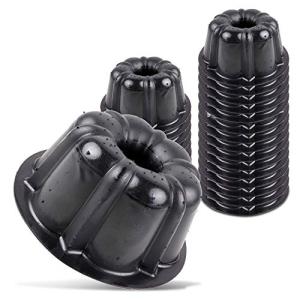
Bundt and tube pans occupy their own special niche. Their characteristic hole in the center serves a real purpose: it allows heat to travel through the middle of the batter, ensuring even baking in a deep, dense cake that would otherwise take forever to cook through. The decorative ridges and patterns on bundt pans also eliminate the need for frosting — the shape itself is the presentation.
Tart and Quiche Molds
Tart pans have fluted edges and, in most cases, a removable bottom that lets you slide the baked tart shell off without disturbing it. They come in round, rectangular, and square formats, and in sizes from individual tartlet rings (8–10 cm) up to large sharing tarts (28–32 cm). The fluted edges aren't purely decorative — the ridges create more surface area, which helps pastry crisp up rather than going soft and soggy.
Deep quiche dishes and ceramic flan molds serve a slightly different purpose. Without a removable base, they're meant to go straight from oven to table. The ceramic retains heat beautifully and the presentation is rustic and appealing, which is exactly the point. These are permanent baking vessels, not tools for unmolding.
Loaf Pans
A loaf pan is indispensable for bread baking, but in the pastry world it's equally valuable. Pound cakes, banana breads, terrines, chocolate fondants baked in slabs, and even ice cream cakes all work beautifully in a loaf mold. The elongated rectangular shape gives you clean slices with consistent thickness, which matters both for presentation and for even portioning.
Standard sizes run from small (around 450g capacity) to large (900g and above). For pastry work specifically, the smaller pans are often more useful — they yield a neater shape and are more proportional when serving individual or small-group portions.
Individual Portion Molds
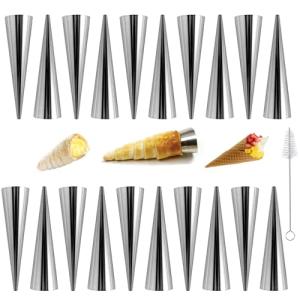
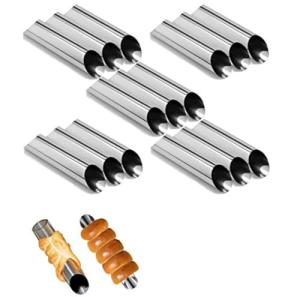
This is where pastry baking really opens up. Individual molds — mini tart shells, financier trays, madeleine pans, cannelé molds, savarin rings, dariole molds — allow you to produce professional-looking individual servings without needing any additional portioning or cutting. In café and restaurant settings, this is standard practice. At home, it's a practical way to serve guests something that looks genuinely crafted.
Madeleine pans deserve special mention. Their distinctive shell shape isn't just charming — the ridges and curves create surface area that produces those characteristic crispy edges with a soft, pillowy interior. Traditional madeleine pans are made from tinplate, which promotes the ideal caramelization on the base of each shell.
Cannelé molds are another classic. These small, fluted copper or silicone cylinders produce the Bordeaux specialty — crispy, lacquered exterior, soft and custardy inside. The copper version is the traditional choice and gives the most striking crust, but requires regular upkeep. Silicone versions are far easier to manage and still produce excellent results.
Silicone Multi-Cavity Molds
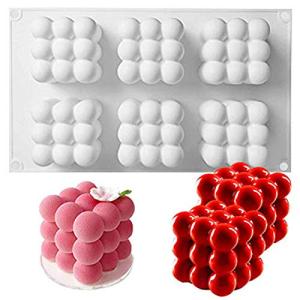
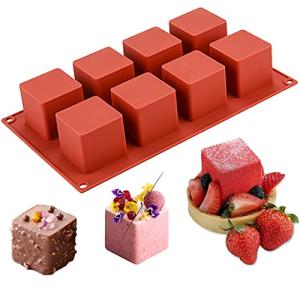
Modern pastry work — particularly the French-influenced style of entremets, mirror glaze cakes, and plated restaurant desserts — relies heavily on silicone molds with multiple cavities. These allow you to produce 6, 12, or even 24 identical components in a single pass, which is essential in any high-volume setting and incredibly useful even at home.
The shapes available in this format are extraordinary: spheres, half-spheres, quenelles, cylinders, pyramids, hearts, ovals, teardrop forms, and dozens of geometric and organic designs. These molds are typically used in conjunction with a freezer — the dessert is set frozen, then unmolded while still cold and glazed or plated immediately. The flexibility of silicone makes this process much more forgiving than rigid metal.
Ring Molds and Pastry Frames
Stainless steel ring molds and adjustable rectangular frames are the tools of choice for assembling layered cakes, mousse desserts, and composed plates. Unlike pans with a fixed base, rings have no bottom — they simply contain the dessert during assembly and setting, then lift away cleanly to reveal the finished result.
Round rings come in heights from about 2 cm (ideal for shallow tarts and entremets) up to 6 cm or more for tall layered cakes. Adjustable rectangular frames are used extensively in professional pastry kitchens for making sheet-format mousses and bavarois that are then cut into individual portions. They're also useful for constructing tiramisu, charlotte royale, and similar cold-set desserts.
Specialty Molds: Chocolate & Confectionery
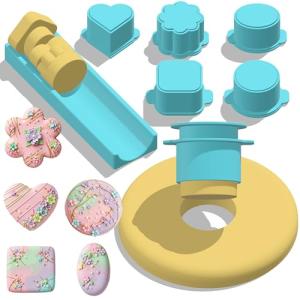
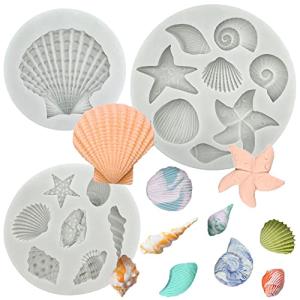
Beyond baked goods, specialty molds for chocolate and confectionery work form their own subcategory. These include polycarbonate chocolate molds for producing filled bonbons and pralines, silicone molds for chocolate bark and decorative elements, and fondant molds for sugar work and cake decoration.
Polycarbonate molds give chocolate its mirror-like glossy finish — the rigid, smooth surface creates the reflective sheen that professional chocolates are known for. They require tempering the chocolate correctly, but the results are unmistakable. Silicone molds for chocolate are more forgiving and far easier to unmold, though the surface finish is typically less glossy.
Materials Explained
Aluminum
Lightweight, affordable, and an excellent conductor of heat. Aluminum pans heat up quickly and deliver even baking, making them reliable for cakes, loaves, and muffin trays. The main drawback is that aluminum is not naturally non-stick, so proper greasing and flouring (or lining with parchment) is essential. Anodized aluminum — which has been treated to harden the surface — is more durable and slightly more resistant to sticking.
Tinplate (Tinned Steel)
Traditional and beloved by professional pastry chefs for specific applications. Tinplate promotes excellent browning and caramelization, which is why madeleine pans, tart rings, and classic French molds are so often made from it. The material requires greasing before each use and needs to be dried promptly after washing to prevent rust — but for bakers who use their pans regularly, that's a negligible inconvenience for the quality of results.
Stainless Steel
More durable than tinplate and much easier to maintain. Stainless steel ring molds and pastry cutters are workhorses that will last decades. The material doesn't react with acidic ingredients, cleans easily, and holds its shape under heavy use. The tradeoff is that it conducts heat less efficiently than aluminum, which makes it less ideal for molds where even heat distribution matters during baking — but perfect for assembly rings and frames where no baking occurs.
Silicone
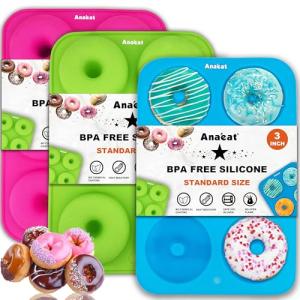
The biggest revolution in pastry molds in the last three decades. Food-grade silicone is completely flexible, naturally non-stick, safe up to temperatures around 230–240°C (and equally safe in the freezer), and available in an almost limitless range of shapes. There's no need to grease silicone molds, unmolding is effortless even for the most delicate desserts, and cleaning is simple.
The quality of silicone matters significantly. Low-quality molds can transfer an unpleasant smell or taste to baked goods, may not hold their shape reliably, and tend to degrade after repeated use. Professional-grade silicone molds from established manufacturers are made from certified food-safe materials, hold precise dimensions across hundreds of uses, and produce consistently sharp, clean results.
One limitation to be aware of: silicone doesn't promote browning or crisping the way metal does. For desserts where a golden crust is part of the appeal, silicone is not the right choice. For mousses, frozen entremets, chocolate work, and any preparation where gentle, even setting is the priority, it's unbeatable.
Ceramic and Porcelain
Slow to heat up, slow to cool down — and that's precisely the point. Ceramic bakeware is ideal for egg-based desserts, custards, crème brûlée ramekins, soufflé dishes, and clafoutis. The gentle, even heat prevents the sharp temperature spikes that can cause custards to curdle or crack. Many ceramic molds also go straight from oven to table, offering an attractive rustic presentation with no transfer required.
How to Choose the Right Mold
Match the material to the outcome you want. If you want a crisp, golden base — go metal. If you want effortless unmolding of a complex shape — go silicone. If you're making a custard or clafoutis you'll serve in the dish — go ceramic.
Get the size right. A pan that's too large spreads batter thin, resulting in a flat, dry bake. One that's too small causes overflow. When a recipe specifies a size, follow it closely. If you're scaling a recipe, scale the pan accordingly — and expect to adjust baking time as well.
Think about what you make most. It's tempting to buy a wide variety of specialty molds all at once, but the most useful approach is to build a collection gradually around the recipes you actually make regularly. A reliable round cake pan, a tart pan with a removable base, a loaf pan, and a standard muffin tray will cover the vast majority of everyday baking. From there, you can add specialty molds as your repertoire grows.
Invest in quality where it counts. A well-made metal pan or silicone mold will outlast a cheap one by years and produce visibly better results. The difference between a professional-grade madeleine pan and a budget version shows up directly in the finished product — in the crispness of the shell, the evenness of the browning, and the cleanliness of the release.
Caring for Your Molds
Metal molds generally benefit from hand washing and prompt drying. Soaking tinplate or carbon steel in water will cause rust. Silicone can go in the dishwasher, though hand washing preserves the surface longer. Avoid using abrasive scrubbers on non-stick coated pans — once the coating is scratched, it's compromised. Store molds flat or stacked carefully to prevent warping.
A great mold won't rescue a bad recipe, but it will absolutely elevate a good one. The difference between a home-baked dessert and a professional-looking creation is often not the recipe at all — it's the vessel it was baked in. Invest thoughtfully in your mold collection, understand what each type and material does best, and you'll find that the results in your kitchen improve noticeably, batch after batch.