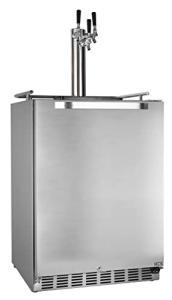
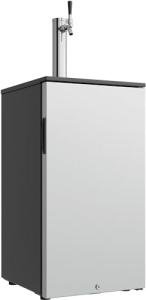
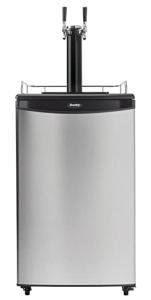
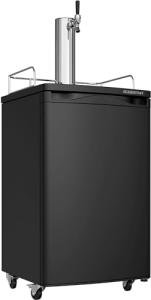
What Is a Kegerator?
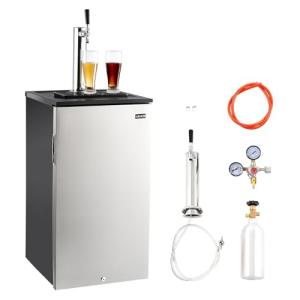
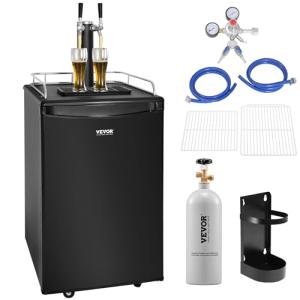
A kegerator is essentially a refrigerator that's been purpose-built — or converted — to store and dispense a keg of beer. It keeps the keg at the right temperature while a CO₂ tank pressurizes the system, pushing beer up through a tap tower and out through a faucet with every pour.
The name is a portmanteau of "keg" and "refrigerator," and the concept is simple: cold storage meets beer dispensing. But the execution ranges from compact single-tap units for apartments to full commercial-grade multi-tap systems for bars and restaurants.
Unlike a standard mini-fridge or a cooler full of ice, a kegerator maintains a consistent temperature precisely tuned for draft beer — typically between 34°F and 38°F. That consistency is everything when it comes to foam control, carbonation levels, and the overall quality of your pour.
How a Kegerator Works
Understanding the basic mechanics helps you use your kegerator better and troubleshoot problems before they ruin a good keg.
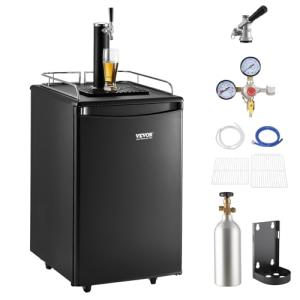
At its core, a kegerator has four main components working together: the refrigeration unit, the CO₂ tank and regulator, the beer line, and the tap tower with faucet.
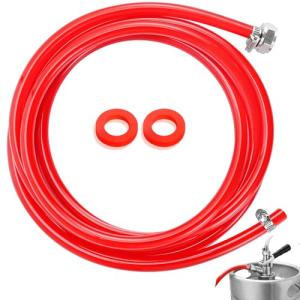
The refrigeration unit keeps the interior — and the keg inside — at a consistent cold temperature. The CO₂ tank connects via a regulator, which lets you dial in the exact pressure at which gas enters the keg. That pressure pushes beer up through the beer line (a food-safe tube running from the keg coupler to the faucet), and when you open the tap, out comes your beer.
The keg coupler is the fitting that connects to the keg itself. Different keg brands and styles use different coupler types — American domestic kegs use a D-type coupler, while many European and craft imports require A, S, G, or U-type couplings. Buying a kegerator that comes with the right coupler for your preferred beer, or one that includes multiple options, saves you a real headache.
Carbonation levels and pour temperature are the two biggest variables that separate a perfect pint from a glass of foam. When the pressure, temperature, and beer line length are all dialed in correctly, you get that smooth, pub-quality pour every time.
Types of Kegerators
Not all kegerators are created equal. The right one for you depends on how much space you have, how much beer you plan to serve, and what kind of setup you're building.
Freestanding Kegerators
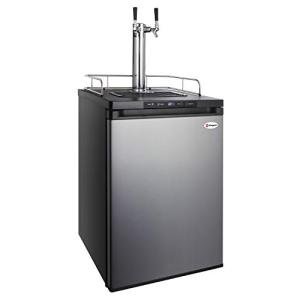
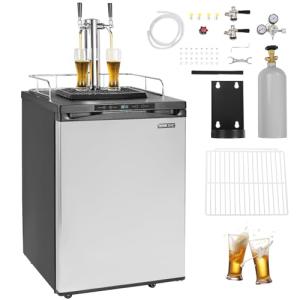
The most popular type for home use. Freestanding kegerators are standalone units that can be placed anywhere with access to a power outlet — a garage, basement, game room, or kitchen. They're available in a wide range of sizes, from compact units that fit a single sixth-barrel keg to large cabinets that hold full-size half-barrel kegs. Most come with a single tap, though dual-tap models are common.
Built-In and Undercounter Kegerators
Designed to be installed flush under a countertop or inside cabinetry, built-in kegerators have front-facing ventilation so heat doesn't get trapped inside the cabinet. These are a sleek choice for kitchen islands, home bar buildouts, or anywhere you want the unit to look like a permanent fixture rather than an appliance you rolled in. The tradeoff is a slightly higher price point and less flexibility if you ever want to rearrange your space.
Outdoor Kegerators
Built to handle temperature swings, humidity, UV exposure, and weather conditions that would destroy a standard indoor unit. Outdoor kegerators use marine-grade stainless steel, weatherproof wiring, and heavy-duty insulation. If you're setting up an outdoor kitchen, a patio bar, or a pool deck entertainment area, an outdoor-rated unit is essential — using an indoor kegerator outside will void the warranty and shorten its life dramatically.
Commercial Kegerators
Found in bars, restaurants, taprooms, and event venues. Commercial kegerators are built for volume, durability, and continuous operation. They typically hold multiple full-size kegs, support multi-tap towers, and feature NSF-certified components for food service compliance. If you're serving draft beer professionally or at high volume, this is the category you're shopping in.
Kegerator Conversion Kits
Not quite a kegerator — a conversion kit turns a standard chest freezer or upright refrigerator into a kegerator. Kits typically include a CO₂ tank, regulator, coupler, beer line, and faucet. They're a budget-friendly path to draft beer at home, especially if you already own a spare freezer. The tradeoff is a more DIY setup that requires some assembly and calibration.
What to Look for When Buying a Kegerator
Shopping for a kegerator means weighing several factors that go beyond price. Here's what actually matters.
Keg Compatibility
The most important question: what keg sizes does it fit? Common keg sizes include the half-barrel (full-size, 15.5 gallons), quarter-barrel, sixth-barrel (also called a sixtel), and the slim quarter-barrel. Different configurations fit different combinations. If you want the flexibility to swap between craft brewery sixtels and standard half-barrels, make sure the unit accommodates both.
Temperature Range and Control
Look for a kegerator with a digital thermostat and a temperature range of at least 34°F to 50°F. This gives you flexibility for different beer styles — lagers and pilsners like it colder, while some ales and craft beers are best served slightly warmer. Precise digital controls are far more reliable than simple dial thermostats.
Number of Taps
Single-tap kegerators are the standard starting point. But if you entertain often or want to keep multiple styles on tap at once, dual or triple-tap models are worth the premium. Each additional tap needs its own faucet, shank, beer line, and typically a separate CO₂ line run through a gas distributor.
Construction Quality
Stainless steel exterior and interior liners are easier to clean, more durable, and more resistant to staining and odor absorption than painted surfaces. A solid, heavy tap tower made from chrome-plated brass or stainless steel minimizes heat transfer, which means less foaming at the tap — an often-overlooked detail that makes a real difference in your pours.
Ventilation
Freestanding units vent from the back or bottom — fine when placed in open spaces, but problematic if you're trying to build them into cabinetry. Built-in models vent from the front. Getting this wrong can cause overheating and compressor failure. Always check the ventilation spec before buying.
Noise Level
The compressor runs periodically to maintain temperature, and some units are louder than others. If your kegerator will be in a living room, bedroom-adjacent space, or quiet office, look for models with low-vibration compressors or reviews specifically mentioning quiet operation.
Draft Beer Quality: Getting Your Pour Right
A kegerator is only as good as the pour it produces. Once your unit is set up, a few key principles keep your beer tasting the way the brewer intended.
Temperature is everything. Most draft beers pour best between 36°F and 38°F. Too warm and the beer over-foams. Too cold and you suppress the aromas and carbonation that make the beer interesting.
Pressure should match the beer. Most American lagers and craft ales carbonate well at 10–14 PSI. Higher-carbonation Belgian styles may need 15–18 PSI. Your CO₂ regulator is your best friend here — learn to read it and adjust gradually.
Keep your lines clean. Beer line cleaning is non-negotiable. Bacteria, yeast, and beer stone build up inside the lines over time, affecting flavor and causing excessive foaming. A proper cleaning every two weeks keeps your system in good health.
Purge with CO₂ after cleaning. After any maintenance or line change, always purge air from the system with CO₂ before tapping a new keg. Oxygen is the enemy of beer freshness.
Kegerators for Commercial Use
For bars, taprooms, restaurants, and catering operations, kegerators are a different investment conversation entirely. The question isn't just "how do I enjoy draft beer at home" — it's "how do I serve high volumes efficiently, maintain food-safety compliance, and minimize waste."
Commercial kegerators are typically direct-draw systems designed for under-bar installation or walk-in cooler configurations. They're NSF-certified for food service, built with heavy-duty compressors rated for continuous operation, and designed so staff can change kegs quickly without disrupting service.
If you're outfitting a bar, look for units with locking casters for easy repositioning, removable drip trays for easy cleaning, and independent temperature zones if you're running multiple beer styles at different temps.
Kegerator Accessories Worth Having
The right accessories turn a good kegerator into a great setup.
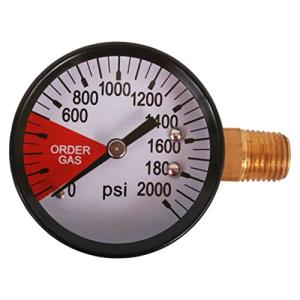
A dual-gauge CO₂ regulator tells you both the output pressure (what's going into the keg) and the tank pressure (how much CO₂ you have left). Always worth the small upgrade over single-gauge regulators.
Insulated beer line reduces temperature rise between the keg and the tap, especially in longer line runs or warm environments.
A keg scale lets you know exactly how much beer is left without guessing or lifting. Useful for planning ahead when you're hosting.
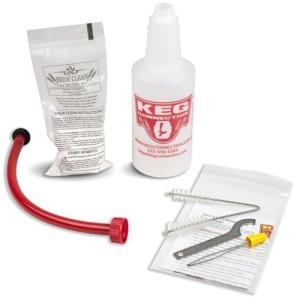
Cleaning kits — a hand pump, cleaning solution, and line brush — are essential for maintenance. Don't skip this.
Jockey boxes are portable, cooler-based draft systems that pair well with a kegerator setup for outdoor events where you need to serve away from your unit.
Kegerators vs. Canned and Bottled Beer: The Real Cost Math
One of the most common questions: is a kegerator actually worth the money?
The honest answer: yes, for regular drinkers and entertainers, the math usually works in your favor. Draft beer purchased by the keg is significantly cheaper per ounce than canned or bottled equivalents. A domestic half-barrel keg — roughly 165 twelve-ounce servings — typically costs far less per serving than buying the equivalent in cans.
The upfront investment in a kegerator (plus CO₂ setup and accessories) is real, but it pays itself back over time if you go through kegs regularly. For home bars and frequent entertainers, the payoff period is often under a year. For casual drinkers, it may take longer — or may never fully offset the cost if kegs go stale before finishing.
Keg beer stays fresh for roughly 30–45 days once tapped when kept cold and under proper CO₂ pressure. Planning around that window is part of kegerator ownership.
Choosing the Right Kegerator for You
The kegerator market spans everything from $200 entry-level conversion kits to $3,000+ commercial multi-tap systems. The right choice depends on your space, your volume, and how seriously you want to take your draft setup.
Start by asking three simple questions: Where will it live (indoors, outdoors, built-in)? What keg sizes do you want to serve? And how many taps do you need? Answer those, and the field narrows quickly.
From there, focus on build quality, temperature control precision, and the coupler types supported. Those three factors will determine whether your kegerator is a long-term workhorse or a frustrating appliance collecting dust in the corner of your garage.
A well-chosen kegerator is one of the most satisfying purchases a beer lover can make — and the first perfectly pulled pint from your own tap will make it all feel worth it.