Toasters are a kitchen essential that can make your mornings so much easier. Whether you prefer your bread lightly toasted or crispy, there’s a toaster out there for everyone. Check out our selection to find the perfect one that fits your style and needs!
Toasters
Product List
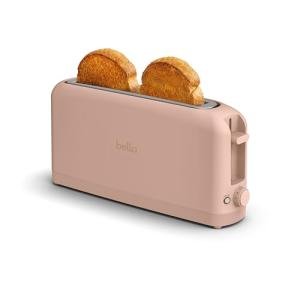
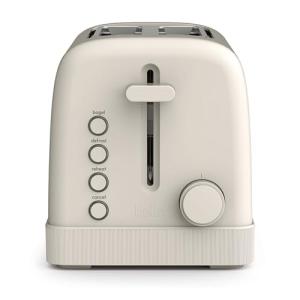
Bella 2-Slice Toaster with Control
Product Review Score
4.09 out of 5 stars
18 reviews$39.99 $29.99
Types of Toasters: More Than Just Slots
When most people picture a toaster, they picture a two-slot countertop box. And that's a completely reasonable place to start. But the toaster category is broader than you might expect.
Slot toasters are the classic. They come in two-slice and four-slice versions, sit on your counter, and do one thing well: toast bread. They're compact, affordable, and easy to use. The two-slice version is ideal for one or two people, while the four-slice model is better suited for families or anyone who regularly needs to toast a lot at once. Within this category, you'll find a massive range of quality and price — from basic budget models to sleek, precision-engineered machines that could double as kitchen décor.
Toaster ovens are a different beast entirely. They look like small ovens (because they essentially are), and they can do far more than toast. You can bake, broil, reheat leftovers, roast vegetables, and yes, toast bread. If you're short on oven space or just want a more versatile appliance, a toaster oven is worth considering. The trade-off is that they take up more counter space and typically take a little longer to produce toast than a dedicated slot toaster.
Conveyor toasters are the kind you see at hotel breakfast buffets. They move bread through a continuous heating element on a conveyor belt, popping out consistently toasted slices at volume. These are commercial-grade and probably overkill for home use, but they exist if you ever find yourself toasting bread for a crowd on a regular basis.
For the purposes of this guide, we'll focus mainly on slot toasters and touch on toaster ovens where relevant, since those are the two categories most home buyers are choosing between.
What to Look for in a Toaster
Browning Control
This is the big one. Every toaster has a dial or slider that controls how light or dark your toast comes out, but not all browning controls are created equal. On a cheap toaster, the settings might feel arbitrary — the difference between 3 and 4 might be barely noticeable, while jumping from 4 to 5 suddenly burns everything. On a better toaster, the control is more linear and predictable. You set it where you want it, and you get that result consistently.
Some high-end models go further with automatic sensors that detect moisture in the bread and adjust heating time accordingly. This means that whether you're toasting fresh bread, slightly stale bread, a frozen bagel, or a cold slice straight from the fridge, the toaster compensates and delivers consistent results without you needing to fiddle with the settings. That's a genuine quality-of-life upgrade.
Slot Size and Depth
Standard toasters are built for standard sandwich bread. If you regularly eat thick artisan bread, brioche, Texas toast, or sourdough from a bakery (the kind with the enormous, irregular slices), you'll want to check slot dimensions before you buy. Wide-slot toasters accommodate thicker slices and allow the bread to sit lower in the slots for more even toasting. Extra-long slots are great for longer baguette slices or sub rolls.
Bagel lovers should also look for a toaster with a dedicated bagel setting. This mode typically toasts only the cut side of the bagel while gently warming the outer side — the way a bagel is actually supposed to be toasted.
Even Toasting
This is where budget toasters often fall short. The heating elements inside a cheap toaster may not distribute heat evenly, leaving you with bread that's dark on one side and pale on the other, or browned at the top but barely warm near the bottom of the slot. Better toasters use more carefully positioned heating elements, sometimes with more of them, to ensure that every part of every slice gets the same treatment. If you've ever had to flip and re-toast your bread to get it evenly done, you've experienced uneven toasting firsthand.
Lift Mechanism
Here's a small detail that makes a surprisingly big difference: how high the toast lifts when it pops up. If you're toasting smaller items — half-slices, English muffins, crumpets — a standard-height lift may leave them sitting too low in the slots to grab safely. A "high-lift" toaster raises the carriage higher so shorter items are easy to retrieve without burning your fingers. Some toasters achieve this through a motorized lift rather than a spring mechanism, which also tends to feel more refined and precise.
Defrost and Reheat Functions
Most decent toasters include a defrost mode, which is essentially just a longer toasting cycle designed for frozen bread. It's handy if you keep a loaf in the freezer (which is actually a great way to extend bread's lifespan). Reheat mode, on the other hand, warms bread that's already been toasted without continuing to brown it — useful for toast that's gone cold before you got to it.
Crumb Tray
Nobody loves cleaning toasters, but a removable crumb tray makes the job significantly easier. Most modern toasters include one; it slides out from the bottom and can be emptied over the sink. Without one, crumbs accumulate in the base of the toaster, which is both unhygienic and, over time, a minor fire hazard. Check that the tray on any toaster you're considering actually spans the full width of the appliance — some cheaper models have undersized trays that barely catch anything.
Materials and Build Quality
A toaster's exterior doesn't just affect how it looks on your counter — it also tells you something about its overall build quality.
Plastic-bodied toasters are the most common at the budget end. They're lightweight, come in lots of colors, and are fine for basic use. The downside is that they can feel flimsy and don't always stand up well to years of daily use.
Stainless steel toasters are the most popular choice in the mid-range and above. They look good, feel solid, and tend to hold up better over time. The main thing to note is that fingerprints show up easily on brushed stainless, so if that bothers you, either choose a different finish or be prepared to wipe it down occasionally.
Die-cast metal bodies — found on premium brands like Dualit — are the most durable of all. These toasters are built to last for decades and have the heft to prove it. They also tend to be repairable, with replaceable heating elements, which is increasingly rare in an age of disposable appliances.
Two Slice vs. Four Slice: How to Decide
The honest answer is: how many people are you toasting for, and how often?
If you live alone or with one other person, a two-slice toaster is almost certainly enough. It's smaller, uses less counter space, and typically costs less. If you have kids, regularly cook breakfast for multiple people, or just find yourself making several rounds of toast every morning, the four-slice version will save you time and frustration.
One practical note: a four-slice toaster is usually not just a two-slice toaster with extra slots. Many four-slice models divide the slots into two independently controlled pairs, meaning you can toast different things at different settings at the same time. That flexibility is worth having if you're feeding people with different preferences.
Top Features Worth Paying For
Not every premium feature on a toaster is worth the extra money, but a few genuinely are:
Automatic sensors that adjust for bread moisture make a real difference in consistency. Once you have them, it's hard to go back.
Motorized eject mechanisms feel luxurious compared to spring-loaded ones and tend to be more reliable over time. They also offer gentle, controlled lifting rather than the slightly chaotic "pop" of a spring.
Longer warranty and repairability might not seem exciting, but a toaster that you can get serviced — or that the manufacturer will stand behind for years — is worth more in the long run than a cheap model you'll replace in eighteen months.
A wider browning range with more distinguishable steps between settings gives you genuine control. This matters more than you'd think once you start toasting different types of bread.
What You Don't Need to Spend More For
Some features that sound impressive are less useful in practice.
LED displays on toasters are largely decorative. A simple mechanical dial does the job just as well and has fewer potential failure points.
Countdown timers are a nice idea but most people quickly stop paying attention to them. Toast pops up when it's done — you don't really need a countdown.
Bluetooth or app connectivity — yes, this exists, and no, you almost certainly don't need it. Your toaster doesn't need to talk to your phone.
Caring for Your Toaster
A toaster will last much longer with a little basic maintenance. Empty the crumb tray once a week, or more often if you use it daily. Every month or so, unplug the toaster, take it outside or over a bin, and turn it upside down to shake out any debris that's accumulated deeper inside. Wipe down the exterior with a damp cloth — never submerge a toaster in water or spray it with liquid cleaners.
Keep the toaster away from sources of moisture, don't store it directly next to the stovetop, and never use it to toast anything that isn't appropriate — bagels and English muffins are fine, but items with lots of loose toppings or fillings can create fire risks.
The best toaster is the one that fits your actual life. If you eat two slices of toast every morning and want something reliable, easy to use, and easy to clean, a solid mid-range two-slice model will serve you beautifully for years. If you have a busy household and want consistent results across different bread types without fussing with settings, invest in a model with automatic sensors. If you care about build quality and want something that'll outlast you (and can be repaired rather than replaced), go premium and buy once.
What all good toasters have in common is this: they do one of the most ordinary things in the kitchen, and they do it right, every single morning, without making you think about it. That consistency is worth more than it sounds.