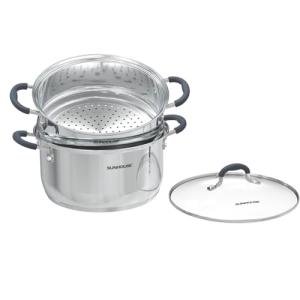
What Is a Kitchen Steamer?
At its core, a kitchen steamer is a cooking appliance that uses water vapour to cook food rather than submerging it in liquid or exposing it to direct dry heat. Water is heated until it turns to steam, which then rises and surrounds the food, cooking it gently and evenly from all sides.
That sounds straightforward — and it is. But the results are genuinely different from boiling, frying, or roasting. Vegetables come out brighter and firmer. Fish stays tender without falling apart. Rice turns fluffy and separate rather than clumping together. And because you're not using oil or letting nutrients leach into water that gets poured away, you end up with food that's both more flavourful and nutritionally richer.
Steamers range from traditional stovetop pots with perforated inserts to multi-tier electric countertop appliances with digital timers. There's something for every kitchen size, cooking style, and budget — which is part of why they've become such a consistently popular kitchen staple.
Why Cook with Steam? The Real Benefits
Better Nutrition, Genuinely
One of the most well-documented advantages of steaming is nutrient retention. When you boil vegetables, water-soluble vitamins like vitamin C and B vitamins dissolve into the cooking water and disappear down the drain. Steaming avoids this entirely — food never touches the water, so it holds onto far more of its nutritional content. If you're eating broccoli, spinach, carrots, or fish with the goal of actually benefiting from what's in them, steaming is one of the best methods available.
No Oil Required
Steaming is one of the only cooking methods that produces genuinely satisfying meals without any added fat. For people managing their weight, dealing with dietary restrictions, or simply trying to eat lighter meals during the week, this matters a lot. You're not compromising on texture or flavour either — steamed food still tastes rich and satisfying because it retains its natural moisture and juices.
Colour and Texture Stay Intact
Anyone who's overcooked broccoli in a pot of boiling water knows the depressing result — grey, mushy, vaguely sulphurous. Steam cooking keeps vegetables vibrant and properly textured. Green beans stay crisp. Asparagus holds its bite. Dumplings come out pillowy rather than waterlogged. The visual difference alone is often enough to make a meal feel more appetising, especially if you're cooking for children or people who aren't naturally enthusiastic about vegetables.
Cook Multiple Things at Once
Multi-tier steamers let you cook a full meal simultaneously — protein in one basket, vegetables in another, rice in a third — without any flavour transfer between them. This isn't just convenient; it genuinely reduces washing up and gets dinner on the table faster.
Speed and Energy Efficiency
Steam cooking is significantly faster than many conventional methods. Vegetables that might take 15 minutes to roast in an oven can be ready in 5 to 7 minutes in a steamer. This efficiency extends to energy use — steamers typically consume less electricity than an oven running for the same period, making them a more economical choice for everyday cooking.
Types of Kitchen Steamers
Understanding the differences between steamer types helps you choose one that actually fits how you cook, rather than one that sits in a cupboard after the first month.
Electric Food Steamers
Electric steamers are the most popular choice for home cooks. They sit on your countertop, have their own heating element, and typically come with stackable baskets that let you cook multiple items at the same time. Most modern electric steamers include a timer, automatic shut-off, and boil-dry protection — the kind of safety features that make them genuinely low-maintenance to use.
Capacity varies considerably, with single-tier compact models suited to one or two people, and larger two- or three-tier models that can handle family-sized portions comfortably. Electric steamers are ideal if you want a dedicated appliance that requires minimal effort and consistent results.
Stovetop Steamers
Stovetop steamers are essentially a pot with a perforated insert or a set of tiered baskets that sit over a saucepan of boiling water. They're affordable, durable, and take up less storage space than an electric appliance. Stainless steel stovetop steamers are particularly popular because they work on all hob types including induction, they're easy to clean, and they last for years.
The main trade-off is that you need to monitor water levels manually, and timing requires a little more attention than with an electric model. But for people who prefer simplicity and aren't looking to add another plug-in appliance to the kitchen, stovetop steamers are an excellent and practical choice.
Bamboo Steamers
Bamboo steamers have been used in East Asian cooking for centuries and remain one of the most effective and characterful steaming options available. They sit over a wok or saucepan of simmering water and are traditionally used for dim sum, dumplings, bao buns, fish, and rice dishes.
One distinctive quality of bamboo is that it absorbs excess steam rather than letting condensation drip back onto the food, which means the inside of the basket stays drier than a metal steamer — an important factor when you're cooking dumplings or anything with delicate wrappers. Many cooks also report that bamboo imparts a subtle, pleasant fragrance to certain foods. The downside is that bamboo requires a bit more care after washing — it needs to dry thoroughly to prevent mould — but with proper maintenance, a good bamboo steamer can last for years.
Microwave Steamers
Microwave steamer baskets are simple, compact containers designed to create a steam environment inside a microwave. They're not as powerful or versatile as electric or stovetop options, but for quick weeknight cooking of vegetables, fish fillets, or dumplings, they're fast and convenient. They take up minimal storage space and are typically dishwasher-safe, making them a sensible addition to any kitchen even if you already own a more substantial steamer.
Pressure Steamers
For those who cook dense vegetables, legumes, or larger cuts of protein regularly, pressure steamers offer significantly faster cooking times by building up steam pressure above the standard boiling point. Think of them as a hybrid between a steamer and a pressure cooker. They're less common in everyday home kitchens but increasingly popular with serious home cooks who prioritise speed and output.
Key Features to Look for When Buying a Kitchen Steamer
Capacity and Tier Configuration
Think honestly about how many people you're cooking for and how often. A single-tier compact steamer is perfectly adequate for one or two people. Families of four or more will benefit from a two- or three-tier model with baskets that can hold a realistic quantity of food without overcrowding — overcrowded baskets lead to uneven cooking and longer times. Look at total volume (usually measured in litres or quarts) rather than just the number of tiers.
Materials
Stainless steel offers excellent durability, even heat distribution, and is rust-resistant with proper care. It's the preferred choice for people who cook frequently and want something that will last. BPA-free plastic baskets are lightweight and easy to handle but should be checked carefully — low-quality plastic can warp over time or leach chemicals when repeatedly exposed to high heat. Glass components offer the advantage of visibility but require careful handling. Bamboo brings natural, eco-friendly character but needs more maintenance.
Safety Features
Auto shut-off and boil-dry protection are not optional extras — they're features that prevent accidents in a busy kitchen. A steamer left unattended that runs out of water and continues heating is a safety hazard. Any electric steamer worth buying should include both of these as standard.
Timer and Controls
A built-in timer means you can set your steamer and get on with other things without hovering over it. Digital controls with pre-set programmes add convenience but aren't essential. Analogue dial timers are simpler and less likely to malfunction. Choose based on how you actually use your kitchen rather than what sounds impressive.
Ease of Cleaning
Dishwasher-safe components make a meaningful practical difference. Check whether the baskets, drip tray, and water reservoir can go in the dishwasher, and whether the heating element base is straightforward to wipe down. Mineral build-up from hard water is a common issue with electric steamers — look for models that are easy to descale, or check whether your water supply is hard enough to make this a regular concern.
Storage Footprint
Multi-tier steamers can be bulky. If counter space is limited, look for models where the baskets nest or stack for compact storage. Stovetop steamers and bamboo baskets are generally easier to tuck away in a standard kitchen cabinet.
What Can You Cook in a Kitchen Steamer?
The honest answer is: more than most people expect. The obvious starting point is vegetables — broccoli, carrots, courgettes, sweet potatoes, green beans, asparagus, and corn all steam beautifully and in a fraction of the time they'd take in an oven. Fish is arguably one of the best things to cook in a steamer; it stays moist, holds together, and absorbs aromatics like ginger, lemon, or herbs particularly well when placed directly in the basket.
Rice and grains come out consistently well, particularly in electric models with a dedicated rice bowl. Dumplings, bao buns, and dim sum are classic steamer territory. Chicken breasts and fish fillets can be steamed to a tender, juicy finish without any oil. Eggs can be steamed rather than boiled with excellent results. Even puddings and custards are traditionally made using steam in certain cuisines.
If you've ever steamed food and found it bland, the likely issue is under-seasoning rather than the cooking method itself. Steam is very receptive to aromatics — add ginger, garlic, lemon slices, or fresh herbs to the water, or season the food itself generously before cooking, and the results are much more interesting.
Stovetop or Electric: Which Should You Choose?
This comes down to two things: how often you'll use it, and how much effort you want to invest.
If you cook at home frequently and want something that practically runs itself, an electric steamer with a timer and auto shut-off is the practical choice. You load it up, set it, and walk away. If you prefer a low-tech, minimal-footprint approach and don't mind slightly more active monitoring, a stovetop model is more affordable, simpler to clean, and easier to store.
Bamboo steamers are a worthy addition regardless of which other steamer you own — they excel at specific tasks (dumplings, dim sum, fish) where their moisture-absorbing properties genuinely improve the result.
Getting the Most Out of Your Steamer
A few simple habits make a real difference. Don't overfill baskets — leave space for steam to circulate freely. Bring water to a boil before adding the food so cooking times are accurate. Cut vegetables to a consistent size so everything cooks evenly. Use the lower tier for denser items that need more heat, and the upper tier for foods that cook quickly. And if you're steaming multiple things with strong flavours, a sheet of parchment paper in the basket prevents any transfer.
Kitchen steamers are one of those appliances that reward the people who actually use them. They don't require skill, they don't demand attention, and they produce genuinely good food with less effort and fewer calories than most other cooking methods. Whether you're after a compact bamboo basket to make weekend dumplings or a full electric multi-tier steamer to overhaul your weeknight cooking routine, the right steamer is a straightforward investment in eating better without making cooking harder.
Browse the full range above to find a model that fits your kitchen, your household size, and the way you actually cook.