Types of Pot Racks: Which Style Fits Your Space?
Ceiling-Mounted Pot Racks
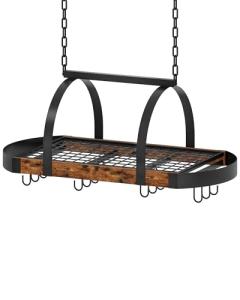
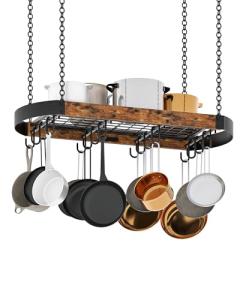
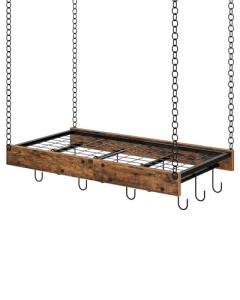
Ceiling-mounted pot racks are probably the most iconic style — and for good reason. They hang from the ceiling, typically on chains or rods, and are most commonly positioned over a kitchen island or prep area. This overhead position is genuinely brilliant from a design standpoint: all that empty space above your island suddenly becomes useful storage.
These racks often feature a grid or oval frame with hooks that you can reposition depending on your cookware collection. Many models also include a top shelf for storing items like cutting boards or flat lids. The dramatic visual impact is a real bonus — a well-chosen ceiling rack can become a focal point that ties the whole kitchen together.
The trade-off? Installation requires anchoring into ceiling joists or structural beams, which means you need to plan carefully before buying. They're also not ideal for kitchens with low ceilings — headroom matters, and a rack hanging too low creates a genuine hazard. As a general rule, if your ceiling is under eight feet, this style may not be the best fit.
Wall-Mounted Pot Racks
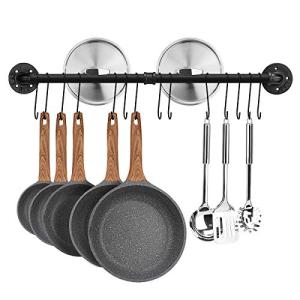
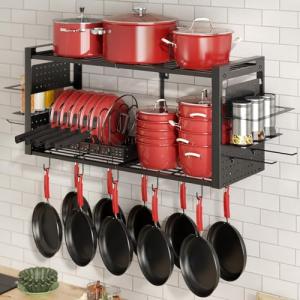
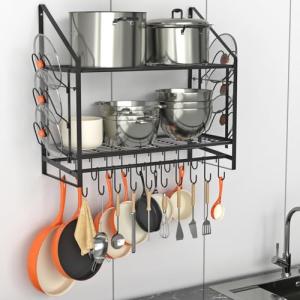
Wall-mounted pot racks are one of the most versatile and widely used options. They attach directly to the wall, typically as a horizontal bar or rail with S-hooks or fixed hooks running along it. Some models are designed as a simple single bar, while others feature double bars or grid panels that offer more hanging space.
These are excellent for kitchens where overhead installation isn't possible or practical — rented apartments, rooms with drop ceilings, or kitchens without a central island. A well-positioned wall rack near the stove puts your most-used pans within arm's reach, which genuinely speeds up everyday cooking.
Wall racks can also pull double duty. Many homeowners combine them with shelves, magnetic knife holders, or hooks for utensils, creating a complete kitchen organization wall. The key is making sure you're mounting into wall studs, not just drywall — these racks carry real weight, and proper anchoring isn't optional.
Freestanding Pot Racks
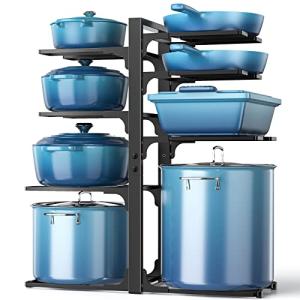
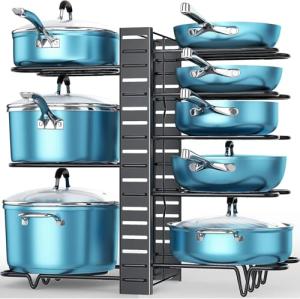
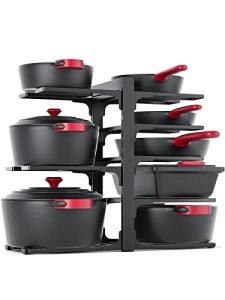
Freestanding pot racks are the easiest option to live with because they require zero installation. These are floor-standing units — usually a sturdy metal frame with multiple tiers — that you simply place wherever space allows. Some models come with wheels, making them easy to move around for cleaning or rearranging.
The multi-tier design makes freestanding racks particularly good for tall items like stockpots, pressure cookers, and large Dutch ovens that simply don't fit comfortably on a shelf or hanging from a hook. If you have a pantry, a utility room, or even a generous corner in your kitchen, a freestanding rack can hold an entire cookware collection cleanly and accessibly.
The downside is floor space. Freestanding racks take up footprint, which can feel like a real sacrifice in a small kitchen. But in a larger space, they're hard to beat for sheer storage capacity and flexibility.
Under-Cabinet Pot Racks
Under-cabinet pot racks are the space-efficiency champions of the category. These compact units mount beneath your upper cabinets, using space that would otherwise sit empty. Pots and pans hang down from hooks, keeping them within reach of the counter without occupying any of the valuable counter surface itself.
Some under-cabinet systems use a fixed rail, while others are sliding or pull-out designs that tuck away when not in use. This style works particularly well for smaller pots, sauté pans, and skillets that you reach for every day. They're not ideal for very heavy or oversized cookware, but for everyday essentials, they're surprisingly practical.
Over-the-Range Pot Racks
Over-the-range pot racks are installed directly above the cooking stove, combining shelf space with hanging storage right where you need it most. This style takes advantage of the wall space that typically goes unused between the stove and the exhaust hood. Pans hang at a convenient height for the cook, and the shelf above can hold frequently used spices, oils, or small appliances.
This option works especially well in galley-style kitchens and smaller spaces where every inch of storage is precious. Just be aware that proximity to cooking heat and steam means you'll want to clean these racks more regularly than other types.
Countertop Pot Racks
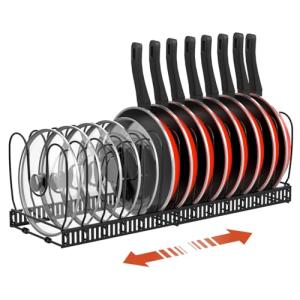
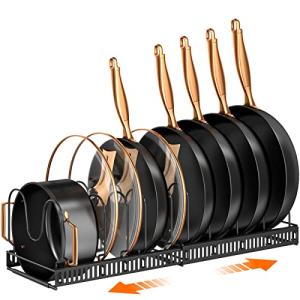
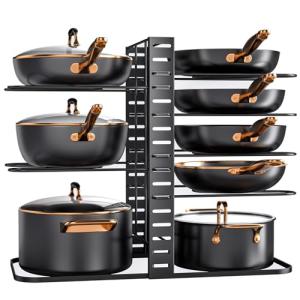
Countertop pot racks are compact organizers that sit directly on the counter or inside a cabinet. These are typically multi-tier or expandable divider-style units, great for organizing a set of everyday pans vertically — the same way you'd file folders — so you can pull out the one you need without unstacking the entire collection.
These work best for flat or medium-height items: skillets, sauté pans, and lids. They're not really designed for tall stockpots, but for a busy home cook who reaches for the same three or four pans every day, a countertop rack can be a genuinely convenient setup.
Materials Matter: What Your Pot Rack Is Made Of
Stainless Steel
Stainless steel is the most popular material for pot racks, and with good reason. It's strong, resistant to rust and corrosion, easy to clean, and looks clean and modern in almost any kitchen style. High-quality stainless steel racks can hold substantial weight — commercial-grade models handle hundreds of pounds — making them the go-to choice for serious home cooks and professional kitchens alike.
Wrought Iron
Wrought iron has a character that other materials simply can't match. It's heavy-duty, visually striking, and ages gracefully. Iron pot racks suit farmhouse, rustic, and industrial kitchen aesthetics particularly well. The only real consideration is that iron can rust if not properly finished and maintained, so look for models with a protective powder-coated finish.
Aluminum
Aluminum is lighter than steel, which makes it a practical choice when keeping the overall weight of the rack down is important — particularly for ceiling-mounted models where every pound counts against the load on your ceiling joists. It's also naturally rust-resistant. The trade-off is that aluminum is less robust than steel and may flex or bend under very heavy loads.
Copper
Copper pot racks occupy a special category because they're as much about aesthetics as function. The warm, rich tone of copper complements traditional and farmhouse kitchen styles beautifully, and it pairs particularly well with copper or brass cookware. Copper racks are often finished to prevent oxidation, though some cooks deliberately let them develop a patina over time for an aged look.
Key Features to Look for When Shopping
Weight capacity is the single most important specification to check. Add up the approximate weight of all the cookware you plan to hang or store, then choose a rack with a comfortable margin above that number. Cast iron cookware in particular is heavy, and underestimating load capacity is a common mistake.
Hook style matters more than most people expect. Metal-on-metal contact between a bare hook and a pot can scratch the finish on your cookware over time. Look for hooks with rubber or felt lining, or consider purchasing coated S-hooks separately. These small details protect your pans and keep them looking good for longer.
Adjustability is worth paying for. Racks with repositionable hooks and adjustable chain lengths give you far more flexibility as your cookware collection grows or changes. Fixed designs are often cheaper but lock you into a configuration you can't easily modify.
Finish compatibility is a detail that makes the difference between a rack that looks like it belongs in your kitchen and one that looks like an afterthought. Match your rack's finish — black, brushed steel, aged brass, polished nickel — to your kitchen hardware, faucet, and fixtures for a unified look.
Installation hardware deserves careful attention. The best rack in the world is only as good as how well it's secured. Check that mounting hardware is appropriate for your wall or ceiling type, and verify that ceiling-mounted racks include hardware for anchoring into joists, not just drywall anchors.
Pot Racks and Kitchen Design: More Than Just Storage
One of the things that makes pot racks genuinely exciting is their dual role as both storage and decor. The right rack in the right spot does something that cabinets simply can't — it shows off your cookware as part of the kitchen's visual story.
Think about the kitchen you see in food magazines or cooking shows. The cookware is almost always visible, not hidden away. That's not an accident. A collection of well-maintained pots and pans is actually beautiful, and a pot rack is the frame that puts it on display.
For modern minimalist kitchens, a sleek matte black wall rail with evenly spaced hooks looks intentional and sharp. For a farmhouse or cottage kitchen, a wrought iron ceiling rack with copper pots creates instant warmth and character. For an industrial loft kitchen, a stainless steel overhead rack fits right in with exposed brick and open shelving. The style variety available today means you're not choosing between function and aesthetic — you can have both.
Common Questions Before You Buy
Will a pot rack scratch my cookware? It can, if you use uncoated metal hooks. Protect your pans by using hooks lined with rubber or felt, or by hanging pots by their handles rather than by the body of the pan.
Can I install a pot rack myself? Wall-mounted and ceiling-mounted racks typically require some basic DIY skill — a drill, wall anchors or stud finder, and a level. Freestanding and countertop models require no installation at all. If you're unsure about ceiling joists or wall construction, getting professional help for the mounting step is always the right call.
How much weight can a typical pot rack hold? Home models generally handle 30 to 80 pounds. Commercial-grade stainless steel racks go significantly higher. Always check the manufacturer's stated capacity and plan conservatively.
Do pot racks collect grease and dust? Racks near the stove will pick up some residue over time, just like any other surface in that area. A quick wipe-down as part of regular kitchen cleaning is usually all that's needed.
Finding the Right Pot Rack for Your Kitchen
The best pot rack is the one that genuinely fits how you cook. If you reach for the same sauté pan and stockpot every single day, a wall rack near the stove puts them exactly where you need them. If you have a large collection of mixed cookware and want it all accessible, a freestanding or ceiling-mounted rack gives you the capacity. If space is tight and installation isn't an option, an under-cabinet or countertop organizer can still make a meaningful difference.
Whatever you choose, a pot rack is one of those kitchen upgrades that earns its place almost immediately. The first morning you reach for your coffee pan without wrestling it out of a stack of lids is the moment it pays off. Browse the collection, measure your space, and pick the style that makes your kitchen work the way you want it to.