Why the Right Mixing Bowl Actually Matters
A bowl is a bowl, right? Not quite. The material it's made from affects how your ingredients behave. The size determines whether you end up with flour on the counter or everything neatly inside. The shape influences how well a whisk or spatula can do its job. And features like a non-slip base, a pouring spout, or measurement markings can quietly save you minutes — and messes — every single time you cook.
Mixing bowls are used for far more than just mixing. They hold prepped vegetables while you work on the next step. They proof bread dough overnight. They serve as the top half of a makeshift double boiler for melting chocolate. They catch pasta water, store leftovers, and double as serving vessels for salads and sides. A good set of mixing bowls is, in many ways, the backbone of how a kitchen flows.
Materials: What They're Made Of and Why It Matters
Stainless Steel
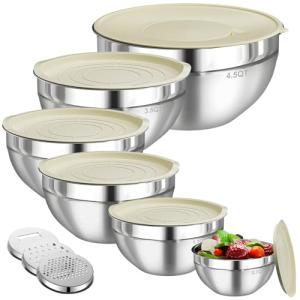
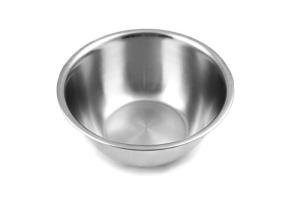
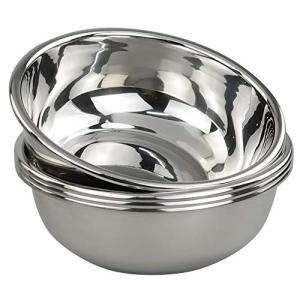
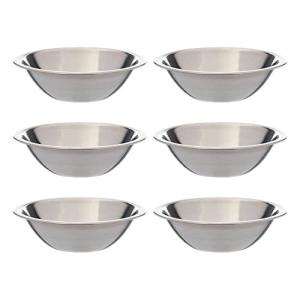
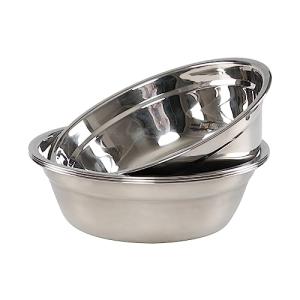
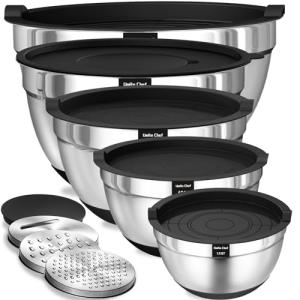
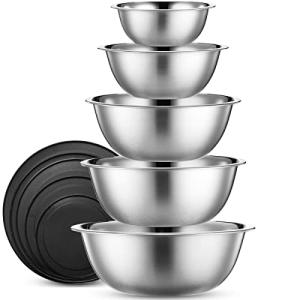
Stainless steel is the gold standard in professional kitchens, and for good reason. These bowls are virtually indestructible — they can take a drop, a scrub, a stint in the dishwasher, and still look fine the next day. They're lightweight despite being sturdy, resistant to stains and odors, and they don't react with acidic ingredients like lemon juice or tomato.
One of the most underrated qualities of stainless steel is how well it conducts temperature. Place one over a pot of simmering water and you've got a double boiler for melting chocolate or warming hollandaise. Fill it with ice and it keeps whipped cream cold while you work. That kind of thermal responsiveness is genuinely useful.
The main limitation? Stainless steel isn't microwave-safe, and you can't see through it — which matters more than you'd think when you're watching dough rise or checking whether wet and dry ingredients have been fully combined.
Glass
Glass mixing bowls have a devoted following, and it's easy to see why. The transparency is a genuine advantage — you can see exactly what's happening inside the bowl at every stage of mixing, which is especially helpful when you're working with batters, watching yeast activate, or just checking for dry streaks at the bottom. Many glass bowls are also microwave-safe, which means you can melt butter or soften cream cheese directly in the bowl you're already using.
Glass is non-reactive, completely odor-resistant, and tends to clean up beautifully. Good glass bowls, particularly those made from borosilicate glass, can handle significant temperature swings without cracking — from the freezer to the countertop without a problem.
The trade-off is weight and fragility. Glass bowls are heavier than stainless steel, and they will break if dropped on a hard floor. They're not ideal for recipes that involve a lot of vigorous physical work, like kneading, because that weight starts to matter when you're 20 minutes in.
Ceramic
Ceramic mixing bowls occupy a nice middle ground between form and function. They're heavy enough to stay put on the counter without gripping, they retain temperature well (useful for proofing dough in a warm bowl), and they look genuinely attractive — which makes them great for bowls you plan to take from kitchen to table.
The weight that gives them stability is also their main drawback for extended mixing sessions. If you're making a big batch of anything that requires sustained effort, a ceramic bowl can fatigue your arms faster than you'd expect. Ceramic also chips if it takes a hard knock, so it needs a bit more care than stainless steel.
For beating egg whites, ceramic is a solid choice — the slightly rough surface creates more friction, which helps whites stiffen up more quickly.
Plastic
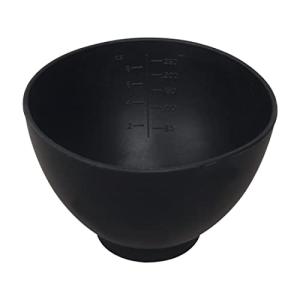
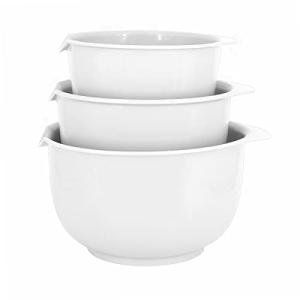
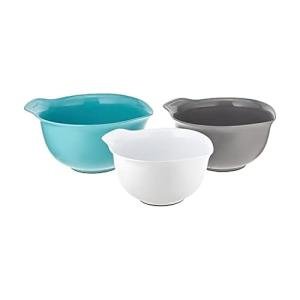
Modern plastic mixing bowls have come a long way from the flimsy, easily-stained versions of the past. Good quality plastic bowls — look for BPA-free materials — are lightweight, shatterproof, and often come with handy features like lids, measurement markings, and non-slip bases baked right into the design.
They're ideal for households with young children (no shattering), for outdoor cooking and picnics, and for anyone who needs a bowl they can toss around without worrying. Many are dishwasher-safe and microwave-compatible, which makes them genuinely versatile for everyday cooking.
The limitations are real, though. Plastic absorbs odors over time, especially from strongly scented foods like garlic, onion, or spices. It scratches more easily than other materials, and those scratches can harbor bacteria if the bowl isn't cleaned thoroughly. Cheaper plastic also tends to retain a slight greasy film, which is a problem when you're trying to whip egg whites — any trace of fat will prevent them from reaching full volume.
Copper
Copper mixing bowls are the specialists of the category. Their claim to fame is chemistry: the copper ions interact with the proteins in egg whites, helping them form a more stable foam that holds its peaks longer. If you bake seriously and spend a lot of time whipping meringues, soufflés, or mousses, a copper bowl is a genuine upgrade.
They're also beautiful — hammered copper develops a patina over time that gives it real character. The cost is steep compared to other materials, and copper bowls require hand washing and some occasional maintenance to keep them in good shape. For most home cooks, one smaller copper bowl for egg whites is plenty. You don't need a whole set.
Sizes: Getting the Range Right
Size is where a lot of people underestimate their needs. The instinct is to go moderate — a medium bowl seems practical, a large one feels like overkill. But in actual kitchen use, having a range from small to genuinely large makes an enormous difference to how smoothly cooking goes.
Small bowls (around 1–2 litres) are for single eggs, small amounts of sauce, whisking salad dressing, or holding prepped ingredients while you work. You'll reach for these more than you expect.
Medium bowls (around 2–4 litres) handle most everyday tasks: mixing a cake batter, tossing a salad for four, marinating chicken, making cookie dough for a standard batch.
Large bowls (5–8 litres) come into their own for bread dough, double batches of batter, big salads for a group, or any recipe that involves combining many ingredients at once. The mistake most people make is trying to squeeze a large-bowl job into a medium bowl, then spending the next five minutes cleaning flour off the counter.
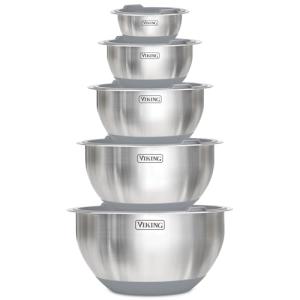
If you're buying a set rather than individual bowls, look for a graduated nesting set where each bowl fits snugly inside the next — this keeps storage manageable and means you always have the right size at hand.
Features Worth Paying Attention To
Non-Slip Base
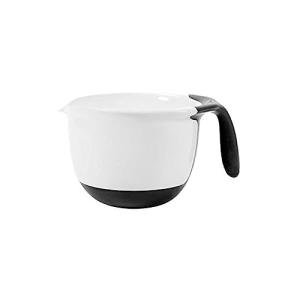
A bowl that slides around while you're whisking vigorously is genuinely annoying and can be a safety hazard. Look for bowls with a silicone ring on the base, a rubberized bottom, or a textured surface that grips the counter. This is one of those features that sounds minor until you have it, and then you can't imagine going back.
Pouring Spouts
A spout might seem like a small addition, but if you regularly pour batters into cake tins, waffles irons, or muffin trays, a bowl with a proper spout makes the job dramatically cleaner. Particularly useful with glass bowls, where the combination of transparency and a spout means you can measure and pour in one motion.
Measurement Markings
Built-in measurement markings — etched or molded directly into the bowl rather than printed on — save you from dirtying a separate measuring jug for liquids. Look for markings on the inside of the bowl in both metric and imperial units, and make sure they're clearly legible and permanently part of the bowl's surface.
Lids
Some mixing bowl sets come with matching lids, which turns your mixing bowl into a storage container. This is especially convenient for dough that needs to rest in the fridge overnight, or for keeping mixed ingredients fresh when you're prepping ahead.
How to Care for Your Mixing Bowls
Most mixing bowls are low-maintenance, but a little attention goes a long way.
Stainless steel can go in the dishwasher, though hand drying prevents water spots. Over time the surface may dull slightly — this is cosmetic and doesn't affect performance. Never use bleach-based cleaners, which can pit the surface.
Glass bowls are typically dishwasher-safe but may develop cloudiness if your water is hard. A soak in white vinegar now and then resolves this. Avoid sudden extreme temperature changes — don't take a cold glass bowl and pour boiling liquid directly into it.
Ceramic usually needs hand washing to protect the glaze and prevent chipping. Store with a cloth or paper between stacked bowls to protect the surfaces.
Plastic is better hand-washed with warm soapy water, especially if the bowl has been used with strongly flavored ingredients. Avoid putting plastic bowls in very hot dishwasher cycles, which can cause warping over time.
Copper must be hand-washed and should never go in the dishwasher. A paste of salt and lemon juice will clean and polish the surface when needed.
How to Build a Mixing Bowl Collection
You don't need to buy everything at once. A practical approach is to start with a core set — usually three bowls in small, medium, and large — in a material that suits your cooking style and budget. Stainless steel is the sensible all-purpose starting point. Add a glass bowl or two when you want microwave-safe options. Throw in a ceramic bowl if you like the look and do a lot of baking. Keep a small copper bowl in mind if egg whites feature heavily in your repertoire.
The right mixing bowls will work in the background of every meal you make — quietly, reliably, without drama. They're not glamorous kitchen equipment, but they are essential ones. Choose well, and you'll barely think about them again. Which, in kitchenware terms, is exactly the kind of compliment that really counts.