What Is a Kitchen Mixer, Exactly?
At its core, a kitchen mixer is a motorized appliance that automates the mixing, beating, whipping, or kneading of food ingredients. Instead of working a wooden spoon around a bowl for ten minutes — arms aching, flour on your shirt — a mixer handles the mechanical work for you.
But that one-line definition undersells what these machines actually do. A good stand mixer can make croissant dough that took years of hand technique to master suddenly feel approachable. A hand mixer can rescue a sauce that's on the verge of breaking. These tools don't just save time. They open up recipes you'd otherwise skip.
The Two Main Types of Kitchen Mixers
Stand Mixers
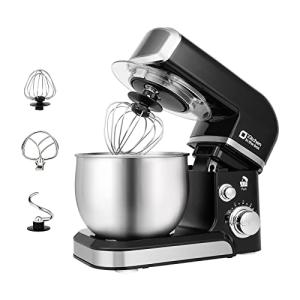
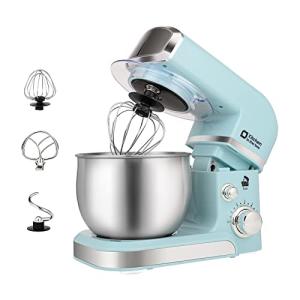
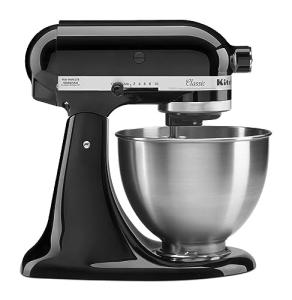
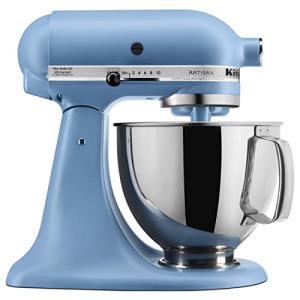
Stand mixers are freestanding countertop appliances with a motorized head, a bowl that locks into place, and a set of interchangeable attachments. You put your ingredients in, attach the right tool, choose a speed, and the machine runs while you do other things — prep the filling, line the pan, clean up as you go.
Most stand mixers use one of two mechanical designs:
Tilt-head models have a head that pivots backward to give you access to the bowl. You tilt it up, attach or remove the bowl and accessories, then lock it back down when you're ready to mix. These are common in home kitchens, generally more compact, and usually the more affordable option within the stand mixer category.
Bowl-lift models keep the head stationary and raise the bowl up into the mixing position. The bowl is attached to a yoke mechanism on either side. This design tends to be sturdier and better suited for heavy, high-volume mixing — commercial bakeries and serious home bakers lean toward bowl-lift machines for exactly this reason.
Stand mixers are the appliance of choice for bread baking, large batches of cookies, meringues, and any recipe that requires extended mixing times. They're an investment, but for people who bake regularly, they're one of the most-used tools in the kitchen.
Hand Mixers
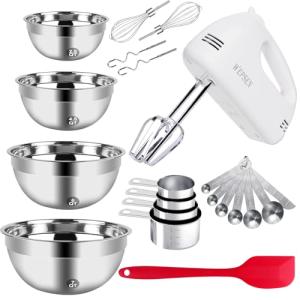
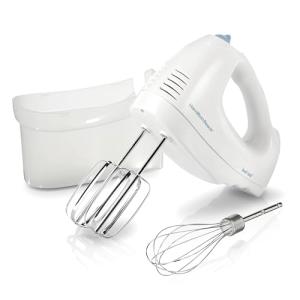
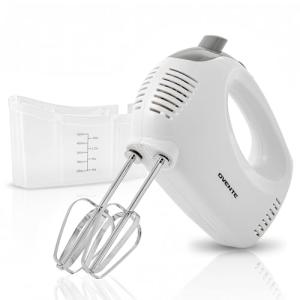
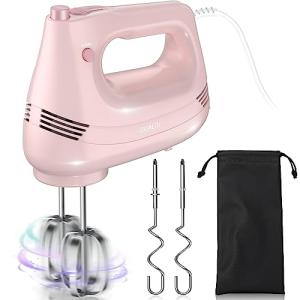
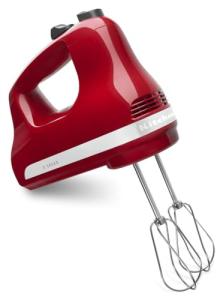
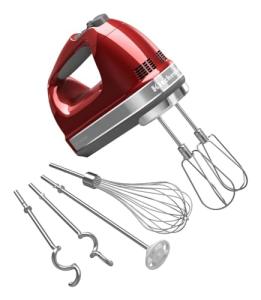
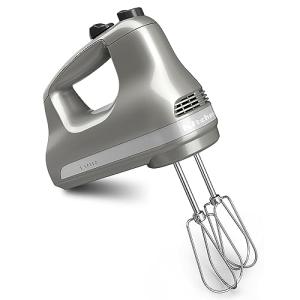
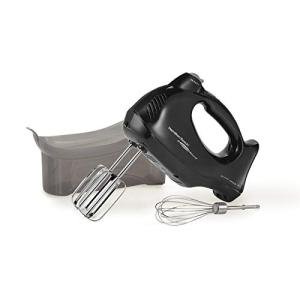
Hand mixers are exactly what the name says — lightweight, portable mixing devices you hold in your hand and move through the bowl yourself. They consist of a small motor body, a set of beater attachments that plug in at the bottom, and a speed dial or button control.
They're not as powerful or hands-free as stand mixers, but that's not really the point. Hand mixers shine when you need quick mixing power without dragging out a large appliance. Whipping a small amount of cream, beating a few eggs, blending a simple cake batter — a hand mixer handles these tasks easily and stores in a drawer when you're done.
For kitchens with limited counter space, or for cooks who mix infrequently and don't want to commit to a stand mixer, a hand mixer is often the smarter, more practical choice.
Key Features to Look For
Motor Power and Wattage
Motor power is measured in watts, and it directly affects how well a mixer handles thick, heavy mixtures. For hand mixers, you'll find motors ranging from about 150 watts on the low end to 300 watts or more on higher-end models. For stand mixers, anything under 250 watts will struggle with bread dough — look for 300 to 600 watts for home use, and higher if you plan to make large batches or dense doughs regularly.
More wattage isn't always necessary, but it becomes critical as soon as you're working with stiff dough, thick batters, or large volumes. A motor that strains against heavy mixtures wears out faster and gives you uneven results.
Speed Settings
Most hand mixers offer five to nine speed settings. Most stand mixers offer ten or more. You want enough range to handle delicate work — slowly folding in flour without overbeating — and also enough power at the top end for vigorous whipping.
Look for a low first speed that doesn't send a cloud of flour erupting out of the bowl the moment you switch it on. That slow start matters more than many buyers realize.
Bowl Capacity
For stand mixers, bowl size is a serious consideration. A 4.5 to 5-quart bowl is standard for home baking and can handle a double batch of cookies or a standard bread loaf. Serious bakers who regularly make large batches often prefer 6-quart or even 7-quart bowls.
Think about the recipes you make most often. If you're making a single loaf of bread once a week, a 4.5-quart bowl is perfectly adequate. If you're baking for events, catering, or feeding a large family, size up.
Attachments and Accessories
The three attachments that come with most stand mixers are the flat beater (for batters and general mixing), the dough hook (for kneading yeast breads and pizza dough), and the wire whip (for cream, eggs, and light mixtures). These three cover the vast majority of mixing tasks.
Beyond the basics, many stand mixer brands — most notably KitchenAid — offer an extensive ecosystem of optional attachments: pasta rollers, meat grinders, food processors, ice cream makers, spiralizers, and more. If you're interested in expanding a single appliance's functionality over time, this ecosystem can represent real value.
For hand mixers, most come with two standard beaters and sometimes a pair of dough hooks or a whisk attachment. The accessories are simpler, but for the tasks hand mixers are meant to handle, they're usually enough.
Build Quality and Materials
This is where the price gap between budget and premium mixers becomes visible. Entry-level mixers often have plastic gears and housings that work fine under light use but struggle with heavy or frequent mixing sessions. Higher-end models use metal gears and die-cast metal bodies that last for decades with proper care.
If you plan to use a mixer often or put it through demanding tasks like bread dough, a sturdier build pays for itself through longevity alone. Many professional bakers still use stand mixers they bought fifteen or twenty years ago.
Stand Mixer vs. Hand Mixer: Which One Do You Need?
The honest answer: it depends on how you cook.
Choose a stand mixer if you bake bread regularly, make large batches, want to multitask while mixing, or are interested in expanding your appliance's capabilities with attachments. They're also the right choice if you make recipes that require long mixing times — some bread doughs need ten or more minutes of kneading, which would exhaust you with any other method.
Choose a hand mixer if you bake occasionally, have limited counter or storage space, mainly make cakes and lighter batters, and want something quick and easy to clean. Hand mixers also travel well — useful if you bake at other people's homes or want a mixer at a vacation property without the bulk.
Some households keep both. A stand mixer for weekend baking projects and a hand mixer tucked in a drawer for quick jobs. That combination gives you flexibility without ever feeling like you grabbed the wrong tool.
How Much Should You Spend?
Budget Range (Under $80)
Hand mixers in this range are widely available and perfectly capable for light to moderate use. You get basic speed settings, standard beater attachments, and enough power for everyday mixing. Stand mixers under $80 exist but tend to be underpowered — worth it only for very occasional, light baking.
Mid-Range ($80–$250)
This is where hand mixers start offering noticeably better motors, more speed options, improved ergonomics, and additional attachments. You'll also find solid entry-level stand mixers here — machines that handle standard baking tasks reliably without the premium price tag of flagship models.
Premium ($250 and Above)
At this level, you're buying into proven engineering, durable materials, and long-term reliability. KitchenAid's Artisan series, Kenwood's kMix line, and comparable premium models from Bosch and Breville sit in this range. These machines are built to last and often come with more powerful motors, larger bowls, and extensive warranty support.
For serious home bakers, this investment typically makes sense. The per-use cost drops quickly when you factor in years — or decades — of regular use.
Tips for Getting the Most Out of Your Mixer
Don't overfill the bowl. Mixing too large a batch can strain the motor and lead to uneven results. Follow the manufacturer's recommendations for maximum capacity.
Start on low speed. Whether you're adding flour to a batter or starting a dough, beginning at low speed prevents splatter and gives ingredients time to combine before you increase the intensity.
Let it cool. If you're running long sessions — kneading heavy bread dough for ten or more minutes — give the motor a break between batches. Continuous heavy use can overheat motors, especially on lower-powered machines.
Clean attachments promptly. Dried dough and batter are much harder to clean than fresh residue. Most attachments are dishwasher safe, but check your manual — some finishes and materials require hand washing.
Store attachments together. Keep beaters, whisk attachments, and dough hooks with the mixer rather than scattered across a drawer. You'll use your mixer more often when everything is in one place and easy to grab.
Kitchen mixers don't make you a better baker on their own — technique, good recipes, and quality ingredients do that. But the right mixer removes friction from the process. It makes the baking you already want to do easier, faster, and more consistent.
Whether you're upgrading from mixing by hand, replacing an old appliance, or buying your very first mixer, take your time comparing options. Think about how you actually cook, not how you imagine you'll cook. A mixer that fits your real habits will serve you far better than one that looks impressive but stays in the cabinet.
The best kitchen mixer is the one you reach for every time.