Measuring cups are essential tools for any home cook who wants to whip up delicious meals and treats. Whether you're baking cookies or preparing a savory dish, having the right measurements makes all the difference. These handy cups come in various sizes and materials, so you can choose what fits your cooking style best.
Measuring Cups
Get precise measurements for all your cooking and baking adventures with our handy measuring cups
Product List
Dry vs. Liquid Measuring Cups: Why Both Matter
One of the most overlooked facts in home cooking is that dry and liquid measuring cups are not interchangeable. They look similar at a glance, but they're designed around completely different principles.
Dry measuring cups are designed to be filled to the brim and leveled off with a straight edge — a knife, a spatula, the back of your hand. They come in standard increments: 1 cup, ½ cup, ⅓ cup, ¼ cup, and sometimes smaller. Because you're meant to fill them flush, they don't have spouts and they don't have extra headroom. That flush-fill method is the only accurate way to measure ingredients like flour, powdered sugar, oats, or grated cheese.
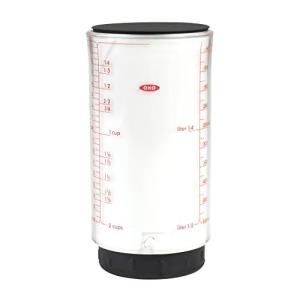
Liquid measuring cups, on the other hand, are meant to be set on a flat surface and read at eye level. They have a pour spout, a handle, and clear measurement markings printed or etched on the side — typically in cups, milliliters, and fluid ounces all at once. The extra space above the fill line is intentional: it prevents splashing when you carry the cup to your mixing bowl. Trying to measure liquid in a dry cup (or dry ingredients in a liquid cup) introduces just enough imprecision to throw off a finely balanced recipe.
If you only own one type, you're already working at a disadvantage. A complete kitchen has both.
Materials: Plastic, Stainless Steel, or Glass?
Walk through any kitchenware aisle and you'll find measuring cups in half a dozen different materials. The choice isn't purely aesthetic — each material has real trade-offs in durability, ease of use, and longevity.
Plastic Measuring Cups
Plastic is the default for most budget sets, and honestly, it earns its place. A good set of BPA-free plastic measuring cups is lightweight, dishwasher-safe, and durable enough for everyday cooking. The markings are typically printed or embossed into the surface. The downside? Printed markings fade over time, especially after years of dishwasher cycles. Plastic can also absorb smells and stains from strongly flavored ingredients like turmeric or tomato paste. Still, for most home cooks, a solid plastic set in the $10–$20 range does everything you need.
Stainless Steel Measuring Cups
Stainless steel is the material that professional kitchens tend to favor, and for good reason. It doesn't absorb smells, it won't warp under heat, and it lasts essentially forever if you treat it reasonably well. A well-made stainless set has a satisfying weight and a rigidity that makes leveling off dry ingredients easier and more precise. The main limitation is that markings are typically etched or stamped rather than color-printed, so they can be harder to read quickly. Stainless cups are also not transparent — you can't see the contents inside — which is a minor inconvenience for certain tasks.
Glass Measuring Cups
Glass is almost exclusively the material of liquid measuring cups, and it excels at that job. A Pyrex-style glass measuring cup with clear markings is easy to read, microwave-safe, heat-resistant, and completely odor-proof. You can pour hot liquid into it directly. You can warm something up and measure it in the same vessel. Glass is heavier than plastic, obviously, and it can break if dropped — but many cooks find that a single 2-cup or 4-cup glass measuring cup becomes the most-used item in their kitchen.
Silicone and Collapsible Options
Collapsible silicone measuring cups have carved out a legitimate niche for small kitchens and people who travel. They fold flat, take up almost no drawer space, and work perfectly well for most measuring tasks. They're particularly handy for sticky ingredients like honey or peanut butter, since silicone is naturally non-stick. The trade-off is that they're not rigid, which makes leveling off dry ingredients slightly trickier.
Standard Sizes and What Each One Is Actually For
Most standard dry measuring cup sets include four pieces: 1 cup, ½ cup, ⅓ cup, and ¼ cup. Better sets add an ⅛ cup (which equals 2 tablespoons) and sometimes a ¾ cup. Here's a quick breakdown of where each size earns its keep:
1 cup is the workhorse. Flour, oats, shredded coconut, ricotta for lasagna — you reach for the full cup constantly.
½ cup shows up in almost every baking recipe. Half a cup of butter, half a cup of milk, half a cup of chocolate chips. This one pulls its weight.
⅓ cup is surprisingly essential for baking. Many muffin and quick bread recipes call for exactly ⅓ cup of oil or yogurt. It's the one people try to estimate and shouldn't.
¼ cup doubles as a 4-tablespoon measure and is indispensable for smaller additions — cocoa powder, brown sugar, olive oil for a pan sauce.
⅛ cup is a nice-to-have rather than a must-have. It holds 2 tablespoons, which is useful when a recipe calls for exactly that and you don't want to do two tablespoon dips.
For liquid measuring cups, the most useful sizes are 1 cup, 2 cups, and 4 cups. Many home cooks swear by the 2-cup Pyrex as a single essential — it covers most everyday needs in one vessel.
Features That Actually Make a Difference
Beyond the basic shape and material, certain design features separate genuinely useful measuring cups from frustrating ones. Here's what to look for:
Easy-to-Read Markings
The markings should be clearly visible at a glance, not tiny stamped numbers you have to squint at. For liquid measuring cups especially, look for high-contrast markings — typically red or black against a light background. Some cups have markings on the inside as well as the outside so you can read them while looking straight down. This "angled" design is particularly clever and reduces the need to crouch to read the side of the cup while it sits on your counter.
Long, Sturdy Handles
A measuring cup handle should be long enough to grip comfortably even when your hands are covered in dough or sticky with egg white. Handles that are too short force an awkward grip. Look for handles that are attached solidly to the cup — the joint between handle and cup is a common failure point on cheaper sets.
Flat Bottoms
This sounds obvious, but not all measuring cups sit perfectly flat. A cup that rocks or tilts when set down is annoying when you're trying to level off dry ingredients. Check that the base is flat and stable.
Nesting or Storage Design
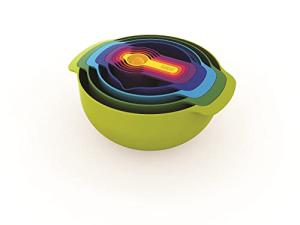
Most dry measuring cup sets are sold with a ring that keeps them together. Some nest inside each other; others hang from a single D-ring. If drawer space is tight, look for a set that stores compactly. Some magnetic sets snap together in a neat stack, which is genuinely satisfying and very space-efficient.
Dishwasher Safety
Almost all modern measuring cups are dishwasher-safe, but it's worth double-checking — especially for cups with printed (rather than embossed or etched) markings, which can fade from repeated dishwasher exposure.
Who Needs What — Matching Cups to Your Cooking Style
Not everyone needs the same measuring cup setup. Your ideal set depends on how and what you cook.
If you bake frequently, invest in a quality set of dry measuring cups in stainless steel or heavy-duty plastic, plus a glass liquid measuring cup in at least the 2-cup size. Precision matters in baking, and good tools make precision easier.
If you cook mostly savory dishes, you may find yourself reaching for measuring cups less often — but a reliable liquid measuring cup is still essential for stocks, sauces, and grains. A simple 2-cup glass measuring cup and a basic 4-piece dry set will cover almost everything.
If you have a small kitchen, collapsible silicone sets or magnetic stacking sets save significant space without sacrificing function.
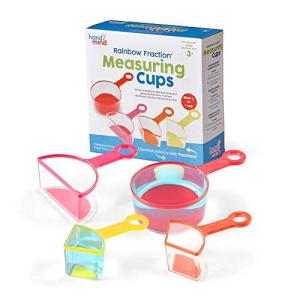
If you cook with kids, colorful plastic sets with large, easy-to-read numbers are genuinely helpful for involving young cooks in the process. The visual engagement of seeing the different sizes is also a low-key way to teach fractions.
If you're outfitting a professional or semi-professional kitchen, stainless steel is the clear choice — durable, precise, and built to handle heavy daily use over years.
Common Mistakes When Using Measuring Cups
Even people who've been cooking for decades make these errors. They're easy to avoid once you're aware of them.
Scooping flour directly from the bag. This compacts the flour, meaning you end up with significantly more than the recipe intends. The correct method is to spoon flour into the cup and then level off — or to use the "fluff, spoon, level" technique for especially light flours.
Measuring brown sugar without packing it. Brown sugar should be firmly packed into the cup — packed tightly enough that it holds the shape of the cup when turned out. Most recipes assume packed brown sugar unless they specifically say otherwise.
Using dry cups for liquids. You can get close, but you won't get precise. The meniscus of a liquid (the slight curve at the surface) makes it very hard to level off accurately in a dry cup. Use a proper liquid measuring cup and read at eye level.
Measuring sticky ingredients dry. Things like honey, maple syrup, and peanut butter cling to measuring cups and leave a residue that skews the actual amount. A quick trick: lightly spray the inside of the cup with cooking spray first, and the ingredient slides right out.
Caring for Your Measuring Cups
Measuring cups don't ask for much. Keep them clean, keep them together, and they'll last for years.
For plastic sets, avoid leaving them to soak for extended periods in hot water — it can warp the shape slightly over time. Check the markings periodically; if they're fading, it may be time for a new set rather than trusting increasingly invisible lines.
For stainless steel, occasional hand washing keeps them looking their best, though most are dishwasher-safe. Dry them promptly to avoid water spots.
For glass, treat them as you would any glassware. Don't drop them, and don't subject them to sudden extreme temperature changes (like pouring ice-cold liquid into a very hot cup).
Store dry measuring cup sets together on their ring or stacked magnetically — a scattered set quickly becomes a set missing the ⅓ cup at the exact moment you need it most.
Measuring cups won't make the headlines. They're not the knife that changes how you prep vegetables or the pan that transforms how you sear meat. But they are silently present in almost every recipe, every baking project, every time you need to know exactly how much of something you're adding to the pot. The right set — matched to your cooking style, made from a material that suits your habits, and designed with features that make the actual task easier — makes that background work just a little bit smoother. And in a kitchen where small errors add up, that quiet reliability is worth every penny.