What Is a Fryer, and Why Does Every Kitchen Need One?
At its simplest, a fryer is a kitchen appliance designed to cook food quickly at high temperatures, producing that signature crispy exterior and tender interior that's so hard to achieve any other way. The category spans a surprisingly wide range of machines — from compact countertop air fryers to powerful deep fryers built for serious home cooks — but they all share the same goal: delivering delicious, evenly cooked food with minimal fuss.
Fryers have become one of the most sought-after kitchen appliances on the market. It's not hard to see why. They're quick to heat up, easy to use, and capable of handling everything from frozen snacks to whole roasted chickens. Once you get used to cooking with a fryer, going back to the oven for everyday meals starts to feel unnecessarily slow and effortful.
Types of Fryers: Finding the Right Fit
The fryer category has expanded enormously over the past decade. Knowing the differences between the main types will save you time, money, and a lot of second-guessing.
Deep Fryers
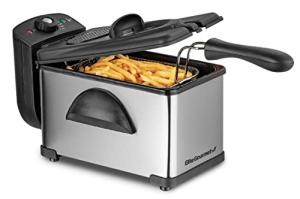
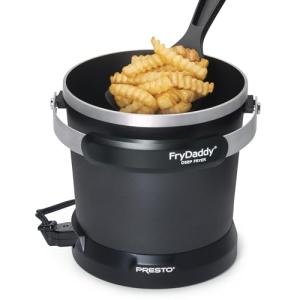
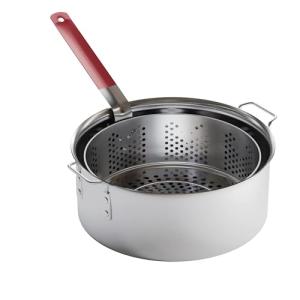
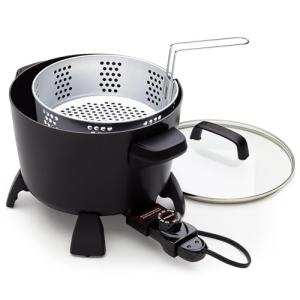
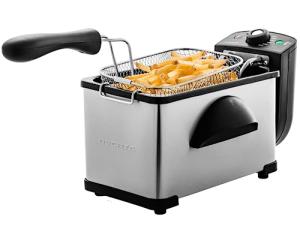
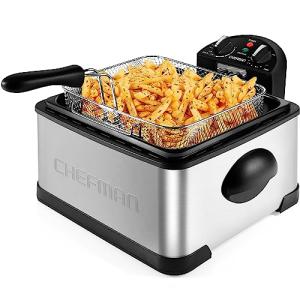
Deep fryers are the classic. They work by submerging food in a tank of hot oil — typically between 160°C and 190°C — cooking it rapidly and evenly on all sides. The result is the kind of crunch that's nearly impossible to replicate any other way.
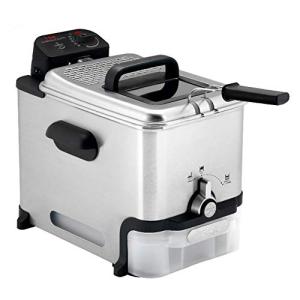
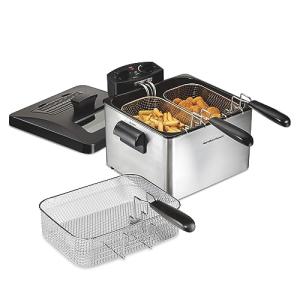
Home deep fryers come in a range of sizes, from compact 1-litre countertop models perfect for one or two people, up to larger 3–4 litre units built for feeding a family. Most modern models come with a built-in thermostat for precise temperature control, a removable oil tank for easier cleaning, and a lid with a filtered vent to keep cooking smells from taking over the whole house.
Deep fryers excel at foods that genuinely benefit from full oil immersion: chips, doughnuts, battered fish, tempura, churros, and anything breaded or coated. The texture they produce is simply unmatched — light, crispy, and evenly browned all the way around. If authentic fried food is the priority, a deep fryer delivers results that no other appliance quite matches.
The tradeoff is obvious: they use a lot of oil, which adds up in cost, and disposing of used oil responsibly takes a bit of effort. Cleanup isn't as instant as with an air fryer, though removable components and dishwasher-safe baskets on most modern models have made things significantly easier.
Air Fryers
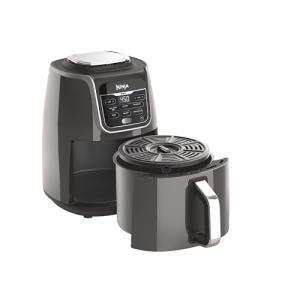
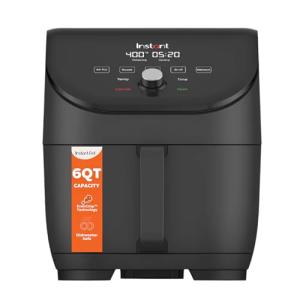
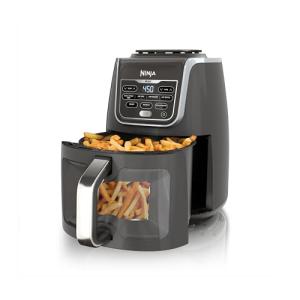
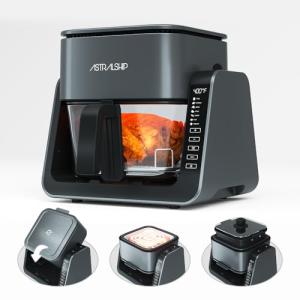
Air fryers have gone from novelty kitchen gadget to everyday household staple in just a few years, and for good reason. They work by circulating hot air at high speed around the food — essentially a very efficient, compact convection oven — which creates a crispy exterior without the need for submersion in oil. A light misting or drizzle of oil is often all you need, or sometimes none at all.
The appeal is obvious: you get a texture that's genuinely close to fried food, with far less oil involved and significantly less mess to deal with afterwards. Air fryers heat up in minutes, cook quickly, and are generally easy to clean, with most baskets and trays being dishwasher safe.
Modern air fryers do a lot more than just "fry." Depending on the model, they can roast, bake, grill, reheat, dehydrate, and even proof bread dough. Many come with preset cooking programmes for specific foods — chips, chicken, fish, vegetables, even cakes — which takes a lot of the guesswork out of cooking. Some higher-end models connect to apps on your phone, letting you control temperature and cooking time remotely or browse guided recipes.
Air fryers come in two main physical formats: basket-style models (compact and great for everyday use) and oven-style models (larger, with shelves or trays, and more cooking capacity). Basket air fryers are ideal for smaller households and quick weeknight meals. Oven-style air fryers are better for families or anyone who regularly cooks in larger quantities — they can handle a whole chicken, a tray of vegetables alongside a piece of fish, or multiple dishes at once.
Dual-Basket Air Fryers
A newer development worth knowing about: dual-basket air fryers, such as those offered by Ninja and similar brands, feature two independent cooking compartments with separate controls. This means you can cook two completely different foods at different temperatures simultaneously — chips in one basket, chicken in the other — and have both ready at exactly the same time. For families or anyone cooking multi-component meals, this is a genuinely useful feature rather than just a marketing gimmick.
Multi-Cookers with Air Fry Functions
Some people want the benefits of an air fryer without adding yet another appliance to the counter. Multi-cookers — machines that combine pressure cooking, slow cooking, steaming, and more — increasingly include an air fry setting or lid. These are a solid option if counter space is limited and you want one machine to handle many tasks. The air fry performance isn't always quite as good as a dedicated unit, but for most everyday cooking it's more than adequate.
Key Features to Look For
Capacity
Capacity is probably the most important practical consideration. A 2-litre air fryer might be fine for one person making a quick portion of chips, but it'll struggle to feed a family of four. As a rough guide:
- 1–2 litres / up to 2 QT: Solo cooks or couples
- 3–4 litres / 3–4 QT: Two to three people
- 5–6 litres / 5–6 QT: Families of three to four
- 7 litres and above / 7 QT+: Large families or batch cooking
When in doubt, go slightly larger. It's far more frustrating to cook in multiple batches than to have a little extra room.
Temperature Range and Control
A good fryer should offer a wide temperature range — ideally from around 80°C up to 200°C or more — along with precise controls. Digital displays and dial controls each have their fans; what matters most is that adjustments are intuitive and the temperature holds steady during cooking.
Preset cooking programmes are a nice bonus, especially if you're new to fryer cooking. They take the guesswork out of getting the settings right for popular foods and can make the whole experience feel much more approachable.
Build Quality and Materials
Look for fryers with well-constructed baskets and cooking chambers. Non-stick coatings are standard, but quality varies significantly between brands. Newer models increasingly offer PFAS-free ceramic-coated surfaces, which is worth considering if you're conscious about what coatings are in contact with your food. Stainless steel exteriors look better over time and tend to be easier to wipe down than plastic finishes.
Ease of Cleaning
Dishwasher-safe components make a genuine difference to how pleasant a fryer is to live with long-term. Look for removable baskets, trays, and oil tanks that can be cleaned without much effort. For deep fryers specifically, check whether the oil tank can be removed without spilling, and whether there's a built-in oil filtration or draining system.
Noise Levels
Air fryers in particular can be surprisingly loud — the high-speed fan that makes them work is essentially a small appliance motor running at full tilt. If your kitchen is open-plan and noise matters to you, it's worth looking for reviews that comment specifically on noise levels.
Smart Features and Connectivity
Smart fryers that connect to apps are increasingly common at the mid-to-upper end of the market. These can offer app-controlled cooking, guided recipes, and even integration with voice assistants. For some people, this is genuinely useful; for others, it's unnecessary complexity. Think honestly about whether you'd actually use these features before paying a premium for them.
Air Fryer vs Deep Fryer: Which One Should You Choose?
This is the question most people are really asking. The honest answer is that it depends entirely on what you plan to cook and what you value in a kitchen appliance.
If you want the most authentic fried food results — proper chip-shop-style chips, fried chicken with a real crisp batter, doughnuts — a deep fryer is hard to beat. The texture and flavour that come from proper oil immersion are difficult to replicate with hot air alone, and deep fryers are often simpler and less expensive.
If you want everyday versatility with less mess and less oil, an air fryer is the better choice. You can use it for breakfast, lunch, and dinner. It reheats leftovers brilliantly (far better than a microwave). It roasts vegetables beautifully. It handles frozen food without requiring you to preheat a full-size oven. And it does all of this with minimal cleanup.
Many households, once they get an air fryer, find themselves using it almost daily — it becomes the default appliance for quick meals in the way that a toaster or kettle does. A deep fryer tends to come out for specific occasions rather than everyday cooking.
There's no reason you can't have both. A compact deep fryer and a mid-sized air fryer can comfortably coexist in most kitchens and cover all bases between them.
A Few Things Worth Knowing Before You Buy
Oil quality matters in deep fryers. Whatever oil you use, it degrades with repeated heating. Most deep fryers now include oil filtration systems to extend the life of your oil, but you'll still want to change it regularly for the best results and flavour.
Don't overcrowd the basket. This applies especially to air fryers. Piling food in too deep means the hot air can't circulate properly, which leads to uneven cooking and soggy results. Most air fryer baskets benefit from cooking in a single layer, or at least leaving enough space for air to move.
Preheating helps. Many air fryer recipes skip this step, but giving the appliance two to three minutes to reach temperature before adding food can make a real difference to how evenly things cook, especially for smaller or more delicate items.
Shake or turn food during cooking. For basket-style air fryers in particular, giving the basket a shake halfway through — or flipping larger items — helps ensure even browning on all sides.
Fryers at a Glance: Matching the Right Model to Your Needs
Whether you're a first-time buyer trying to decide between an air fryer and a deep fryer, or a more experienced cook looking to upgrade to a larger capacity or smarter model, the fryer category offers something genuinely useful for every type of home kitchen. The technology has improved dramatically in recent years — cooking times are faster, controls are more intuitive, cleaning is easier, and the results speak for themselves.
The right fryer won't just save you time. It'll change the way you think about weeknight cooking — making meals that were once reserved for restaurants or takeaways something you can pull off at home, on a Tuesday evening, with very little effort and a lot of satisfaction.