What Makes a Fillet Knife Different
A fillet knife isn't just a thin knife. It's a purpose-built cutting tool engineered around a very specific problem: separating flesh from skin and bone without destroying either in the process.
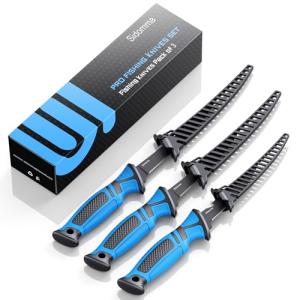
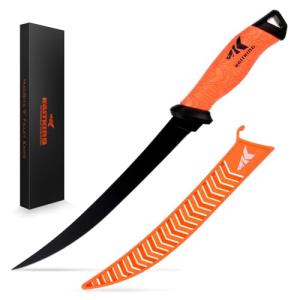
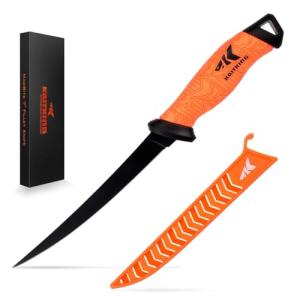
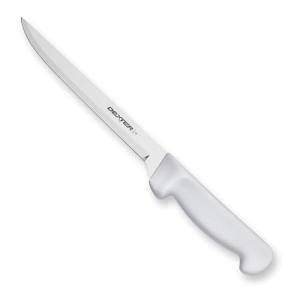
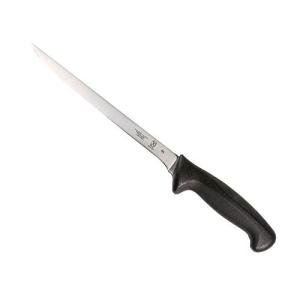
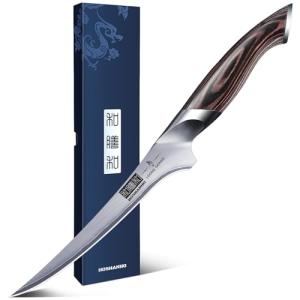
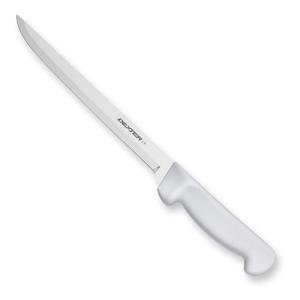
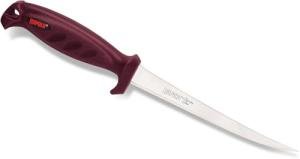
The blade is long and narrow, typically between six and eleven inches. It flexes. That flex is intentional — it allows the blade to follow the contour of a fish's ribcage, hugging the bones so closely that almost nothing is left behind. A stiff chef's knife can't do this. Neither can a boning knife, which is shorter, more rigid, and designed for mammal carcasses rather than fish. The fillet knife occupies its own category entirely.
Beyond fish, fillet knives are also excellent for skinning game, trimming membrane from large cuts of meat, and slicing boneless proteins paper-thin. Their narrow profile and flexibility make them unexpectedly versatile. But fish is their native language, and that's where they truly excel.
Blade Flexibility: Finding Your Flex
Walk into any serious fishing supply shop and you'll immediately notice that fillet knives come in dramatically different stiffness levels. This isn't random variation — it's one of the most important buying decisions you'll make.
Extra-flexible blades are the tool of choice for panfish, trout, and other small, delicate species. The blade bends dramatically under pressure, which lets it navigate tight spaces around small bones and follow the curvature of a small fish body without tearing the flesh. If most of your fishing involves smaller species, this is the flex range to prioritize.
Medium-flex blades hit the sweet spot for most freshwater anglers. They're capable enough to handle bass, walleye, pike, and similarly sized fish, yet rigid enough to give you control when you need to apply a bit more force near the tail or around the head. This is the category that most anglers end up in, and for good reason.
Stiff or semi-flex blades are designed for larger fish — salmon, large stripers, big catfish, saltwater species like grouper and snook. When you're working through more substantial flesh and heavier pin bones, you need backbone in your blade. A knife that flexes too easily on a ten-pound fish will feel imprecise and tiring.
Some experienced anglers own two or three fillet knives at different flex points and reach for the right one based on what they're cleaning that day. If you're just starting out, a medium-flex blade in the seven-to-nine-inch range covers the most ground.
Blade Length: Matching the Knife to the Fish
Blade length follows a straightforward principle: match the knife to the size of the fish you're most commonly cleaning.
A six-inch blade is ideal for small fish — panfish, crappie, small perch, and trout under twelve inches. The shorter length gives you excellent control in tight quarters and is less fatiguing during extended cleaning sessions.
A seven-to-eight-inch blade handles the mid-range species that most freshwater anglers pursue: bass, walleye, pike, catfish, and similar-sized fish. This is arguably the most universally useful fillet knife length.
A nine-to-eleven-inch blade is where you go for serious size — large salmon, big striped bass, halibut, and other substantial saltwater fish. The extra reach means fewer strokes and a cleaner fillet from start to finish on a large carcass.
There's a temptation to buy the longest blade available, reasoning that a big knife can handle small fish too. This logic is partly sound, but a ten-inch blade is genuinely cumbersome when you're cleaning a nine-inch perch. The proportions feel wrong, the maneuverability suffers, and the end result is a messier fillet than a shorter, more appropriate knife would have produced.
Steel: Stainless vs. High Carbon
The two dominant material camps in fillet knife steel are stainless and high carbon, and serious anglers have strong opinions in both directions.
Stainless steel is the practical choice for most fishing environments, particularly saltwater. It resists corrosion reliably, requires minimal maintenance after use, and holds a serviceable edge through extended sessions without demanding constant attention. For the casual to moderate angler, a quality stainless blade is genuinely the smart choice. It may not hold a razor edge as long as high carbon, but it forgives the kind of neglect that happens when you're tired after a long day on the water.
High-carbon steel takes and holds an exceptional edge — sharper than stainless, and in the hands of someone who maintains their tools diligently, it stays that way longer. The trade-off is that high-carbon blades require more care. They need to be dried promptly after use, lightly oiled between sessions, and kept away from prolonged exposure to salt water. Anglers who clean fish daily, who sharpen their knives religiously, and who treat their tools with genuine respect will appreciate what high-carbon steel delivers.
A third option gaining traction in higher-end fillet knives is high-carbon stainless — alloys that blend corrosion resistance with improved edge retention. Blades in the 440C, AUS-8, or VG-10 steel families occupy this middle ground and perform exceptionally well for serious anglers who want the best of both worlds without the full maintenance demands of plain high carbon.
Handle Materials and Grip
The handle on a fillet knife matters more than casual buyers often realize, because fillet knives are frequently used with wet hands, slippery fish slime, and blood in the mix. A handle that works beautifully in a dry kitchen will become treacherous at the cleaning table.
Rubber and thermoplastic grips are the workhorses of the category. They provide solid purchase even when thoroughly wet, resist the odors that fish-processing environments generate, and hold up to repeated cleaning and scrubbing. Most production fillet knives designed for practical fishing use feature some variation of textured rubber or overmolded grip material.
Synthetic polymer handles — Zytel, Fibrox, and similar materials — offer excellent durability with good wet-grip performance. They're lightweight, dimensionally stable in temperature extremes, and easy to sanitize.
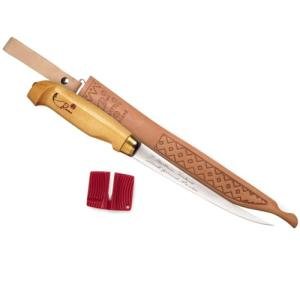
Natural wood handles appear mostly on premium and heritage knives. They're beautiful and feel wonderful in the hand on a dry afternoon, but they require more care around sustained moisture. A wood-handled knife left wet or stored damp can warp, crack, or develop mold over time. If you choose wood, dry the handle promptly and treat it periodically with food-safe oil.
Whatever material the handle is made from, pay attention to the guard and balance point. A well-designed guard protects your forward hand from slipping onto the blade during the push-cuts that filleting demands. And a knife that balances near the handle feels controlled; one that's blade-heavy feels clumsy.
Electric Fillet Knives: A Practical Alternative
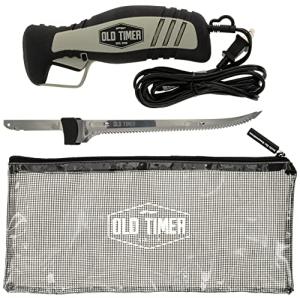
Electric fillet knives have carved out a genuine following among anglers who regularly clean large quantities of fish. They consist of two serrated blades that reciprocate against each other at high speed, making them especially efficient for production-scale cleaning.
Where electric knives shine is volume. If you're cleaning a cooler full of walleye or crappie after a productive day, an electric knife does the work faster and with less physical effort than a manual blade — particularly for anglers whose hands or wrists tire during extended sessions.
The trade-off is precision. An electric knife doesn't give you the nuanced feedback of a quality manual blade. Getting into tight spots around the rib cage requires a bit more technique, and thinner, more delicate fish can be more challenging to fillet cleanly. Electric knives are also cordless or corded, and keeping batteries charged or finding an outlet at a remote fishing spot adds a logistical consideration.
For many serious anglers, the ideal setup is both: a quality electric for the bulk work and a manual fillet knife for the finishing and detail work.
Sheath, Storage, and Blade Covers
A fillet knife is a sharp, flexible tool that deserves proper storage. Tossed loose in a tackle box or fishing bag, the blade suffers — and so does everything around it, including fingers.
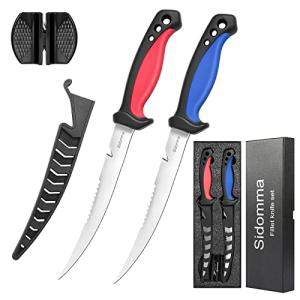
Most quality fillet knives ship with a sheath or blade cover. These are worth using consistently. Look for a sheath that holds the knife securely without requiring force to seat or retrieve. Leather sheaths look classic but require their own maintenance in wet environments. Plastic and nylon sheaths are more practical for fishing use.
For home storage, a magnetic knife strip or a knife roll keeps fillet knives accessible and protects the edge. Knife blocks work too, though the narrow blade of a fillet knife doesn't always sit well in standard slots.
Keeping Your Edge: Sharpening and Maintenance
A dull fillet knife is both a frustrating and dangerous tool. When the blade stops cutting cleanly, you compensate by pressing harder — and harder pressure on a flexible blade is how accidents happen.
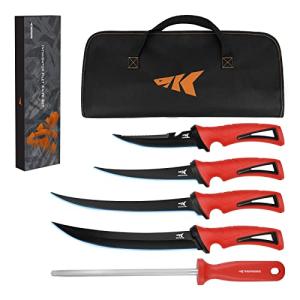
Fillet knives are best maintained with a sharpening rod (a smooth or fine-grit ceramic honing rod, not a rough diamond rod) or a dedicated pull-through sharpener designed for thin blades. The goal is maintaining the factory bevel without removing excessive material. Fillet knives have thinner edges than most knives; aggressive sharpening shortens their useful life.
After each use, rinse the blade thoroughly with fresh water (especially critical for saltwater use), dry it completely, and store it properly. Wipe a thin film of food-safe mineral oil along the blade periodically if you're storing for any length of time between uses.
Choosing the Right Fillet Knife for You
The best fillet knife for you is the one that matches your actual fishing. Not the fish you dream about catching — the fish you clean on a regular Tuesday evening after coming off the water.
Think through these questions: What species do you most frequently clean? How large are they? Do you fish primarily fresh or salt water? How often do you clean fish — occasionally, weekly, or near-daily? Do you prioritize durability and low maintenance, or are you willing to care for a more demanding blade in exchange for superior performance?
A moderate-flex, seven-to-eight-inch stainless steel blade with a textured grip handles the majority of freshwater fishing scenarios well and requires minimal care. Step up in length and steel quality as your needs — and your willingness to maintain the tool — grow.
The best fillet knife you can own is a sharp one. Buy quality, keep it honed, store it properly, and it will return clean, beautiful fillets for years.