What Is an Electric Knife?
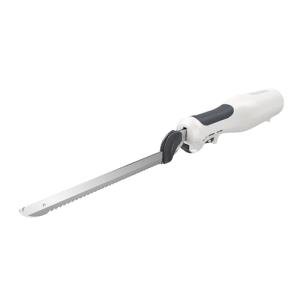
An electric knife is a powered kitchen cutting tool with two serrated blades that oscillate rapidly back and forth against each other — essentially creating a fast, continuous sawing motion with almost no effort required from you. You guide the knife, and the motor does the work.
Unlike a standard carving knife where your arm generates all the force and momentum, an electric knife cuts through meat, bread, and other dense foods with smooth, consistent strokes. The result is cleaner slices, less wasted food, and far less fatigue — especially when you're carving for a crowd.
Most electric knives are corded and plug directly into a wall outlet, giving them continuous power for as long as you need. Cordless models powered by rechargeable batteries are also available, offering more freedom of movement and the ability to use the knife away from an outlet — at a barbecue, for example, or at a dining table.
Who Actually Needs an Electric Knife?
The honest answer: more people than you'd think.
Electric knives have a bit of a reputation as a holiday-only gadget — something you pull out for Thanksgiving and then shove to the back of a cabinet until next November. But that's really underselling what they can do. Yes, they are exceptional for carving a whole turkey or a large roast. But they're also remarkably useful year-round for bread baking enthusiasts, home chefs who work with large cuts of meat regularly, and anyone who struggles with grip strength, wrist pain, or arthritis.
If you bake sourdough or artisan bread, an electric knife glides through a crusty loaf without compressing the soft interior — something that's genuinely difficult to do with even a very good manual bread knife. If you slow-cook a brisket every weekend, an electric knife helps you get those thin, uniform slices that make the difference between a presentable plate and a great one.
They're also a thoughtful choice for older cooks or anyone with limited hand strength. The motor removes the need for forceful downward pressure, which means less strain on joints and less risk of the knife slipping unexpectedly.
What Can You Cut With an Electric Knife?
The short answer is: more than most people realize. Here's a practical breakdown:
Poultry — Turkey, whole roast chicken, duck. Electric knives handle the transition from breast meat to joints smoothly, and they're particularly good at getting clean slices from the breast without shredding.
Roasts and large cuts of beef — Prime rib, brisket, leg of lamb, pork loin. These dense, heavy cuts are where electric knives really earn their place on the counter.
Bread — Both fresh-baked and day-old loaves. The oscillating blade cuts through hard crusts without squashing the interior. Some models come with a dedicated bread blade designed specifically for this purpose.
Hard cheeses — Large blocks of aged cheddar, gouda, or parmesan can be sliced much more efficiently with an electric knife than with a standard cheese knife.
Fruits and vegetables — Large, firm produce like watermelon, pineapple, and pumpkin can be handled easily. The powered blade reduces the awkward pressure needed to work through tough rinds.
Frozen foods — Some electric knives are capable of slicing partially frozen items, which comes in handy for meal prep.
Corded vs. Cordless: Which One Is Right for You?
This is the first real decision you'll make when shopping for an electric knife, and both options have genuine advantages.
Corded electric knives are the more traditional choice and remain the most popular for good reason. They deliver consistent, uninterrupted power for as long as you're using them — there's no battery to run down mid-carve. They tend to be more powerful overall, which matters when you're working through a thick bone-in roast. If you're primarily using your electric knife in the kitchen or at a dining table near an outlet, a corded model is usually the better value.
Cordless electric knives run on rechargeable battery packs, typically lithium-ion. They offer real freedom of movement — you can carry the knife to the table, use it outdoors at a cookout, or simply avoid the annoyance of managing a cord while carving. The trade-off is that battery life is finite, and a cheap cordless knife can lose power partway through a large carving job. If you go cordless, look for a model with a strong battery rating and a fast charging time.
Blade Types and Materials
Most electric knife blades are made from stainless steel. It's durable, easy to clean, and holds up well over time with proper care. Some higher-end models use high-carbon stainless steel, which offers better edge retention and tends to stay sharper through more use before needing replacement.
Blades on electric knives are serrated — the teeth are what make the oscillating motion so effective. The pattern and depth of those serrations matters. Finer serrations generally produce cleaner cuts on soft foods like bread. More aggressive, deeper serrations handle tough meat and skin more effectively.
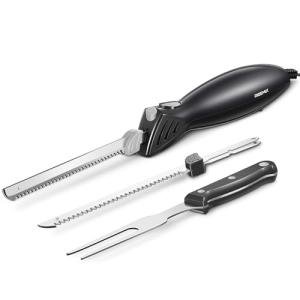
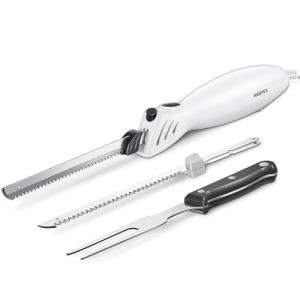
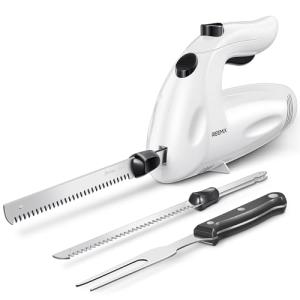
Many electric knives come with two different blade types included in the box: one for meat and one for bread. This is genuinely useful, and worth looking for when comparing models. Blade release mechanisms vary — some use a simple push-button to eject blades, while others require a bit more effort to swap. If you plan to switch between blade types regularly, a quick-release system will save you time and frustration.
Blade length is another consideration. Most standard electric knife blades run around 7 inches, which is sufficient for most birds and medium-sized roasts. If you regularly carve very large cuts — a full prime rib or a large turkey — a longer blade (8–9 inches) will let you complete each stroke without stopping and repositioning.
Handle Design and Comfort
Don't underestimate how much the handle matters. An electric knife vibrates during use, and if the grip isn't comfortable or secure, a carving session that should take five minutes can become genuinely tiring or even hazardous.
Look for a handle with a rubberized or textured grip surface. This keeps the knife from slipping, especially when your hands are greasy or damp from handling meat. Ergonomic shaping that fits naturally in the hand reduces fatigue during longer carving jobs.
Weight is a related factor. A heavier electric knife can be harder to control, particularly for users with smaller hands or limited strength. Most quality models strike a reasonable balance — heavy enough to feel solid, light enough to stay comfortable through a full carving session.
The trigger or power button should be easy to press without requiring an awkward hand position. Some models use a simple on/off switch; others use a trigger-style button on the underside of the handle. Personal preference plays a role here, but the key is that activation should feel natural and reliable.
Safety Features Worth Knowing About
Electric knives are powerful tools and deserve the same respect as any sharp kitchen equipment. Most quality models include a few safety features that are genuinely worth paying attention to.
Safety locks prevent the knife from activating accidentally. The best designs use a lock button that must be engaged separately from the trigger — meaning you have to deliberately unlock the knife before it can be turned on. If you have children in the kitchen or plan to leave the knife on a counter between uses, a safety lock is not optional.
Cord length matters more than you might expect. A short cord forces you to work close to the outlet, which can create awkward angles and put the cord in the path of the blade. Look for models with a cord of at least 4–5 feet to give yourself room to work comfortably.
Auto-shutoff is a feature on some newer models that cuts power when the blade stops moving or when the knife is set down. It's a useful safety addition, especially in busy kitchen environments.
Noise Level: A Real Consideration
This might sound like a minor point, but anyone who has used a cheap electric knife knows that noise level matters. Some models sound like a power tool. Others are quiet enough to carry on a conversation while carving. Generally speaking, better motors with tighter engineering produce less vibration and less noise. If you're carving at the table in front of guests, or if you have noise-sensitive family members nearby, it's worth reading reviews specifically for how loud a model runs before you buy.
Cleaning and Maintenance
Most electric knife blades are dishwasher safe — this is one of the genuinely convenient aspects of the category. The blade assembly detaches from the handle, and both pieces can typically go in the top rack. The handle itself should never be submerged in water; a damp cloth wipe-down is all it needs.
Blades do dull over time, but replacement blades are widely available for most major brands and are relatively inexpensive. Many manufacturers sell their replacement blades in multi-packs, so stocking up when you find a good price is a sensible move.
Store your electric knife in a case or a designated drawer to protect the blade edges and keep the cord organized. Many models come with a plastic storage case, which is worth using — it protects both the blades and anyone who reaches into a drawer unexpectedly.
What to Look for When Comparing Models
Here's a quick checklist of the most important factors to evaluate when you're comparing electric knives:
Motor power — More powerful motors handle dense foods more easily and maintain speed without bogging down. This matters most for bone-in roasts and frozen items.
Blade quality and length — Stainless steel blades around 7–9 inches, with good serration for your primary use case.
Included accessories — Does it come with multiple blade types? A carving fork? A storage case? These add real value.
Handle comfort and grip — Rubberized, ergonomic, appropriately weighted.
Safety features — Independent safety lock, adequate cord length.
Ease of cleaning — Dishwasher-safe blades, simple blade release.
Noise level — Particularly important if you'll be using the knife at the table.
Warranty — Quality brands stand behind their products. A 2–3 year warranty is a good sign.
An electric knife is one of those kitchen tools that earns its place quickly once you actually use it. The difference between hacking through a roast with a tired arm and gliding through it in smooth, even strokes isn't subtle — it's immediate and satisfying. These aren't gadgets for people who love unnecessary gear. They're practical tools for anyone who regularly works with large cuts of meat, bakes bread at home, or simply wants carving to feel like the easy, enjoyable part of a meal rather than the stressful one.
Whether you're buying your first electric knife or upgrading from an older model, the key is matching the features to how you actually cook. Get the handle right, get the blades right, and add a safety lock if there are kids around. The rest tends to take care of itself.