Cutting boards are essential kitchen tools that make meal prep a breeze. Whether you’re chopping veggies, slicing meat, or preparing a cheese platter, the right cutting board can make all the difference. Explore our collection to find the perfect board that fits your style and needs, so you can get cooking with confidence!
Cutting Boards
Find the perfect cutting board that suits your cooking needs and style
Product List
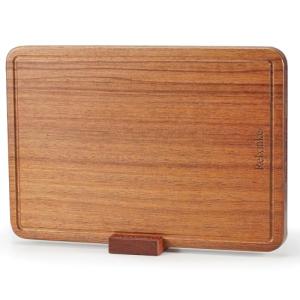
Relxinke Solid Teak Wood Cutting Board One Pi...
Product Review Score
4.75 out of 5 stars
228 reviews$49.88
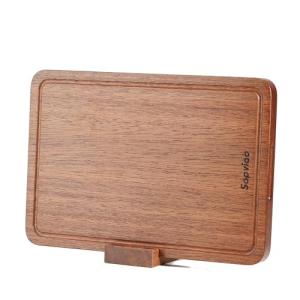
Sapviao Teak Wood Cutting Board Solid Unibody...
Product Review Score
4.09 out of 5 stars
109 reviews$24.99
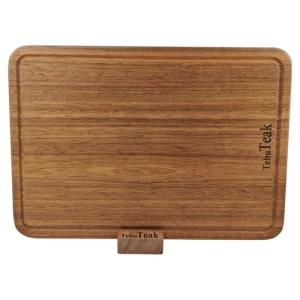
TebuTeak Solid Teak Wood Cutting Board - Sing...
Product Review Score
4.35 out of 5 stars
37 reviews$29.00
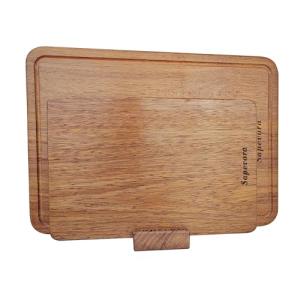
Sapevora Solid Teak Wood Cutting Board Set On...
Product Review Score
4.28 out of 5 stars
206 reviews$35.64
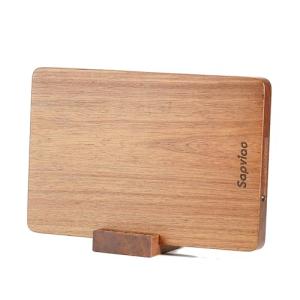
Sapviao Teak Wood Cutting Board Solid Unibody...
Product Review Score
4.27 out of 5 stars
120 reviews$21.99
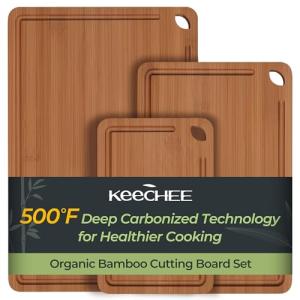
Keechee Bamboo Cutting Board, Durable Wood Cu...
Product Review Score
4.79 out of 5 stars
221 reviews$45.99 $36.99
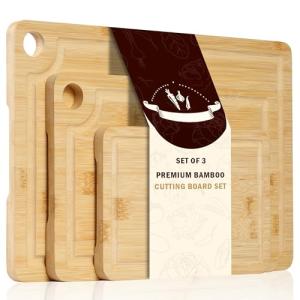
Sentk 3Pcs Bamboo Cutting Boards for Kitchen,...
Product Review Score
4.95 out of 5 stars
191 reviews$34.97
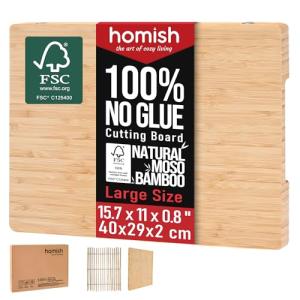
Why the Material Matters More Than Anything Else
The single biggest decision you'll make when choosing a cutting board is what it's made of. Everything else — size, thickness, whether it has juice grooves — is secondary. Material affects how your knives feel, how hygienic the board is, how long it lasts, and how much maintenance it demands.
Wood Cutting Boards
Wooden boards are the classic for a reason. They're beautiful, they're kind to knife edges, and they develop a character over time that plastic or composite boards simply never will. A well-maintained wooden board can last decades — some people inherit them.
The best woods for cutting boards are hardwoods with a tight grain: maple, walnut, cherry, teak, and acacia are the most common. Maple is the industry workhorse — dense, durable, relatively affordable, and widely used in professional kitchens. Walnut is softer than maple (which is actually a good thing for your knives) and has a rich, dark color that looks stunning on a kitchen counter. Cherry falls somewhere between the two and develops a gorgeous amber tone as it ages.
Teak and acacia are worth mentioning separately because they're often used in more affordable boards, but they're also naturally high in silica and oils, which makes them harder on knife edges than maple or walnut. They're still good choices — just something to be aware of if you're working with very fine Japanese knives.
One thing wooden boards absolutely need: regular oiling. A dry wooden board will crack, warp, and eventually split. Food-grade mineral oil or a beeswax-based board cream applied every month or two keeps the wood hydrated and sealed. It's a small ritual, but an easy one.
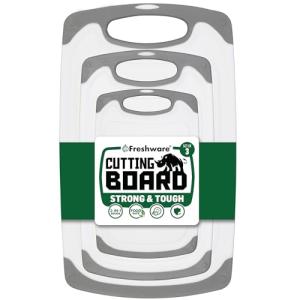
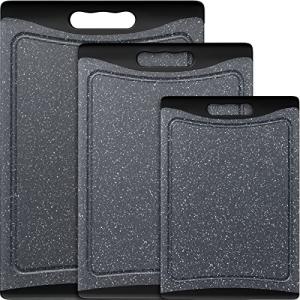
Plastic Cutting Boards
Plastic boards — typically made from polyethylene or polypropylene — are the practical choice for many kitchens. They're dishwasher-safe, lightweight, color-codeable (great for preventing cross-contamination between meat and produce), and inexpensive enough that you can have several on hand without thinking twice about it.
The trade-off is that plastic boards develop knife scars over time. Those grooves are harder to sanitize than they look, and bacteria can take up residence in them. A plastic board that's heavily scarred should be replaced rather than kept in rotation. The good news is that good-quality polyethylene boards are affordable enough that this isn't a financial hardship.
If food safety is a top priority in your kitchen — especially if you're handling raw poultry frequently — plastic boards are a solid choice, particularly as dedicated boards for proteins.
Composite and Rubber Cutting Boards
Composite boards, often made from compressed paper or resin, offer an interesting middle ground. They're non-porous (unlike wood), dishwasher-safe (unlike most wood), and gentle on knife edges (unlike plastic). Brands like Richlite have built a following among professional chefs for exactly these reasons. They tend to be heavier and more expensive than plastic, but they last longer and perform better.
Rubber boards are less common in home kitchens but worth knowing about. They're used extensively in professional settings because they're extraordinarily durable, non-slip, and easy to sanitize. They're generally on the heavier side and not the most attractive option for a home kitchen, but for someone who cooks seriously and wants a board that can handle serious abuse, a thick rubber board is hard to beat.
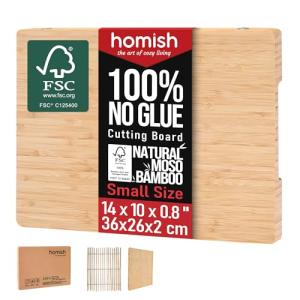
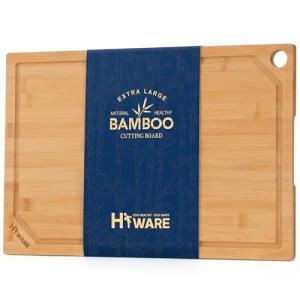
Bamboo Cutting Boards
Bamboo has been marketed as an eco-friendly alternative to wood, and it does have genuine sustainability credentials — bamboo grows incredibly fast compared to hardwood trees. However, bamboo is actually quite hard, harder than most woods used for cutting boards, which means it can be rougher on knife edges. It also tends to splinter more with age.
That said, bamboo boards are affordable, attractive, and widely available. If you're buying on a tight budget and plan to replace the board in a few years anyway, a bamboo board is perfectly serviceable. Just don't use it with your best Japanese knives.
Size and Thickness: Getting the Proportions Right
Once you've settled on material, size becomes the next most important consideration — and most people underestimate how much size matters until they've struggled with a board that's too small.
Choosing the Right Size
A cutting board that's too small forces you to work in cramped quarters, and ingredients roll off the edges, and you end up making more messes than you solve. As a general rule, bigger is almost always better. The largest board that fits comfortably on your counter and in your storage space is usually the right choice.
For everyday use — chopping vegetables, slicing fruit, portioning cooked meat — a board in the range of 12 by 18 inches is a solid starting point. It's large enough to work comfortably without constantly reorganizing the pile of chopped onions. If you cook for a family, host dinner parties, or do a lot of batch prep, go larger: 15 by 20 or even 18 by 24 inches gives you genuine room to work.
Small boards — 8 by 10 or 10 by 12 — have their place, but it's a limited one. They're handy for quick tasks: slicing a lemon, cutting an avocado, portioning cheese for a snack. Treat them as secondary boards, not your main workhorse.
Why Thickness Matters
A thicker board is a heavier board, and a heavier board is a more stable board. Thin boards flex under the knife, slide around the counter, and warp more easily over time. Boards that are at least three-quarters of an inch thick perform better in all of these ways, and one-and-a-half to two inches thick is ideal for a primary cutting board.
Thick boards also have a tactile quality that makes them feel more serious and satisfying to work on. There's a reason restaurant-grade boards are built like butcher blocks.
End Grain vs. Edge Grain vs. Face Grain
If you've spent any time looking at wooden boards, you've probably encountered these terms. They describe how the wood is oriented, and they make a real difference.
Edge grain boards show the long side of the wood planks. They're the most common type and offer a good balance of durability and knife-friendliness. This is what most standard wooden cutting boards are made from.
End grain boards show the cut ends of the wood — the circular pattern you'd see if you cut a tree trunk crosswise. These boards are gentler on knives because the blade slips between the wood fibers rather than cutting across them, and they tend to self-heal from minor knife marks. They're also typically thicker and heavier. The trade-off is price: end grain boards are more labor-intensive to make and cost more. But for a serious home cook who wants a board that lasts a lifetime and protects their knife edges, an end grain board is a worthy investment.
Face grain boards are less commonly seen in cutting boards because the wide face of the plank is more prone to warping and cupping over time.
Features Worth Looking For
Beyond material and size, a few features separate a good cutting board from a great one.
Non-slip feet or rubberized edges keep the board from sliding during use. This is both a safety feature and a practical one — a board that moves while you're cutting is a board that slows you down and increases the risk of a knife slipping. Some boards come with rubber feet built in; others are sold with a simple trick: place a damp cloth or a non-slip mat underneath.
Juice grooves are channels carved around the perimeter of the board that catch the juices from meat, citrus, or tomatoes. If you frequently carve roasts, slice watermelon, or cut anything particularly juicy, juice grooves save your counter and your sanity. On a flat board without them, those juices run everywhere.
Handles or hanging holes make storage and transport easier. A board you can hang on a hook takes up no counter or drawer space, and handles make it easier to carry a fully loaded board to the table or stove.
Reversible boards — flat on both sides — give you double the surface life and flexibility. Dedicate one side to proteins and the other to produce if you prefer not to use separate boards.
Caring for Your Cutting Board
The best cutting board in the world won't last if it's not properly maintained. The good news is that maintenance is simple.
For wooden and bamboo boards: Hand wash with warm soapy water after each use and dry immediately — never leave a wooden board soaking in water or sitting in a puddle of liquid. Moisture is wood's enemy. Once a month, or whenever the wood starts to look dry or feel rough, apply a generous coat of food-grade mineral oil, let it soak in for several hours (or overnight), then wipe off the excess. A board conditioning cream that combines mineral oil with beeswax or carnauba wax adds an extra layer of protection.
Never put a wooden board in the dishwasher. The combination of heat, prolonged moisture, and harsh detergent will warp, crack, and eventually destroy even the most well-built board.
For plastic and composite boards: These can typically go in the dishwasher, making sanitizing straightforward. For extra peace of mind after handling raw meat, a quick spray with diluted white vinegar or a food-safe sanitizer works well. Replace plastic boards when they develop deep knife grooves that can't be scrubbed clean.
For rubber boards: Wipe clean with a damp cloth and mild soap. Most rubber boards can handle more aggressive cleaning without damage.
Building a Board Collection That Actually Makes Sense
Many serious home cooks keep more than one cutting board, and there's wisdom in this approach. A large wooden end grain board for everyday prep and carving; a medium plastic board dedicated to raw meat and fish; a small grab-and-go board for quick tasks. That combination covers almost any cooking scenario without breaking the bank.
Color-coded plastic boards are particularly useful for food safety: one color for raw poultry, another for red meat, another for produce. It removes the guesswork and makes cross-contamination prevention automatic rather than effortful.
Finding the Right Board for How You Actually Cook
The best cutting board for you depends entirely on how you cook. If you prep vegetables almost exclusively, a beautiful end grain maple or walnut board is a joy to use and will serve you for years. If you're frequently breaking down whole chickens or handling raw proteins, a dedicated plastic board that can go through the dishwasher makes practical sense. If you have limited storage space, a single large reversible board might be the perfect compromise.
What matters most is that the board feels good to use, stays put on the counter, and is large enough that you're not fighting the edges every time you cook. Cutting boards are one of those kitchen tools that you interact with every single time you cook — worth choosing thoughtfully, worth maintaining properly, and worth replacing when the time comes.
A good board is a quiet pleasure. You might not think about it consciously, but it's there every time a knife moves cleanly through a carrot, every time prep feels effortless, every time a meal comes together without friction. That's the point.