Get ready to unleash your inner baker! Our bakeware collection has everything you need to whip up delicious treats, from mouthwatering cakes to perfectly baked cookies. With sturdy materials and non-stick surfaces, you can say goodbye to kitchen disasters and hello to sweet success!
Bakeware
Discover the perfect tools to bring your baking dreams to life
Product List
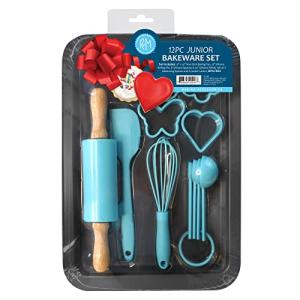
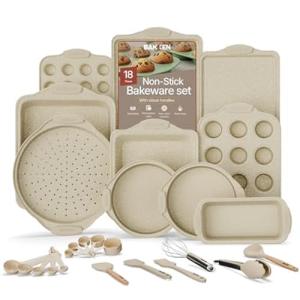
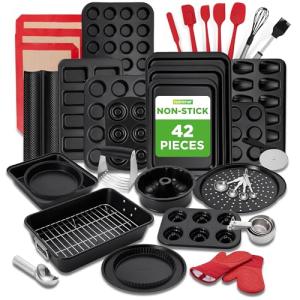
NutriChef 42-Piece Bakeware Set
Product Review Score
4.64 out of 5 stars
204 reviews$174.99 $159.99
Why Bakeware Material Makes Such a Big Difference
Before you start comparing shapes and sizes, it's worth understanding the most important variable in bakeware: what it's made of. Material affects how heat moves, how quickly things brown, how easy cleanup is, and how long a piece of equipment will last.
Aluminized steel and carbon steel are workhorses. They heat up quickly and evenly, which is exactly what you want for baking sheets, muffin tins, and loaf pans. Most professional bakers reach for these without hesitation. The trade-off is that they can rust if left wet and aren't dishwasher-friendly — but with basic care, they last decades.
Aluminum is a classic choice, especially in commercial kitchens. Pure aluminum is lightweight, conducts heat brilliantly, and produces consistent results. It can react with acidic ingredients like tomatoes or citrus over time, but for most baking tasks — cakes, breads, rolls — it's hard to beat.
Non-stick coatings add convenience, particularly for delicate items that tend to stick: financiers, intricate Bundt cakes, sticky buns. A good non-stick pan means less greasing, less flouring, and less heartbreak when you try to unmold something. The key is treating the coating gently — no metal utensils, no abrasive scrubbing — to make it last.
Cast iron and enameled cast iron hold heat exceptionally well and can go from stovetop to oven without a second thought. They're heavier and slower to heat than aluminum, but that thermal mass creates a beautiful crust on breads and pizzas. A well-seasoned cast iron skillet makes one of the best rustic loaves you'll ever bake.
Ceramic and stoneware are gorgeous on the table and great for dishes that benefit from gentle, even heat — think casseroles, gratins, and deep-dish pies. They're slower to heat up, but they retain warmth beautifully, which keeps things bubbling at the table.
Glass is transparent, which is oddly useful: you can see how the bottom of your pie or lasagna is browning without lifting it out of the oven. It heats more slowly than metal but retains heat well once it's hot. One caveat — glass bakeware doesn't love sudden temperature changes, so moving it from freezer to hot oven isn't a great idea.
Baking Sheets and Sheet Pans: The Most Versatile Thing in Your Oven
If you own just one piece of bakeware, it should probably be a half-sheet pan. These flat, rimmed pans — typically around 18 by 13 inches — are used for cookies, roasted vegetables, sheet cake, granola, galettes, and dozens of other things. The low rim allows heat to circulate around food while still containing it, and the large surface area means you can bake a lot at once.
Look for heavy-gauge aluminum or aluminized steel sheet pans. The flimsy ones warp in the oven and produce uneven results. A good sheet pan will feel substantial in your hand and last for years without warping. Many serious bakers keep three or four on hand so they can rotate batches through the oven without waiting for pans to cool.
Rimless cookie sheets are a variant worth knowing about. Because there's no rim to redirect airflow, they can produce slightly more even browning on the bottom of cookies. They're less versatile than sheet pans but beloved by cookie enthusiasts.
Cake Pans: Rounds, Squares, and Everything In Between
For layer cakes, the standard is a set of two or three round cake pans, typically 8 or 9 inches in diameter. The difference between those two sizes is more significant than it sounds: a recipe designed for 9-inch pans will produce thinner layers in a 9-inch pan versus thicker, taller layers in an 8-inch pan. Neither is wrong, but knowing your pan size matters.
Springform pans are the ones with a removable bottom and a latch on the side that releases the walls. They're essential for cheesecakes and certain tarts, where unmolding a fragile filling without destroying it would be nearly impossible otherwise. A good springform pan seals tightly enough that batter won't leak out, but still releases cleanly when you open the latch.
Bundt pans are the decorative, tube-shaped pans that turn a simple cake into something that looks impressive straight from the oven. The hollow center ensures that a dense, rich batter bakes through evenly. The intricate fluted or geometric patterns on a Bundt pan create a beautiful exterior — but they also mean that thorough greasing and flouring is non-negotiable, or you'll spend twenty frustrating minutes trying to extract a stuck cake.
Square and rectangular pans in the 8x8, 9x9, and 9x13 sizes are the backbone of brownies, bars, coffee cakes, and casserole-style bakes. The 9x13 is probably the most universally useful pan in any kitchen — big enough for a sheet cake, a pan of lasagna, or a tray of cinnamon rolls.
Loaf Pans: For Bread, Pound Cake, and So Much More
A standard loaf pan (around 9x5 inches) is the shape most people picture for sandwich bread and banana bread, but it does a lot more than that. Pound cakes, meatloaf, terrines, quick breads, and even layered gelatin desserts all call for a loaf pan. It's one of those pieces that earns its cabinet space.
For yeast breads, many bakers prefer glass or ceramic loaf pans because they allow you to see how the crust is developing on the sides and bottom. For quick breads and cakes where color is less critical, a non-stick metal pan makes for easy release and fast cleanup.
If you bake a lot of bread, consider adding a Pullman loaf pan (also called a pain de mie pan) to your collection. It has a sliding lid that you place on top during baking, resulting in a perfectly square loaf with a fine, even crumb — ideal for sandwiches where you want clean, uniform slices.
Muffin Tins and Cupcake Pans
Standard 12-cup muffin tins are among the most frequently used pieces of bakeware in most households. They do obvious duty for muffins and cupcakes, but they're also useful for mini quiches, egg bites, individual cheesecakes, and single-serve portions of brownie batter.
Mini muffin tins with 24 smaller cups are great for bite-sized treats — two-bite brownies, mini corn muffins, blini-style appetizers. They bake faster than standard muffins, so watch your timing.
On the other end of the spectrum, jumbo muffin tins with 6 large cups produce bakery-style oversized muffins with that signature domed top. The larger volume means a longer bake time, but the result is that impressive, substantial muffin you see stacked in the display case at your favorite café.
Non-stick coatings are particularly helpful in muffin tins, where the multiple small cups make greasing tedious. Silicone muffin molds are another option — they're flexible enough that you can pop baked goods out without much effort, though they don't brown the exterior quite as well as metal.
Pie Dishes and Tart Pans
Pie dishes come in glass, ceramic, or metal, and each produces a slightly different result. Glass lets you monitor bottom browning. Ceramic holds heat well and looks beautiful going from oven to table. Metal conducts heat fastest and is the choice of pie-competition bakers who want the crispiest possible bottom crust.
Tart pans with a removable bottom are a small revelation if you've never used one. Once the tart is baked and the sides have firmed up, you just push the bottom up through the outer ring and the pan walls fall away cleanly, leaving a beautifully finished tart with no transfer required. Fluted edges give tart shells their characteristic look and add a little structural rigidity to the crust.
For a classic French tart with a crisp, thin shell, look for shallow pans — the standard is about 1 inch deep — in 9 or 11-inch diameters.
Specialty Bakeware Worth Knowing About
Once you have the fundamentals covered, there's a whole world of specialty bakeware that opens up.
Ramekins are small ceramic or glass cups used for individual soufflés, crème brûlée, lava cakes, and pot de crème. They're also useful for mise en place — holding measured ingredients before they go into the recipe. A set of six is plenty to start with.
Madeleine pans have the distinctive shell-shaped cavities that produce those delicate French sponge cakes. The shallow impressions mean quick baking times and a lovely thin edge that crisps up in the oven.
Baguette pans (perforated trays with curved channels) help maintain the long, narrow shape of a baguette while the perforations allow air to circulate and promote a crispy crust.
Silicone baking mats aren't pans exactly, but they're bakeware essentials. Placed on a sheet pan, they create a non-stick surface without any added grease, and they're reusable for thousands of baking sessions.
How to Care for Your Bakeware
Good bakeware is an investment, and treating it well extends its life significantly. Most metal pans should be hand-washed rather than put through the dishwasher — the harsh detergents and high heat can strip non-stick coatings, cause discoloration, and speed up rusting. Dry metal pans thoroughly before storing them to prevent rust spots.
Non-stick surfaces should be treated with care. Use silicone, wood, or plastic tools — never metal — and avoid stacking heavy items on top of non-stick pans, which can scratch the coating. If the coating starts to flake, it's time to replace the pan.
For cast iron, the rule is simple: keep it dry and keep it seasoned. After washing (minimal soap, minimal water), dry it on the stovetop over low heat, then rub a thin layer of oil over the surface before storing.
Choosing the Right Bakeware for Your Kitchen
The best bakeware collection is one that matches how you actually cook. If you bake cookies weekly, invest in two or three quality sheet pans. If layer cakes are your specialty, a matched set of round cake pans in the same material and brand will give you consistent results across batches. If you're just starting out, a half-sheet pan, a 9x13 rectangular pan, a loaf pan, and a muffin tin will cover the vast majority of recipes you'll ever attempt.
Quality matters more than quantity. A few well-made, properly cared-for pieces will outperform a cabinet full of thin, cheap pans every single time. Look for even weight distribution, sturdy construction, and materials suited to your baking style. Your pans should feel like tools you want to reach for — not obstacles standing between you and a good bake.